
Hives at DEQ
NC DEQ maintains active honey bee hives as part of its commitment to environmental stewardship, education, and pollinator awareness.
Green Square Rooftop Bees
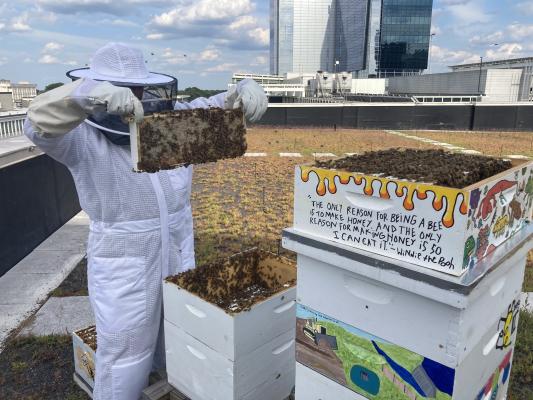
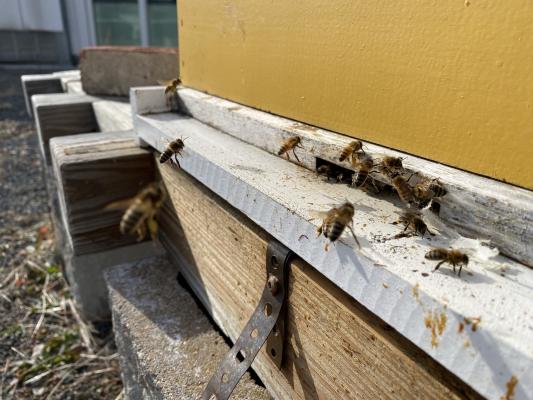
Located atop the Green Square Complex in downtown Raleigh, these rooftop hives demonstrate how pollinators can thrive in urban environments. The bees forage from nearby trees, gardens, and green spaces, highlighting the role cities can play in supporting healthy pollinator populations.
Standards Lab Bees
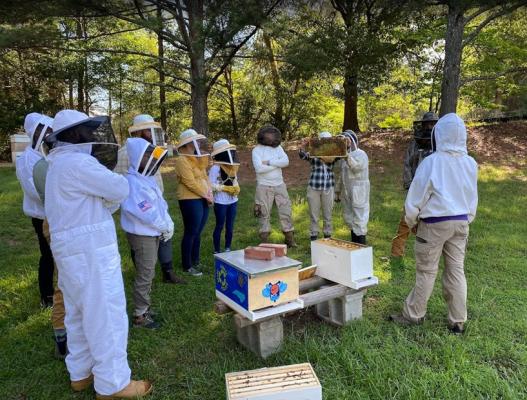
The hives at the DEQ Standards Laboratory in Raleigh provide additional habitat for honey bees while supporting staff engagement and hands-on learning. Together, DEQ’s hives showcase best practices in responsible beekeeping and pollinator care.
About the Hives
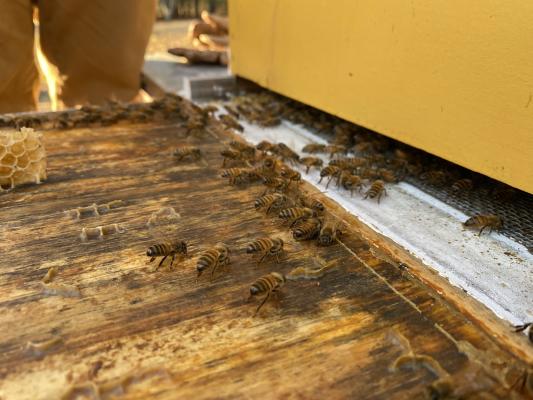
DEQ’s honey bees live in Langstroth hives—rectangular, stackable boxes designed to make beekeeping safer for bees and people. Inside each box are frames where bees build honeycomb for raising young bees and storing honey. Beekeepers can lift and check the boxes one at a time, helping keep the colony healthy without disturbing the hive too much.
Support Local Beekeepers
Find and support local beekeeper's using the Certified Honey Producer Locator Map maintained by the North Carolina State Beekeepers Association.
Honey Extraction
Honey extraction is the process of harvesting surplus honey from the hive while ensuring the colony retains enough food for its own needs. At DEQ, this process is done in late summer with great care taken to prioritize bee health.
Honey Extraction Steps
When honeycomb cells are fully capped with wax—indicating the honey is mature—frames are removed from the hive. This typically occurs once or twice a year, depending on nectar flow and colony strength. Beekeepers use a smoker to gently calm the bees and encourage them to move away from the frames, allowing honey to be collected safely while minimizing stress on the colony.
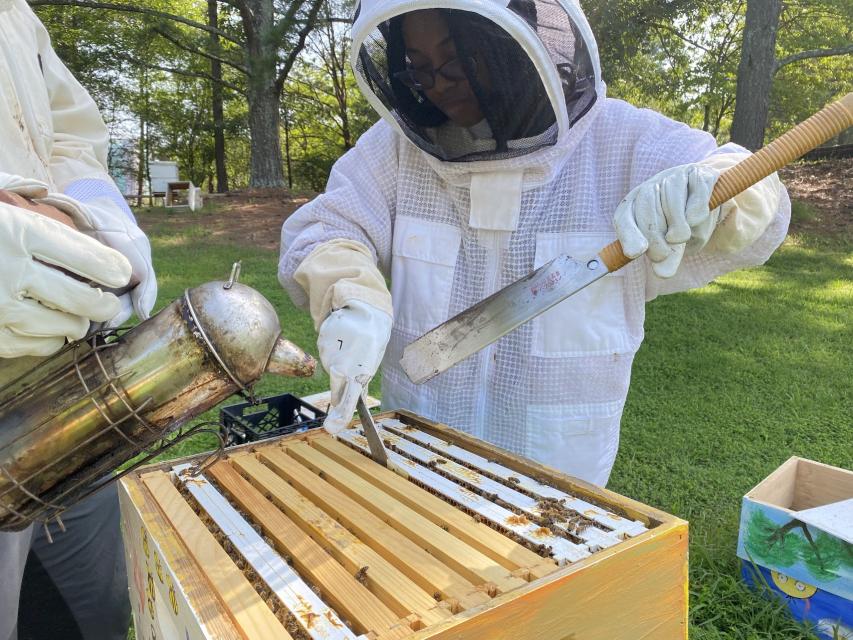
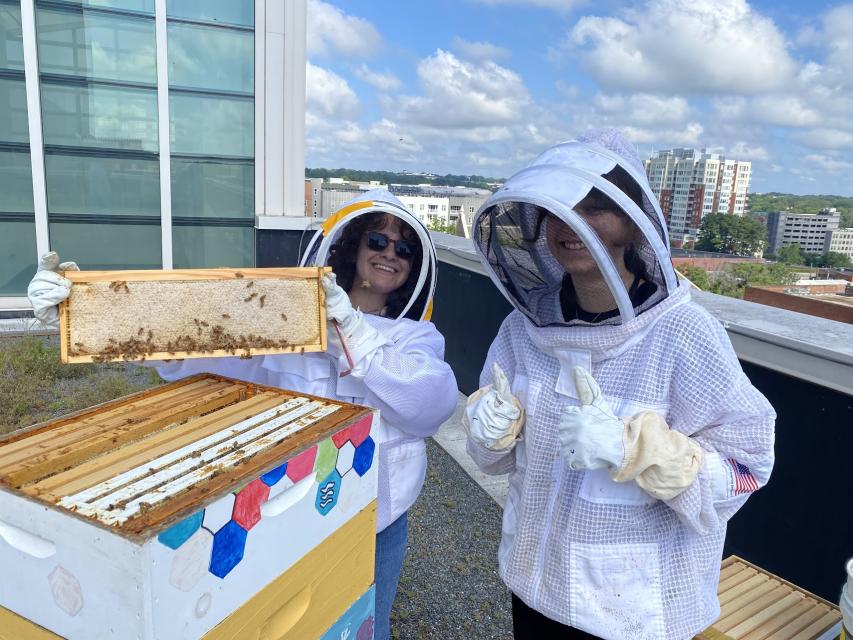
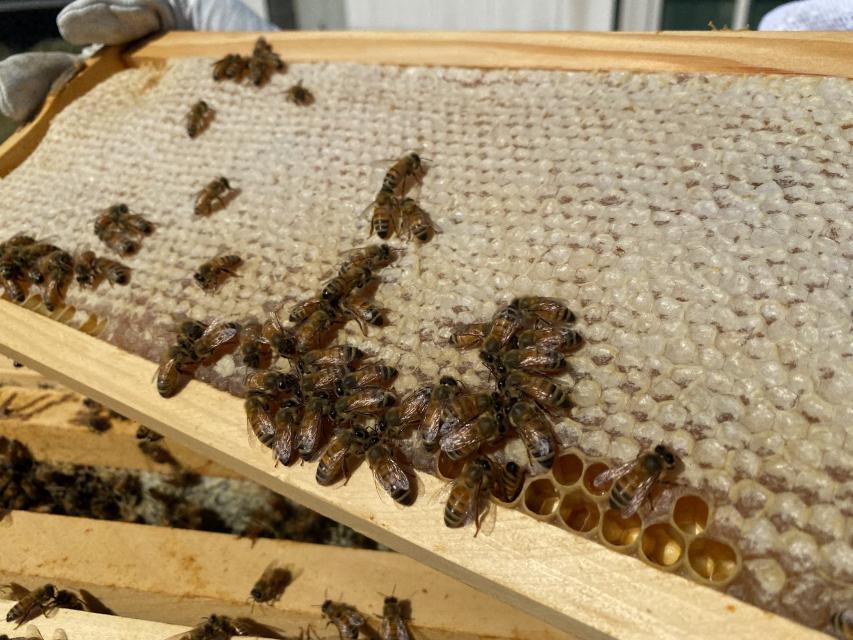
The thin wax caps sealing each honey cell are carefully removed using tools such as an electric uncapping knife and an uncapping fork or scraper.
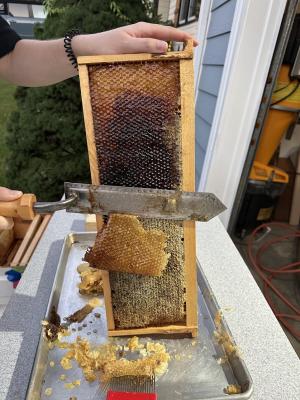
The heated knife warms and cuts away the wax caps in smooth passes, while the fork or scraper helps remove wax from hard-to-reach spots so the honey can flow out during extraction. These tools allow beekeepers to cleanly open the cells while preserving the honeycomb so it can be returned to the hive for reuse.
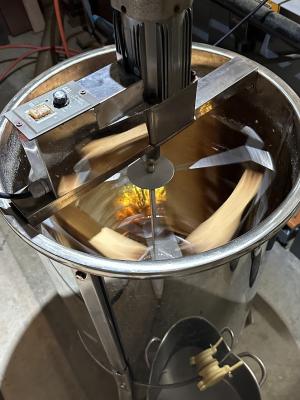
Uncapped frames are placed in a centrifugal extractor, which spins the frames and pulls honey out of the comb without damaging it. The empty comb is returned to the hive so bees can reuse it.
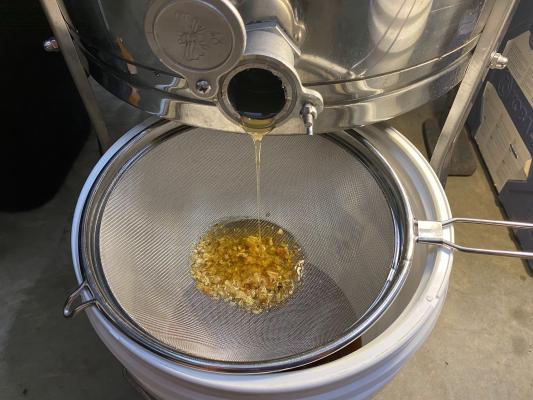
Freshly extracted honey is strained to remove wax particles and other natural debris while preserving pollen, enzymes, and flavor.
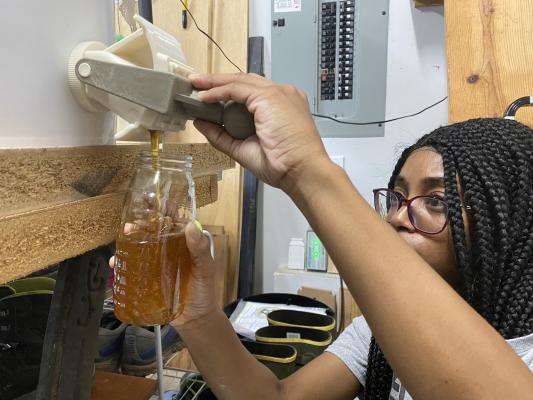
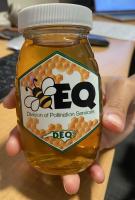
Once filtered, the honey is bottled and labeled. The result is raw, local honey that reflects the plants and seasons surrounding DEQ facilities. Bottled honey is shared with DEQ employees and distinguished guests as a fun, tasty way to support pollinator education.
Honey Bees & Native Bees
Honey bees are important pollinators, but they are only one part of North Carolina’s diverse pollinator community.
Honey Bees
Honey bees (Apis mellifera) are not native to North Carolina or North America. They were introduced from Europe and are now widely managed by beekeepers for honey production and agricultural pollination. Honey bees live in large, social colonies and play a significant role in supporting food systems and public education about pollinators.
Native Bees
North Carolina is home to more than 500 species of native bees, including bumble bees, carpenter bees, mason bees, leafcutter bees, and sweat bees. Most native bees are solitary, do not produce honey, and nest in the ground, hollow stems, or wood. Many are highly efficient pollinators and are often better adapted to pollinating native plants than honey bees.
Supporting pollinator health in North Carolina means considering the needs of both managed honey bees and wild native bees by protecting habitat, planting diverse flowering plants, and reducing stressors such as habitat loss and pesticide exposure.
View the video below for more information about honey bees and other pollinators.
Additional Resources
Native Plants & Pollinator Gardens
Native plants and pollinator gardens play a critical role in supporting healthy pollinator populations and resilient ecosystems.
What Are Native Plants?
Native plants are species that occur naturally in a specific region and have evolved over thousands of years alongside local wildlife, soil conditions, and climate. In North Carolina, native plants provide essential food and habitat for native bees, butterflies, birds, and other pollinators that depend on them for survival.
What Is a Pollinator Garden?
A pollinator garden is a planted space designed to provide nectar, pollen, shelter, and sometimes nesting habitat for pollinators. These gardens can be any size—from small containers to large landscapes—and are intentionally designed to support bees, butterflies, moths, birds, and other beneficial insects.
Native Plants vs. Pollinator-Friendly Plants
While many native plants are pollinator-friendly, not all pollinator-friendly plants are native.
Native plants offer the greatest ecological benefits because local pollinators are often adapted to their specific shapes, bloom times, and nutritional value.
Pollinator-friendly plants may include non-native species that provide nectar or pollen but do not always support native pollinators as effectively, especially for specialist species.
A balanced approach prioritizes native plants while thoughtfully incorporating other pollinator-friendly plants to extend bloom periods and increase floral diversity.
Why Pollinator Gardens Matter
Pollinator gardens:
Provide food sources throughout the growing season
Support both honey bees and native pollinators
Reduce the need for water, fertilizers, and pesticides when native plants are used
Strengthen local biodiversity and ecosystem health
DEQ encourages the use of native plants and pollinator-friendly landscapes at its facilities and across North Carolina to support pollinators at every scale—from urban rooftops to residential yards and community spaces.
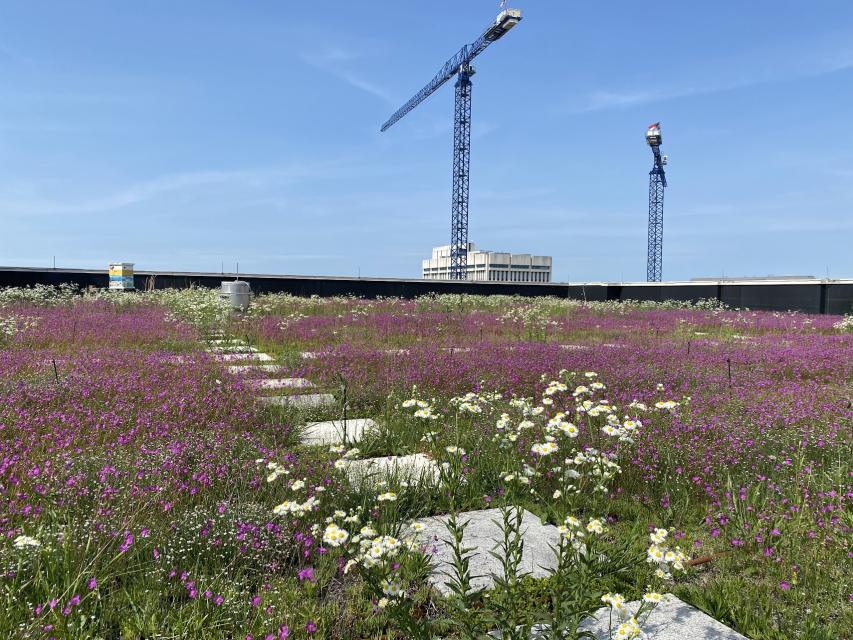
At DEQ's Green Square office location, pollinator gardens are maintained outside the building and on the green roof.
Learn More About Beekeeping
Interested in learning more or getting started? Explore these external resources, which offer guidance for beginners and experienced beekeepers alike.