
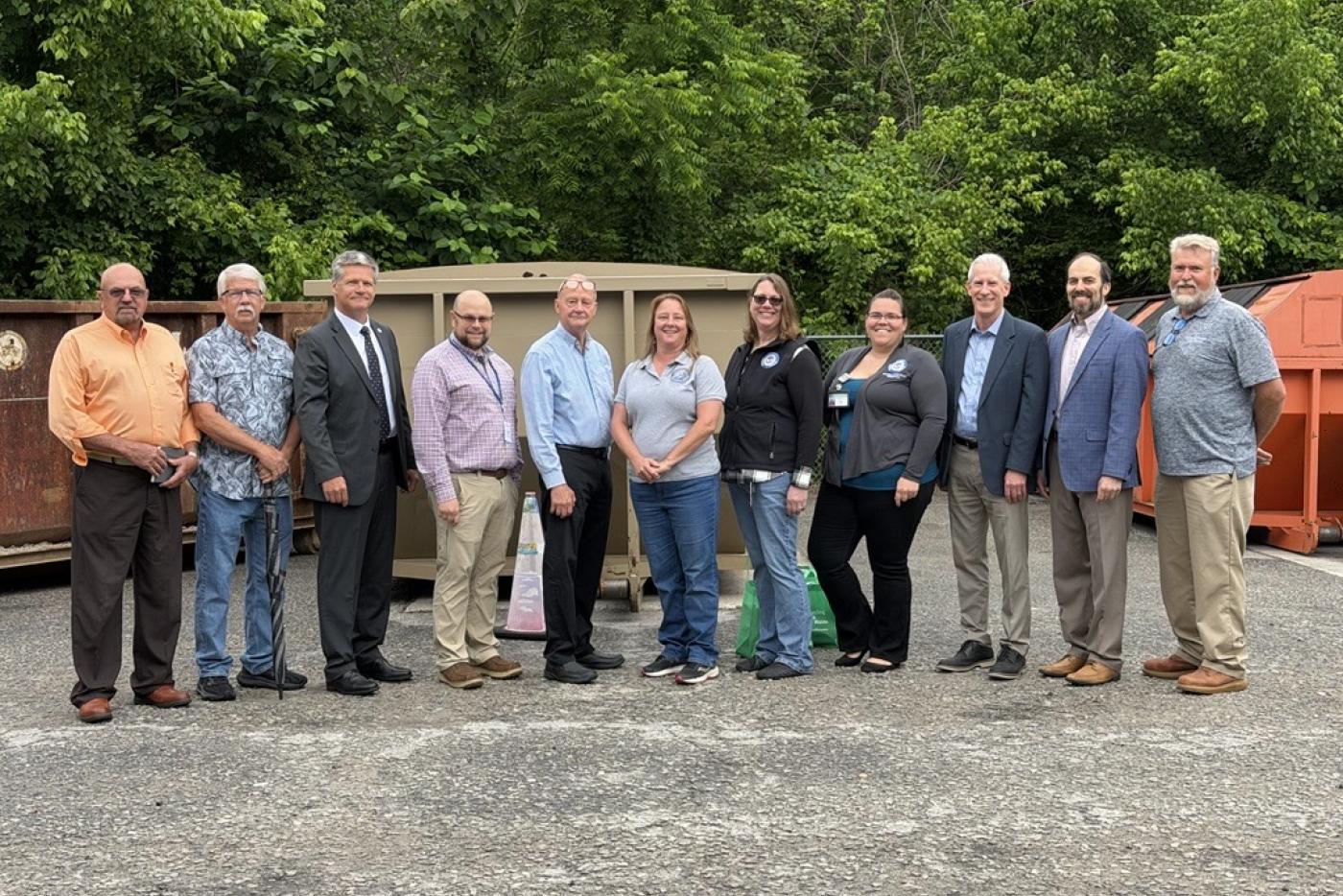
Today North Carolina Department of Environmental Quality (DEQ) Secretary Reid Wilson visited McDowell County to announce grants for 16 projects in western North Carolina designed to improve waste reduction infrastructure and debris management through the Helene Recovery Recycling Infrastructure (HRRI) grant program.
The program awarded $25 million to local governments to repair and develop recycling infrastructure and strengthen organic debris management systems to ensure long-term resilience against future storms.
“After Helene, communities across western North Carolina are dealing with damaged recycling facilities and enormous amounts of storm debris scattered throughout the region,” said Governor Josh Stein. “Western North Carolinians have worked hard to recover over the past 20 months, but communities are still rebuilding critical infrastructure. These grants will help local governments better manage waste and prepare for future storms.”
“Hurricane Helene tore apart waste management and recycling infrastructure throughout the mountains,” said DEQ Secretary Reid Wilson. “These grants will help communities rebuild systems and equipment to manage waste more efficiently and reduce vulnerability when future disasters strike.”
From the 2024 federal disaster recovery legislation, the U.S. Environmental Protection Agency awarded $25 million to DEQ’s Division of Environmental Assistance and Customer Service (DEACS) for the HRRI program. DEACS received 45 applications for HRRI funding totaling $145 million, leaving almost $100 million in unmet needs after factoring in local matching funds.
Helene Recovery Recycling Infrastructure Grant Recipients
The following local governments were selected for funding:
- Alleghany County ($2,800,000) will expand recycling services, rebuild Helene-damaged infrastructure at its transfer station, and make operational improvements for long-term resilience.
- Ashe County ($3,000,000) will replace aged and damaged buildings, equipment, and infrastructure used to handle household recyclables, vegetative debris, appliances, and hazardous waste.
- Avery County ($544,000) will purchase a horizontal grinder and replace damaged asphalt and concrete at recycling centers.
- Town of Black Mountain ($525,000) will rebuild key elements of the Buncombe County town’s curbside sanitation infrastructure with the goal of collecting more recyclable material and creating long-term resiliency.
- Buncombe County ($3,500,000) will build construction and demolition waste diversion infrastructure and increase revenue generated from these materials.
- Graham County ($1,400,000) will make site improvements and equipment purchases to modernize its recycling program.
- Haywood County ($2,514,500) will replace curbside carts lost during Hurricane Helene and relocate a convenience center out of the flood plain.
- Jackson County ($3,000,000) will construct an additional transfer station in the Cashiers area, which is frequently cut off due to landslides during storms. This facility will improve access to recycling services throughout the county.
- Macon County ($2,750,000) will rebuild its damaged Recycling Processing Center and make other improvements through new equipment investments.
- Town of Marshall ($356,000) will replace damaged collection equipment and establish a curbside recycling program for the Madison County town.
- McDowell County ($580,000) will purchase equipment to increase capacity, reduce maintenance-related downtime, and significantly decrease the number of trips required for material transport.
- Mitchell County ($380,000) will restore and expand its recycling center.
- Rutherford County ($1,500,000) will enhance vegetative debris recycling and divert construction and demolition debris from landfill disposal.
- Watauga County ($280,000) will replace containers lost in Helene and purchase new equipment to improve metals and white goods collections.
- Wilkes County ($570,000) will replace recycling trucks and collection equipment damaged during Hurricane Helene.
- Yancey County ($1,300,000) will rebuild storm-damaged recycling infrastructure and improve efficiency by adding equipment for in-house hauling and processing.
For more information about Helene Recovery Recycling Infrastructure funding, visit the DEACS webpage or contact Matt James at (919) 707-8142.