
Guidelines: Natural Resources Conservation Service’s Environmental Quality Incentives Program (NRCS-EQIP)
Application deadlines
The current spring 2026 application cycle typically ends on June 30, 2026, however, we have extended this deadline to July 31, 2026, due to delays with NRCS contracting associated with the 2025 federal government shutdown. The next spring 2027 application cycle begins Jan. 1, 2027, and ends on June 30, 2027. Any application submittals that are not received or are not complete by these dates may not be eligible for review and funding for this current application review cycle.
Administered by: Division of Water Resources (DWR), N.C. Department of Environmental Quality (DEQ), 1617 Mail Service Center, Raleigh, NC., 27699-1617. Contact Amin Davis at amin.davis@deq.nc.gov or (919) 707-9132.
Authority: DWR is authorized to provide grants to local governments for stream restoration projects cost-shared as part of the Natural Resources Conservation Service’s Environmental Quality Incentives Program (NRCS-EQIP) by General Statutes § 143-215.70-73 and Session Law 2017-57.
Who is Eligible: Units of local government, local political subdivisions, and non-governmental organizations (NGO, only as co-applicants). An Applicant is a unit of local government; a co-applicant is an NGO partnering with a local government. A grantee is the local government applicant who has been awarded grant funding; A co-grantee is an NGO partnering with a grantee. NGOs serving as co-applicants shall include the local government contact on correspondence associated with application submittals, contractual matters, reimbursement requests and grant close out activities.
Grant submission guidelines
Stream restoration projects approved for NRCS-EQIP funding by the U.S. Department of Agriculture are eligible for state financial assistance. A single project shall consist of all the landowners and other participants under a single project contract approved by the NRCS under the EQIP program along a contiguous stretch of stream.
Under WRDG Guidelines, a single project shall consist of all the landowners and operators under a project design contract approved by the NRCS along a contiguous section of stream pursuant to GS 143-215.72(d)(4), NRCS 440 M 530 Subpart R (amended March 2024) and NRCS Appendix to Form NRCS-CPA-1202.
A project design contract shall include the NRCS-approved conceptual restoration design that clearly identifies all project participants1, operators with a Conservation Contract (NRCS-CPA-1202), and all adjacent landowners (non NRCS-EQIP) with written agreements to have stream improvement work performed on their property as part of the project.
Eligible stream practices for DWR funding consideration are those listed in the most recent version of the EQIP/RCPP Guidelines for Natural Stream Channel Work (View the most recent version of these guidelines under the "Additional guidelines, forms" heading below). Refer to the Restoration Types section in the latest version of the NC Land & Water Fund’s Applicant Funding Manual Restoration Program to select the appropriate restoration type to select as a ‘Treatment’ in our application spreadsheet.
Exclusion fencing (NRCS Practice 382) may be considered an eligible stream practice for the ecological benefits it provides to stream and riparian areas when appropriately implemented. In addition to the requirements outlined in NRCS Conservation Practice Standard 382, the following requirements shall all apply in order for this practice to be considered eligible for DWR funding: fencing must be located within the riparian area but no closer than 10 feet from the top of streambank; grazing and mowing between the fence and top of streambank is not allowed. Observed/documented evidence of riparian area access or encroachment by livestock or machinery shall be remediated within 30 days of observance. A minimum 10-year maintenance period is also required. In the event of noncompliance with these requirements (including NRCS Practice Standard 382) the Co-Grantee shall be required to reimburse DEQ for a portion of, or the entire amount of grant funds expended for fencing based on the final approved NRCS-CPA-1245 forms and submitted invoices.
Any practices not listed in Attachment 1, except for exclusion fencing, shall be considered non-eligible purposes. Other non-eligible purposes include projects directly associated with maintenance or repairs, meeting an existing environmental permit requirement (i.e., NPDES Phase I and Phase II Stormwater) or regulatory enforcement action, generating nutrient credits and small watershed projects of the NRCS (reviewed by the N.C. Soil and Water Conservation Commission). Removing stream debris other than that which is required to implement the stream restoration project is non-eligible. Any stream debris removal shall be done in accordance with the Guidelines for Snagging and Clearing Operations of Stream Debris dated 8/19/21.
Compensatory mitigation projects and the generation of compensatory mitigation credits for impacts to aquatic resources per the Federal Mitigation Rule (33 CFR Part 332) are non-eligible purposes. However, compensatory mitigation projects can be located directly adjacent to an eligible project for the purposes of achieving maximum ecological benefit. Session Law 2020-18, Section 12.(a) prohibits Applicants from applying for funding to this grant program if they also receive funding from the North Carolina Land and Water Fund.
- 1
1 The NRCS Appendix to FORM NRCS-CPA-1202, “participant” is defined as a person, legal entity, joint operation, Indian tribe that is a producer, or other eligible party who has applied for participation in the program, has been selected as eligible for participation, and who has entered into this contract as responsible for implementing its terms and conditions.
NRCS-EQIP stream restoration projects are funded at an estimated 50% federal cost and 50% non-federal cost. Projects in North Carolina, which have been approved by the NRCS for Federal funding, are eligible for up to 100% funding by the State of the estimated 50% non-federal cost. Essentially, DWR can provide up to a maximum1:1 cost-share based on the federal cost estimate of implementing eligible stream restoration practices reported on the project-specific Conservation Plan/Schedule of Operations (NRCS-CPA-1155/1156 Forms).
Example Award Calculation:
Total Estimated Project Cost: $400,000
Federal Estimate (50%): $200,000
Nonfederal Estimate (50%): $200,000
Maximum DWR Grant Amount for this example $200,000 (100% of Nonfederal Estimate)
Grant awards are a maximum grant award, not a guaranteed payment amount – if actual project costs are less than estimated, DWR will only pay out the difference between the actual cost and the federal payment. Actual project costs are the sum of all invoices submitted for the project and approved by DWR. Applicants are encouraged to keep Administrative costs at or below 10% of the total project budget based on our limited annual funding availability.
A project team member representing the Applicant or Co-Applicant is required to contact the Administrator at least one month prior to the end of the application cycle (by June 1 if possible) to schedule a virtual pre-application consultation. The purpose of this informal consultation is for the project team member to provide the Administrator with information regarding the proposed project to assist with determining project eligibility prior to the submission of an application. Additionally, any questions the applicant has regarding the application submission and review process can addressed during this consultation. A brief project narrative, site photos, conceptual project plan map, if available, and project coordinates shall be provided to the Administrator to assist with eligibility determination.
If the Applicant or Co-Applicant plans on submitting more than three separate applications they shall provide the Administrator with a complete list of potential applications that includes the project name, county, brief project narrative site coordinates and mention whether the Applicant or Co-Applicant may submit a grant application for the same site to other state grant programs. WRDG review of projects for funding consideration will remain independent and be based on the existing WRDG review process and criteria. A link to geotagged photos of the entire project area shall be included as part of the application submittal.
An application for Water Resources Development Grant funding shall include information about the five items listed below and the required forms that have been signed by the appropriate reviewing officials as listed in the DWR/DEQ required forms checklist under the "Additional guidelines, forms" heading below to be considered complete. Additional supplementary documentation (reports, photos, etc.) are not required but can be provided as separate attachments or uploaded to an authorized, secure filesharing website. The Checklist sheet of the application spreadsheet contains a list of all required submittal documents. All required forms and grant information can be found on the WRDG website. Please check this website frequently for updates.
Application Spreadsheet (MS Excel)
The most recent version of the application spreadsheet shall be used. All applications should include the appropriate project information in the designated sheets including checklist confirmations, contacts, general information, narratives, treatment amounts, benefits, budget, and budget in-kind notes. Detailed instructions about how to complete this application are provided on the Instructions sheet of this spreadsheet and within each of the individual sheets. Please see Stream Restoration/Stabilization/Enhancement instructions under the Guidelines column in the Treatments section of the Form to select the correct Stream Restoration type.
Project Narrative: shall begin with a statement outlining the overall project scope (what is being proposed). This shall be followed by the project justification (why it is being proposed) and how the proposed stream treatment will mitigate the documented stream impairments. Information about proposed riparian buffers (minimum/maximum or average proposed widths) and stream crossings shall also be provided.
Budget: shall serve as the basis for the financial administration of the grant contract and reimbursement requests for projects that are awarded funding. The budget shall only include cost estimates for expenses directly associated with the project scope and treatments as written in the application, or any subsequent contract amendments. Matching contributions must be those directly related to the eligible elements of the project that grant funds are being requested for, or those that may affect the overall outcome and improve the overall quality of the eligible elements. Applicants shall list all sources of funding contributions (including federal and nonfederal funding) on the application’s Budget Sheet to minimize the potential for duplicative funding for identical work activities associated with a single project. Based on Session Law 2020-18, Section 13.(a) permitting costs shall be listed on the budget sheet. The complete application will be included in the DEQ contract documentation, therefore, it is very important that the budget and all other contents are accurate and complete.
The Federal Contribution listed on the Budget sheet of the Application shall be equal to the sum of all eligible stream restoration practices reported on the approved NRCS-CPA-1155/1156forms that has been signed by both reviewing officials. If the Total Contract Payment (TCP) amount listed on the NRCS 1155/1156 forms includes estimated costs for non-eligible stream restoration practices, then an Eligible Stream Practices spreadsheet must be completed that breaks out the estimated costs of the eligible and non-eligible practices listed on the NCRS 1155/1156 forms.
Project Plan and Location Maps
Scaled versions of the most recent NRCS Practice Code Map and associated Conservation Plan Map shall be provided and must clearly depict the conceptual restoration plan as well as any additional stream treatments such as livestock exclusion fencing or stream crossings. 30% restoration design drawings shall also be provided when available. At least one map should show the entire project length.
Official Resolution
The Applicant shall include a resolution adopted by its governing board stating the amount of state aid requested and accepting the Applicant's responsibilities. A representative of the Applicant with signatory authority shall sign this Resolution. For projects involving a Co-Applicant, the Co-Applicant shall provide DWR with a signed document affirming/adopting the terms of this Resolution so that it can be included with the final DEQ contract documentation. A form-fillable Official Resolution template can be downloaded from our grant website. In most circumstances, the responsibilities listed below shall be included in the Official Resolution. However, this resolution template can be adapted to fit the unique circumstances of a specific project.
Written justification shall be provided to DWR for any responsibilities listed below that are not included in the Official Resolution.
The following responsibilities shall be included in the Official Resolution:
- Assume full obligation for payment of the balance of project costs. Obtain all necessary state and federal environmental permits.
- Obtain all necessary state and federal environmental permits.
- Comply with all applicable laws governing the award of contracts and the expenditure of public funds by local governments.
- Supervise construction of the project to assure compliance with permit conditions and to ensure safe and proper construction in accordance with approved plans and specifications.
- Obtain appropriate easements, rights-of-way or suitable spoil disposal areas that may be necessary for the construction and operation of the project without cost or obligation to the state.
- Hold the state harmless for any damages that may result from the construction, operation, and maintenance of the project.
- Accept responsibility for operation and long-term maintenance of the completed project.
- When there is a Co-Applicant: Applicant identifies Co-Applicant as a responsible party and grants them authority to operate on the Applicant’s behalf as project administrator, project fiduciary, etc.
Other Required Documentation
Form(s) NRCS-CPA-1202: complete set of the most recently signed and approved NRCS Conservation Program Contract for each for each landowner considered a Participant for each landowner considered a Participant per the Appendix to Form NRCS-CPA-1202.
Form(s) NRCS-CPA-1155 or NRCS-CPA-1156: complete set of the most recently signed and approved NRCS Conservation Plan Schedule of Operations for each landowner considered a Participant per the Appendix to Form NRCS-CPA-1202. Copies of signed landowner agreements must be provided for all non-participants who have agreed to have stream improvement work done on their property associated with a WRDG application submittal.
Conflict of Interest Certification: both the Applicant and Co-Applicant must each submit this form stating the Applicant/Co-Applicant, Applicant’s/Co-Applicant’s subordinates and any person or persons designated to act on behalf of the Applicant/Co-Applicant do not have an actual or apparent conflict of interest with respect to the project. A representative of the Applicant/Co-Applicant with signatory authority shall sign these certifications. For projects involving a Co-Applicant, both the Applicant and the Co-Applicant shall sign and submit their own separate forms per NCGS §143C-6-23(b).
Conflict of Interest Policy: a separate document from the above-referenced Certification and applies to each of the Applicant/Co-Applicant entities as a whole. This policy must address situations in which any of the Applicant’s/Co-Applicant’s management employees and the members of its board of directors or other governing body may directly or indirectly benefit (except as the Applicant’s/Co-Applicant’s employees or members of its board or other governing body) from the Applicant’s/Co-Applicant’s disbursing of State funds. The policy must also include actions to be taken by the Applicant’s/Co-Applicant’s or the individual, or both, to avoid conflicts of interest and the appearance of impropriety.
No Overdue Tax Debts Statement: this form is no longer required for the application submittal but will be required if the application is recommended for funding later in the year. This written statement shall be completed, signed and notarized by that Applicant's board of directors or other governing body stating that the Applicant does not have any overdue tax debts, as defined by G.S. 105-243.1 at the federal, State, or local level.
Templates of these forms can be downloaded from our website.
Geotagged Photos: a link to photos with location information embedded in the digital file are now required in lieu of a pre-application site visit and shall be taken according to the most recent version of our Guidelines For Taking Geotagged Digital Photos document available under the NRCS-EQIP Stream Restoration heading on our website.
Supplementary Documentation
Additional supplementary documentation (reports, photos, etc.) is not required but can be provided as separate attachments.
Application submittal documents shall be emailed to amin.davis@deq.nc.gov by the last day of the application cycle in order to be considered for grant funding during the current application cycle. A link to a filesharing website should be provided instead of sending file attachments if the cumulative file size exceeds 35 megabytes. If a project includes a Co-Applicant, a representative of both the Applicant and Co-Applicant should be included on the email application submittal. The submittal shall consist of an Excel version of the completed application spreadsheet, at least two Adobe pdf documents labeled as Map(s) and Signed Documents (resolution, conflict of interest forms, signed/notarized no overdue tax statement etc.). A third pdf labeled as Supplementary Documents (reports, data, photos, etc.) can be provided, or uploaded to a secure filesharing website, but is not required.
** A summary of potential required forms is provided under the "Additional guidelines, forms" heading.
Notes: The complete application will be included in the DEQ contract documentation; therefore, it is very important that its contents are accurate and complete. It is the Applicant’s/Co-Applicant’s responsibility to ensure their application is accurate and complete at the time of submission to DWR. Application submittals with four or more errors or omissions may not be accepted for funding consideration. Corrections to all application errors or modifications must be submitted by the Applicant to DWR within 30 calendar days of the end of the application cycle in which the application was submitted. Erroneous or incomplete application information can also lead to significant delays with the issuance of a DEQ Contract should the project be recommended for grant funding.
Any changes to the original project budget and/or project scope submitted with the application will require the prior written approval of DWR if an application is recommended for funding. Unapproved changes to the project scope or budget throughout the course of a project will not be eligible for cost-share funding or reimbursement.
The following criteria will be used to approve, approve in part, or disapprove grant applications:
- The economic, social, and environmental benefits to be provided by the projects;
- Regional benefits of projects to an area greater than the area under the jurisdiction of the local sponsoring entity;
- The financial resources of the local sponsoring entity;
- The environmental impact of the project;
- Any direct benefit to State-owned lands and properties.
Applicant/Co-Applicant Obligation – Environmental Permitting
All proposed stream restoration projects are subject to environmental review and permitting under applicable federal, state and local regulations. It is the Applicant’s/Co-Applicant’s responsibility to prepare, provide and remain in compliance with all applicable environmental permitting requirements associated with project implementation.
Review Decisions
This is a competitive grant program due to limited funding availability. The grant’s review criteria are contained within the Benefits & Evaluation Criteria sheet of the application form. A multi-agency review team comprised of various subject-matter experts reviews each application to assist the Administrator and Division Director with establishing funding priorities. Applications that receive a median review team score of less than 50 out of 100 possible points will not be recommended for funding.
Review decisions and notifications for applications received during the spring application cycle are generally made in October. Review decisions and award notifications for applications received during the fall application cycle are generally made in April of the next calendar year. However, unforeseen circumstances such as legislative, policy or funding allocation changes may delay award notifications.
Projects Not Awarded Funding
Applicants/Co-Applicants who are not awarded funding within one calendar year from the end date of the grant cycle in which their application was originally submitted may be required to complete and submit a new application to DWR if they wish to re-apply for funding consideration. A new application will also be required if there have been any changes to the project scope or budget. The spring grant cycle ends on June 30th and the fall cycle ends on December 31st of each year.
Acceptance of a grant award will require the Applicant to enter into a grant contract with the DEQ. A DEQ grant contract is considered ‘fully-executed’ once it has been signed by a signatory authority of the Grantee and the Co-Grantee, if applicable, and DEQ Financial Services. A copy of the fully-executed contract shall be provided to both the Grantee and Co-Grantee by DEQ. No portion of reimbursable work or expenditure of reimbursable funds for the project, plan or services shall begin prior to receiving a fully-executed contract from DEQ. Contracts are generally valid for two years from the date the grant contract document is fully-executed by DEQ and the grantee.
Contract modifications
Any changes to the scope of the project or project budget after submission of a grant application will require the written approval of the DEQ and may also require a DEQ contract amendment. Any contract amendment requests shall be submitted to the Administrator at least 30 days prior to the DEQ contract expiration date. Typical changes that require a contract modification are listed below.
Project Scope/Budget Changes: The minimum information that shall be supplied to DEQ for consideration includes a brief written narrative on official letterhead containing the justification for any proposed changes, and a revised scope of work description. A revised project plan/map to scale, completed Revision of Plan/Schedule of Operations or Modification of a Contract (NRCS 1156 Form) and revised budget sheet submitted as an Excel file shall also be submitted if applicable. Unapproved changes to the project scope or budget shall not be eligible for, and may result in additional reductions to, cost-share funding or reimbursement.
Extension Requests: Grant recipients can submit an extension request for one additional year beyond the grant expiration date if progress toward project completion can be sufficiently documented. An extension request shall be submitted in a cover letter on official agency letterhead. This request shall include a justification statement, current project status update and anticipated project schedule moving forward. No more than one extension shall be granted for an active contract.
Requests For Additional Funding: Grant recipients may submit a request for additional funding consideration to DWR for a maximum of 25% of the original grant award, not to exceed $100,000. This request shall be submitted by the Grantee’s or Co-Grantee’s primary contact on a cover letter with official letterhead via email. The following information shall be submitted by the Grantee or Co-Grantee to DWR for additional funding consideration:
- a cover letter describing the circumstances/need for an increased funding award, summary of current project status, revised project scope (if applicable) and anticipated project implementation
schedule. - copies of the most recent version of all NRCS-CPA-1156 forms (Revision of Plan/Schedule of Operations or Modification of a Contract) associated with the specific project in which additional funding is being requested.
- revised scaled drawing(s) that clearly depict the location of the proposed revised work (if applicable).
DWR will review this information and respond to the Grantee and Co-Grantee with a decision regarding increased funding within 30 calendar days. Funding increases are subject to the availability of funds and to DWR’s actual cost reimbursement policy. DWR may not be able to grant requests for additional funding caused by inaccurate or incomplete information in the application or project budget provided by the Grantee/Co-Grantee.
All amendment cover letters shall include the following contact information:
| Grantee’s Contract Administrator | Grantee’s Authorized Amendment Signatory |
|---|---|
| Name/Title: | Name/Title: |
Organization: Address: | Organization: Address: |
| City/State/Zip: | City/State/Zip: |
| Telephone: | Telephone: |
| Email Address: | Email Address: |
| Co-Grantee’s Contract Administrator | Co-Grantee’s Authorized Amendment Signatory |
|---|---|
| Name/Title: | Name/Title: |
Organization: Address: | Organization: Address: |
| City/State/Zip: | City/State/Zip: |
| Telephone: | Telephone: |
| Email Address: | Email Address: |
Any documentation associated with a contract modification should be submitted electronically to amin.davis@deq.nc.gov. If a project involves a Co-Grantee, a representative of both the Grantee and Co-Grantee shall be included with the email modification submittal.
Grant Reimbursement Payments
The grant award amount is the maximum possible reimbursement amount (Contract Amount). Allowable expenditures incurred which are associated with eligible stream practices and the contract budget after the start date of the DEQ contract are eligible for reimbursement. Allowable expenditures are expenditures associated with the work performed for a specific invoicing cycle that are in accordance with the most recent version of the DWR-approved budget sheet and Reimbursement Instructions. All project-related invoices, receipts, and/or supporting documentation, including contractor construction invoices related to the grantee’s matching funds listed in the most recent DEQ-approved project budget, shall be submitted and should generally reflect total project costs at project close out. Reimbursement requests may be submitted no more frequently than monthly but shall be submitted at least every three months (quarterly). DEQ will normally pay the Grantee or co-Grantee electronically or by mailed check within 30 days of receipt of a complete reimbursement payment request, provided the expenses are in accordance with the budget/contract information, or as amended. A final reimbursement request shall be submitted to DWR within 30 days after the contract expiration date. If the grant recipient decides that significant changes to a project’s scope from that in the original application are necessary, the grant recipient must send a request in writing to the Administrator and receive approval of those changes from the DWR and DEQ. Unapproved changes will not be eligible for state cost-sharing.
The Cumulative State Disbursement (CSD) of grant funds to a grant recipient shall be done in a manner consistent with the approved DWR Application Package, fully-executed DEQ Contract and the following provisions:
- The Grantee and Co-Grantee shall submit invoices to the Department’s Contract Administrator at least quarterly, but not more frequently than monthly
- Invoices shall be on either the Grantee or Co-Grantee’s letterhead and include, at a minimum, (i) the total amount spent on the project to date and the amount of the reimbursement request, (ii) the names of any contractor(s) or vendor(s) responsible for the work performed during the relevant invoicing cycle, (iii) the contact information for such contractor(s) or vendor(s), (iv) a list of task(s) completed during the invoicing cycle and the cost associated with each task, and (v) copies of all invoices related to tasks in item (iv) for contractors and vendors under item (ii). All invoices are subject to approval by the Department and shall be signed by both the Grantee and Co-Grantee. Invoices submitted by subcontractors to the Grantee or Co-Grantee must be on the subcontractor’s letterhead/invoice form and be included as an attachment to the invoice that is submitted to DWR.
- Prior to the final invoice and payment, the Department shall reimburse the Grantee or Co-Grantee one hundred percent (100%) of each invoice submitted for actual allowable expenditures, up to a cumulative reimbursement total equal to ninety percent (90%) of the Contract Amount. “Allowable expenditures” are expenditures associated with the work performed for a specific invoicing cycle that are approved by the Department in accordance with the Agency Guidelines. The final ten percent (10%) of the Contract Amount will not be paid until a close-out site visit has been completed and the project has been approved for close-out by DWR staff.
- The final invoice shall contain the remaining balance of project costs not submitted to the Department previously for allowable expenditures, in addition to the applicable NRCS-CPA-1245 forms. The total of all approved invoices shall be the Actual Project Cost. The final invoice, including the applicable NRCS-CPA-1245 and all other project closeout information required under the Agency Guidelines, must be received by the Department thirty (30) days prior to the date on which termination or expiration of the DEQ grant contract becomes effective. Failure to submit a final invoice demonstrating project compliance before the conclusion of such timeframe may result in a zero-dollar ($0) total for the CSD, and the Grantee and Co-Grantee will be invoiced for the overpayment by the Department. Similarly, amended or corrected invoices must be received by the Department prior to the date on which termination or expiration of the DEQ grant contract becomes effective. Any invoice received thereafter shall be returned without action.
The CSD amount under this grant program shall be calculated as follows:
Actual Project Cost – (Total NRCS-CPA 1245 distribution amount) = $X
If $X is greater than or equal to the Contract Amount, CSD = $Contract Amount
If $X is less than the Contract Amount, CSD = $X f.Upon the completion of all required project-related work and the Department’s receipt and acceptance of all reports/deliverables and the final invoice, the final payment amount, which shall include the ten percent (10%) retainage, will be calculated as follows:
CSD – Total of all prior disbursements = Final Payment Amount
If the final payment amount is a negative figure, the Grantee and Co-Grantee will be invoiced for the overpayment.
** Please review Reimbursement Instructions formerly provided as Attachment 3 in previous guidelines documents
A project is considered completed and eligible for close-out by DWR when all project work, including plantings, have been completed and the final version of all NRCS-CPA-1245 forms (Practice Approval and Payment Application) have been signed by all parties. If there is a Remaining Assignment Balance listed on the 1245 form and the project is complete, then the Grantee or Co-Grantee shall provide a written explanation of this balance to the Administrator. This explanation shall be included in the cover letter for the final reimbursement request.
After project completion and prior to the close-out inspection either the Grantee or Co-Grantee shall provide the Administrator with the most recent versions of the following documentation: 1.) scaled final as-built, record or red-line drawings electronically in an Adobe PDF format; 2.) full set of scaled construction drawings. These scaled drawings shall have the name and signature of the engineer responsible for preparing them as well as the date the drawings were signed or completed. 3.) Practice Certification/Completion Forms completed by the project engineer or technical service provider. The Grantees will then arrange a close out inspection of the completed project with the Administrator or their designated representative. DWR reserves the right to substitute its personnel with that of other state or federal agencies that are located closer to the project area or provide reasonable alternatives to a close out inspection on a case-by-case basis.
This inspection will verify that the project was implemented in accordance with the information provided in the grant application, DEQ contract (including amendments, if applicable) and approved plans and specifications. The grant recipients shall address any remedial or compliance actions identified during this close out inspection prior to DWR final project approval. After the project has been inspected and approved, the Grantee or Co-Grantee can submit a final reimbursement request to DWR that includes the final versions of the NRCS-CPA 1245 forms. DWR will review the project’s accounting statements and request DEQ pay the final 10% of DEQ’s share of the nonfederal cost, if a balance remains after applying DEQ’s actual cost reimbursement formula.
A WRDG Close Out Spreadsheet shall be completed by the Grantee or Co-Grantee in accordance with Session Law 2020-18, Section 13.(a) and submitted with the final reimbursement request.
Applicable Policies
As per Session Law 2017-57 and G.S.143-215.70-.73, upon the execution of a contract, the policies contained within these guidelines shall control for the duration of a project, only subject to change for compliance with a requirement of State or federal law or regulation, or upon agreement by the Grantee and Co-Grantee. The applicable version of these guidelines shall be included in every grant contract. These guidelines are subject to review or revision prior to issuance of any grant contract or award.
Additional guidelines, forms
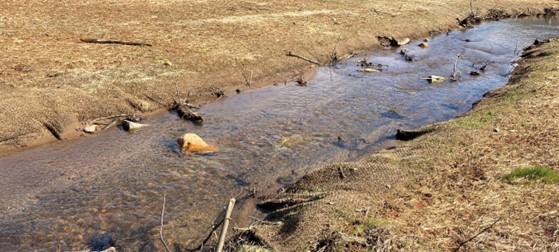
580 – Streambank and Shoreline Protection – Bioengineered Scenario
This is the most common 580 scenario that will be contracted when grading and installing woody vegetation on stream banks. This scenario would include bank grading, matting, and woody vegetation establishment (live stakes, plugs, rooted material, potted material, etc.) so do not plan 342 – Critical Area Planting below the top of bank grading. Also, do not plan 484 – Mulching where 580 is implemented, since the cost of matting is included in the Financial Assistance (FA) rate.
The 584 – Channel Bed Stabilization Structural scenario will be commonly contracted for in-stream structures alongside 580 Bioengineered. The 580 Bioengineered scenario includes any of the following:
- Benching/grading with Erosion Control Matting
- Tree Revetments
- Root Wads
- Vegetated Geogrids
The 580 Bioengineered scenario would not include the following:
- Structures in the channel (log or rock vanes, cross-vanes, wing deflectors, toe boulders, etc.). Contract 584 for in-stream structures.
This 580 Bioengineered scenario will be measured by the linear foot (LF) of bank treated. If both banks on a 100 LF reach of stream are treated then measure 200 LF of this practice. This can be applied on one or both banks.
580 – Streambank and Shoreline Protection – Structural Scenario
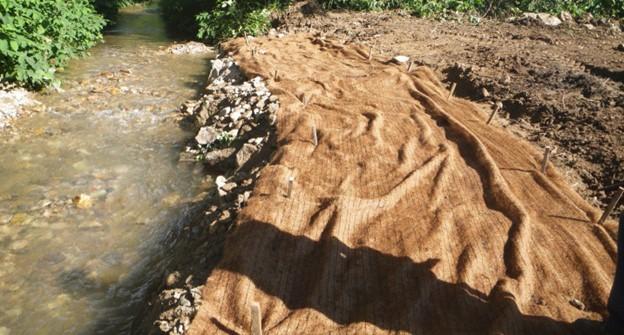
This 580 scenario may be contracted when installing rock structures for bank protection that do not meet the requirements of NRCS Practice Standard 584 - Channel Bed Stabilization (do not alter channel dimension or profile). The 580 Structural scenario may include any of the following:
- Rock vanes
- Rock spurs
- Boulder toe
- Any structural bank protection measures that do not alter channel dimension or profile.
The 580 Structural scenario will be measured by the ton of rock installed, therefore wood structures are not measurable. This scenario can be applied on one or both banks. There is no conversion factor for FA quantities.
Do not apply 580 Structural on any section of stream where Practice 584 is planned. These two practices must not overlap.
Do not apply 580 Structural and 580 Bioengineered on the same linear footage of stream bank.
580- Streambank and Shoreline Protection – Wood Structures
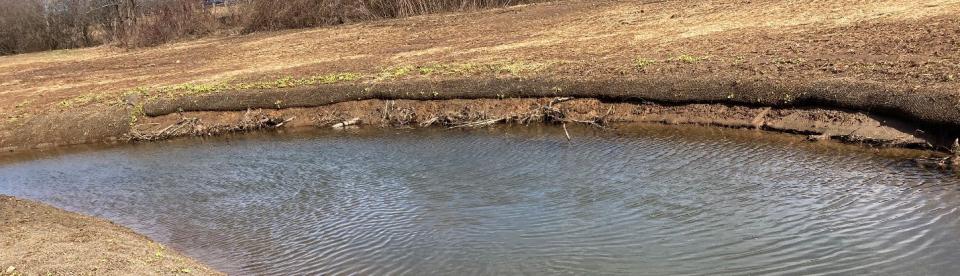
This 580 scenario may be contracted when installing toe wood or brush toe where dense woody material is installed and stabilized in the toe of a bank for enhanced roughness, bank protection, and habitat enhancement. This scenario may be planned, designed, and installed for banks in high shear stress locations such as the outside bank of meanders with lower radii of curvature. Payment for this scenario will not be made for low density wood installment where bare soil is exposed.
The 580 Wood Structure scenario will be measured by the linear feet of bank treated. This scenario cannot be planned along the same linear footage where any other 580 scenario is planned. 584 Channel Bed Stabilization may be planned in conjunction with this practice scenario.
584 - Channel Bed Stabilization
Structural - J-Hook, Cross-Vane, etc. Requiring Boulders Scenario
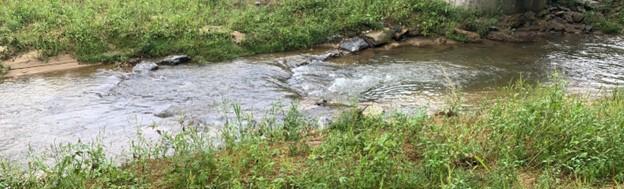
This practice may be used for installing rock or wood structures using natural stream channel design when the work meets NRCS Practice Standard 584 - Channel Bed Stabilization. To meet Practice Standard 584 channel dimension and profile will be altered in order to stabilize the system. This scenario does not include bank grading and woody vegetation establishment. Plan 580 Bioengineered or Wood Structure as described previously for bank grading, protection, matting, and vegetation establishment.
This scenario may only be contracted if the participant landowner owns both sides of the stream or if landowners of both banks of the stream are participating in NRCS programs.
The 584 Structural scenario may include any of the following boulder, log, or combination structures:
- J-Hooks
- Cross-vanes
- Step-pool sequences
- Wing Deflectors
- Brush runs
- Constructed riffle structures installed for the purpose of correcting dimension or profile
This scenario would not include bank grading and shaping, which is covered under 580 – Streambank and Shoreline Protection, therefore 580 may be planned according to this guidance document along the same footage of stream where 584 is applied.
This scenario will be measured by the linear foot of channel bed stabilized. Measurement will be from the upstream to downstream extent of the hydraulic effect of the structure(s) installed. Units are in stream length (do not double for both banks).
The length of 584 applied for a structure with up and/or downstream hydraulic influence and bank protection beyond grade control (J-Hook, Cross-Vane, Wing Deflector – downstream arm only, log vane, arch structure, some constructed runs, etc.) will be measured along the plan view as 1.5 times the length of the structure upstream and downstream plus the length of the structure itself along the bank. A series of structures may have overlapping effects and therefore will be measured from the upstream extent of the effect of the upstream structure to the downstream extent of the effect of the downstream structure. Constructed riffles (for the purpose of profile stabilization) and interlocking step-pool structures will be measured by the length of the actual structure with no upstream or downstream effect no matter how far up or downstream the structure affects the water surface profile.
FA is quantified by the cubic yard (CY). To convert from linear feet to cubic yards for this scenario, multiply the linear feet treated by 0.5 to get cubic yards. Example: 1,000 LF = 500 CY.
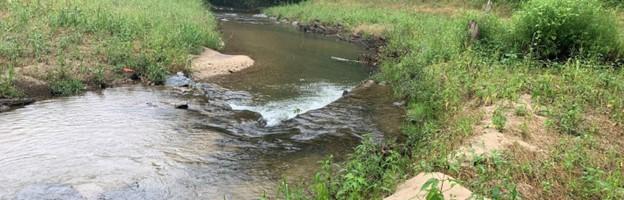
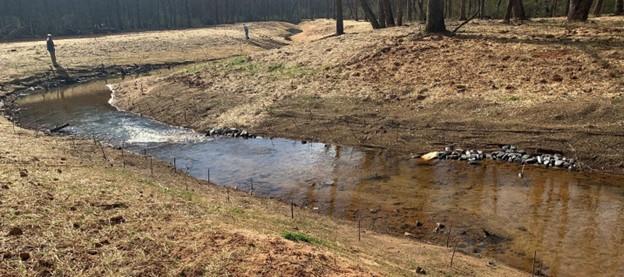
395 – Stream Habitat Improvement – Rock and Wood Structures Scenario
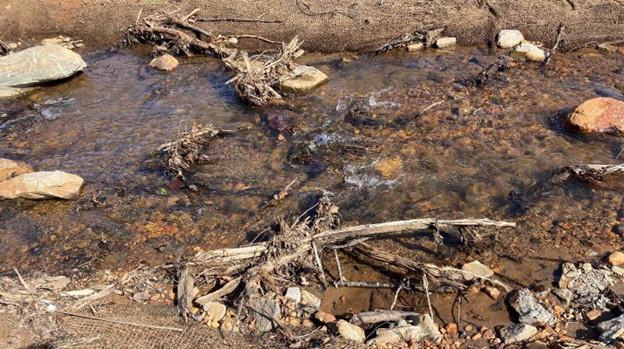
This practice may be planned where habitat enhancement features will be installed in the stream channel. The Rock and Wood Scenario would be the only scenario offered because the majority of this practice incorporates both materials.
395 may be contracted on the same linear feet of stream as 580 and 584 if the habitat enhancement features are separate and distinct from those features installed to stabilize the streambanks and channel bed. Habitat enhancement features shall be installed throughout the contracted reach with a minimum of one habitat enhancing feature in 50% of pools and/or riffles. Examples of habitat enhancement features include boulder clusters, cover logs, and other fish holding structures. Design report shall include applicable items found in current NRCS Conservation Practice Standard 395, PLANS AND SPECIFICATIONS section. Design drawings must show details and locations of planned enhancement features. Installation of habitat enhancement features may not be possible on smaller tributaries therefore should not be planned.
Payment will be calculated by the reach length x design riffle bankfull width. Reach length is defined from the most upstream enhancement structure to the most downstream enhancement structure if these structures are installed throughout the reach.
FA is quantified by the acre. To convert from linear feet to acres for this scenario, multiply the linear feet applied by the riffle bankfull width of the stream to get acres.
578 – Stream Crossing
Low Water Crossing Scenario
This 578 scenario should be planned where a standard cloth and gravel ford type crossing is needed and is the preferred type of stream crossing for most projects. If the stream bed is coarse, cloth and gravel may not be needed in the stream bed portion of the crossing. If this is the case, do not count the square footage of the crossing in the stream bed toward the contract. This practice is measure by the square foot.
Culvert Installation Scenario
This 578 scenario should be planned for any size and type of culvert unless the intent of the culvert is to meet the 396 Aquatic Organism Passage. If 396 is the goal please contact the Area Office staff for guidance. Quantity is based on diameter (inches) of the culvert x length (feet) of culvert; (ex. 30" culvert that is 40' long = 30 x 40 = 1200 in-ft.).
* Note – Contact NRCS Area Office Staff if any barrier to aquatic organism movement exists (dam, perched culvert, etc.) to see if any practice scenario is applicable to remove the barrier.
572 – Spoil Spreading Scenario
This practice may be planned when significant amounts of spoil are generated on projects with high banks. The practice is measured by the cubic yards of spoil generated from bank grading/benching that must be moved away from the stream corridor and stabilized. Do not plan this practice for any other earth moving activities other than bank excavation and spoil disposal. This practice is measured by the cubic yards of earth moved. Plan 342 Critical Area Planting along with this practice to stabilize the spoil.
Spoil spreading calculations must be presented to support payment quantities. Spoil quantities are excess spoil from bank grading that must be disposed of on site. Spoil material contracted may not be sold or hauled offsite.
342 – Critical Area Planting – Native and Introduced Vegetation – Moderate Grading Scenario
This practice will be implemented to establish herbaceous cover over areas disturbed during construction activities. Do not plan this item below top of bank where 580 is applied. This practice is measured by the acre.
612 – Tree/Shrub Establishment – Hand plant bare root hardwoods, no tubes Scenario
This practice will be implemented to establish a woody vegetative buffer on the terrace/floodplain. Approximate planting spacing is 12’x12’ grid. Do not plan this item below top of bank where 580 is applied. Use when a buffer with an average width of less than 35 feet will be established. This practice is measured by the acre.
612 – Tree/Shrub Establishment – Hand plant bare root hardwoods, with tubes, 300 per acre Scenario
This practice will be implemented to establish a woody vegetative buffer on the terrace/floodplain where wildlife or other concerns validate the need for tubes on the plantings. Approximate planting spacing is 12’x12’ grid. Do not plan this item below top of bank where 580 is applied. Use when a buffer with an average width of less than 35 feet will be established. This practice is measured by the acre.
391 – Riparian Forest Buffer – Bare root shrubs, 300 per acre, no tubes Scenario
This practice will be implemented to establish a woody vegetative buffer on the terrace/floodplain where the average width will be equal to or greater than 35 feet. Approximate planting spacing is 12’x12’ grid. Do not plan this item below top of bank where 580 is applied. This practice is measured by the acre.
391 – Riparian Forest Buffer – Bare root hardwoods, 300 per acre, with tubes Scenario
This practice will be implemented to establish a woody vegetative buffer on the terrace/floodplain where the average width will be equal to or greater than 35 feet and where wildlife or other concerns validate the need for tubes on the plantings. Approximate planting spacing is 12’x12’ grid. Do not plan this item below top of bank where 580 is applied. This practice is measured by the acre.
390 – Riparian Herbaceous Buffer – Pollinator Habitat
This practice will be implemented to establish pollinator habitat enhancement as a component of the vegetated stream buffer. There is no minimum width unless this practice is implemented specifically to maintain or improve water quality (ex. filter from concentrated livestock area, excessive erosion from crop field, or other identified source of pollution). If the practice is installed primarily to maintain or improve water quality then minimum buffer width shall be increased to 2.5 times stream bank full width.
This practice is measured by the acre. Do not plan 342, 612, or 391 on the same acreage as this practice.
Additional requirements: A minimum of nine (9) species MUST be included in the planting specification. Only two (2) grasses may be included in the prescribed seeding mix. At least three (3) species shall have their primary blooming period during each of the following time frames: Period 1: April 1 – June 15; Period 2: June 15 – July 31; Period 3: August 1 – October 31. The Planting Specification Worksheet and Native Pollinator Seed List OR a list that has been developed by an appropriate experienced professional (e.g., wildlife biologist, biologist, WRC biologist, entomologist, etc.; if in question, please contact the NRCS State Biologist) can be utilized to identify appropriate species for the site.
484 – Mulching – Erosion Control Blanket Scenario
This practice may be planned with 612 – Tree/Shrub Establishment or 391 – Riparian Forest Buffer. This practice could be used to mulch around desirable trees planted after removal of invasive plants on a section of stream bank with stable cross-section dimensions. Do not plan this practice on the same footage where 580 is planned. Do not plan this practice for extensive matting installation on the floodplain. This practice is measure by the square footage of area treated.
All NRCS practice standards and statements of work can be found on the eFOTG.
Application submittal
The appropriate signatory is listed in the fifth column to the right in the table below.
| Form/weblink | Form name or description | Relevance | Applicability | Signatory |
|---|---|---|---|---|
| NRCS-CPA-1155 | Conservation Plan or Schedule of Operations | Contract support document outlining estimated practice quantities and costs. | Grant Application | NRCS, Landowner |
| NRCS-CPA-1156 | Revision of Plan/Schedule of Operations or Modification of a Contract | Contract support document for modifications to original project scope. | Submit To DWR as soon as signed & completed | NRCS, Landowner |
| NRCS-CPA-1202 | Conservation Program Contract | Formal contract between a landowner/producer and the NRCS | Grant Application | NRCS, Landowner |
| WRDG Website | EQIP Eligible Practices Spreadsheet | Needed if non-eligible stream restoration practices are included in the 1155 form. | Grant Application | Applicant or Co-Applicant |
| WRDG Website | Official Resolution Template | Adopted by the governing board stating the amount of state aid requested and accepting the Applicant's responsibilities. | Grant Application | Applicant |
| WRDG Website | Resolution Affirmation Template | Affirms terms/ conditions of adopted Official Resolution for contractual purposes. | Grant Application | Co-Applicant |
| WRDG Website | No Conflict of Interest Certification Template | Members of project team have no conflict of interest with respect to the project. | Grant Application | Applicant, co-applicant |
| WRDG Website | No Conflict of Interest Policy Template | Agency’s written policies regarding conflicts of interest. | Grant Application | Applicant, co-applicant |
| Substitute W-9 Form | State of North Carolina Request for Taxpayer Identification Number | For registration in NC E- Procurement & State Accounting System | For Receiving Reimbursement Payments | Applicant, co-applicant |
Project close-out
Form/Weblink | Form Name or Description | Relevance | Applicability | Signatory |
|---|---|---|---|---|
N/A | Scaled Construction and As-built, Record or Red-line Drawings | Used to document completed project location & elements. | Grantee or Co-Grantee submits to DWR after project completion. | Project Engineer |
N/A | Practice Certification/Completion Forms | Summarizes project close out information. | Co-Grantee submits to DWR prior to project close-out. | Technical Service Provider |
NRCS-CPA 1245 | Practice Approval And Payment Application(s) | Used to calculate actual DEQ total reimbursement amount. | Co-Grantee submits to DWR with final reimbursement request. | NRCS, Landowner |
N/A | WRDG Close-Out Checklist | Used to summarize grant close-out information. | Co-Grantee submits to DWR with final reimbursement request. | Grantee, Co-Grantee or Technical Service Provider |