
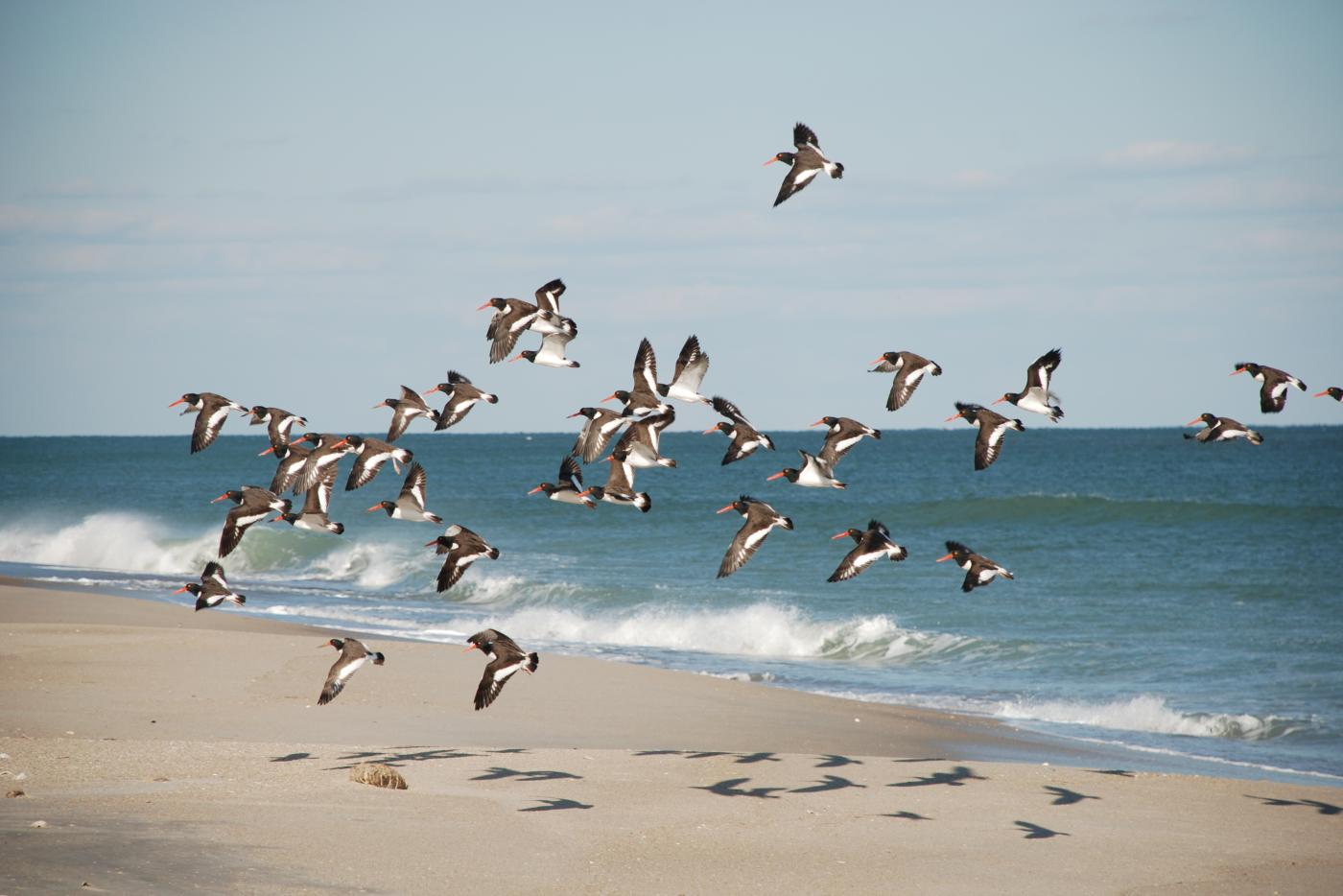
We're wrapping up an incredible year of research, education, training, and stewardship at our 10 North Carolina Coastal Reserve & National Estuarine Research Reserve sites.
The N.C. Coastal Reserve & National Estuarine Research Reserve is a program of the N.C. Division of Coastal Management, a division of the N.C. Department of Environmental Quality. The N.C. National Estuarine Research Reserve is managed through a federal-state partnership between NOAA and the N.C. Division of Coastal Management. The Reserve is a network of 10 protected sites established for long-term research, education, and stewardship. This program protects more than 44,000 acres of estuarine land and water, which provides essential habitat for wildlife; offers educational opportunities for students, teachers, and the public, trainings for professionals; and serves as living laboratories for scientists. The N.C. Coastal Reserve sites are open to the public and visitor information can be found on the reserve site pages.
Highlights:
The Division of Coastal Management celebrated the 40th anniversary of N.C.’s National Estuarine Research Reserve this year, designated by the state and NOAA to protect special places in N.C. including the Currituck Banks, Rachel Carson, Masonboro Island, and Zeke’s Island Reserves. This designation inspired the state to later create the N.C. Coastal Reserve which is authorized by the N.C. Coastal Area Management Act.
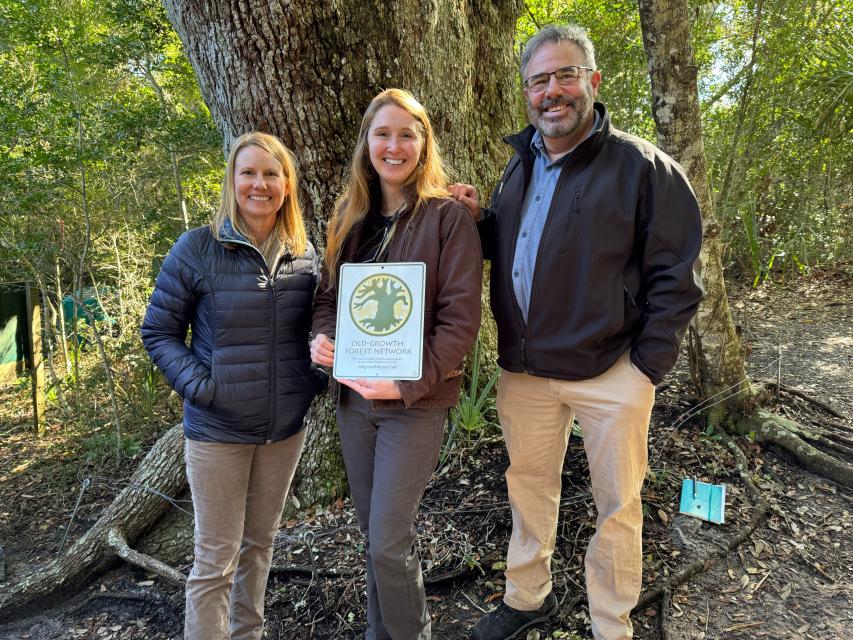
The Bald Head Woods Reserve was recognized as an old growth forest by the Old Growth Forest Network at a ceremony in January 2025. The Old Growth Forest Network is a national network of protected, old-growth, native forests that are publicly accessible for all to experience and enjoy. This designation complements the site’s protection as a Coastal Reserve and Dedicated Nature Preserve. Partners from the Village of Bald Head Island, Bald Head Island Conservancy, Natural Heritage Program, volunteers and advisory committee members attended the brief ceremony and short hike through the woods.
Education
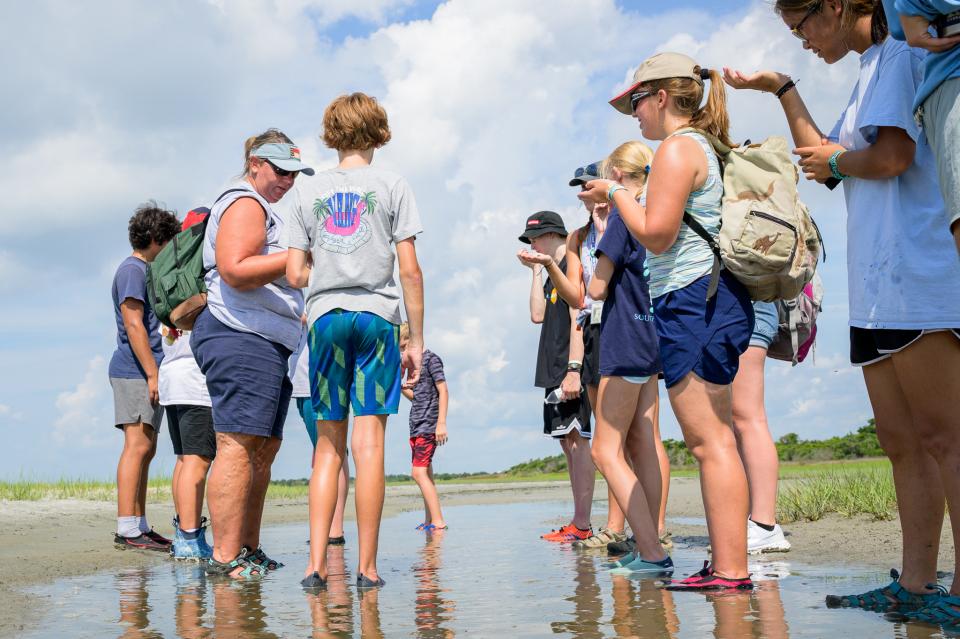
Students and educators experience coastal and estuarine ecosystems firsthand as school groups visited Reserve sites for nature hikes and field experiences to learn about estuaries through programs aligned with their grade’s teaching standards. Students from Carteret, Onslow, and Craven Counties traversed the Rachel Carson Reserve, and the Masonboro Island Explorers program hosted fifth-grade students from New Hanover County in partnership with Masonboro.org and Carolina Ocean Studies.
This year:
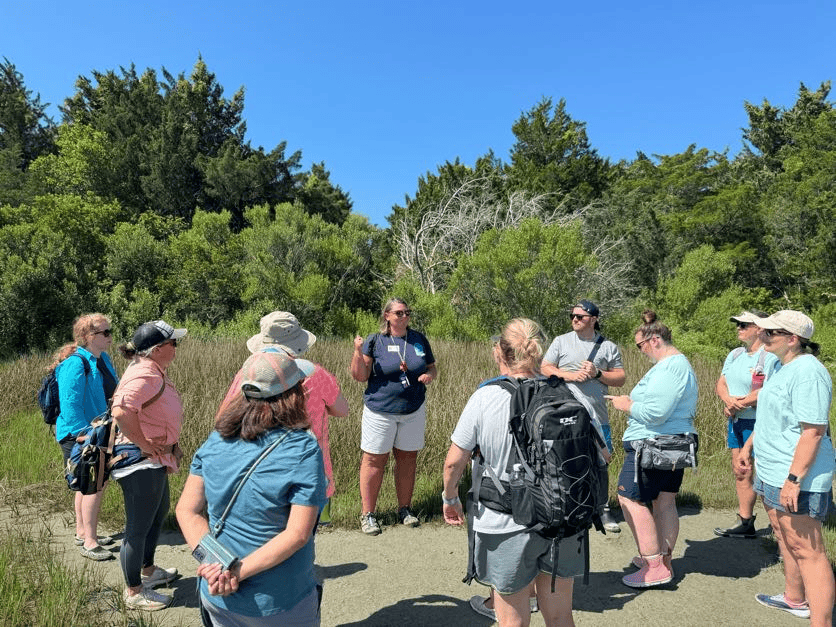
- The Reserve served 3,114 K-12 students through our programs.
- The Reserve served 847 K-College students at the Beaufort office and the Rachel Carson Reserve.
- 2,267 of these students are 5th graders from New Hanover County who visit the Masonboro Island Reserve via the Island Explorer Program.
- 56 students attended Reserve summer camps this year. Rising first through tenth graders learned about estuaries and experienced estuarine habitats, and plants and animals through hands-on experiences at the Rachel Carson Reserve and in the laboratory to increase understanding and appreciation of coastal resources. Camps are conducted in partnership with the N.C. Maritime Museum in Beaufort.
- The Reserve provided workshops, outreach, and trainings for 104 educators this year. Thirteen Carteret County teachers took part in Teachers On The Estuary, or TOTE, exploring coastal habitats at the Rachel Carson Reserve, learning about local research projects, and conducting curricular activities for use in the classroom. TOTE is a teacher education program implemented at all 30 reserves in the National Estuarine Research Reserve System. Twenty-eight pre-service teachers took part in a virtual Coastal Explorations workshop to learn about estuaries and ways they can incorporate estuarine science into their classrooms.
- 64 people joined us on our summer public field trips to the Rachel Carson Reserve.
- We reached 160 people in our community during outreach for our local partners.
Stewardship
The stewardship program is dedicated to protecting the Reserve’s natural resources for research and education. Long-term monitoring and resource management of the Reserve serve as models of responsible practices for other organizations, agencies, and coastal communities. Site Steward volunteers help monitor Reserve sites. The Reserve’s Site Stewards Volunteer Program significantly enhanced the program’s capacity in managing the Currituck Banks, Kitty Hawk Woods, Buxton Woods, Rachel Carson, Masonboro Island, and Bird Island Reserves this year.
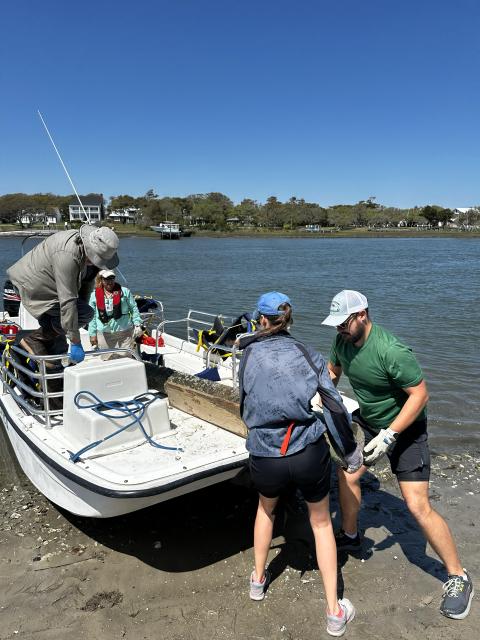
Reserve volunteers contributed over 1,273 hours of stewardship work at Reserve sites. The value of this to the Reserve is equivalent to $42,021.73! Site Stewards observe and record data in the field and report findings back to Reserve staff. Information collected is related to general site conditions, marine debris items, visitor issues, infrastructure damage, and species found at the site. Thank you to our volunteers!
- Volunteers removed 500+ pounds of marine debris from Reserve sites.
- There are two success stories for the Rachel Carson Reserve foals that were removed from the island due to being mortally ill in 2024 and 2025:
- The 2024 foal removed from RCR was adopted to a loving family in Kentucky through Renaissance Equine Rescue and Welfare.
- The mortally ill foal removed in 2025 is now thriving at Renaissance. Thanks to Brandt Animal Foundation, Friends of the Reserve, and Renaissance for supporting this effort.
Community Science
Chronologs are photo stations in natural areas that create crowd-sourced time lapses that monitor the environment and engage communities in science. Check out our video to learn more! The Reserve has seven Chronolog stations, one at each of the following reserve sites: Currituck Banks, Bird Island, Masonboro Island, Buxton Woods, Zeke's Island, Rachel Carson, and Kitty Hawk Woods Reserves. There were 504 total Chronolog contributors in 2025.

Research
The Reserve sites serve as living laboratories to support coastal research and long-term monitoring, and as facilities for on-site staff, visiting scientists and graduate students. They also serve as reference sites for comparative studies on ecosystem dynamics, human influences on estuarine systems, habitat conservation and restoration, species management, and social science.
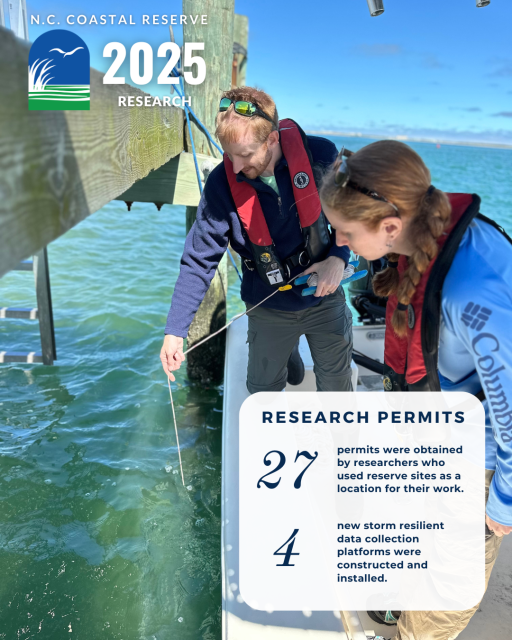
In 2025, 29 research permits were issued to nine different partner organizations. The research conducted on reserve sites informs understanding and management of coastal resources.
Nearly 40 experts provided input to inform habitat resilience plans for the Masonboro Island and Zeke’s Island Reserves at two workshops this year. Attendees at both workshops participated in brainstorming exercises to address habitat vulnerability. The Masonboro Island Reserve workshop yielded a robust list of 41 research and monitoring needs to foster future resilience at the site. Products from the Zeke's Island Reserve workshop are under development. Results from the workshops will inform future research and monitoring, restoration/enhancement, and partnership activities as environmental conditions change.
Training & Engagement
This year the Reserve’s training and engagement staff offered workshops and partner engagement meetings for decision-makers throughout coastal North Carolina, this included:
- Providing trainings for 202 real estate professionals throughout coastal N.C. focused on barrier island development rules, living shorelines, and water quality protection. These events were held in partnership with Cape Fear Realtors, Brunswick County Association of Realtors, and Outer Banks Association of Realtors. Permitting considerations were presented by DCM regulatory staff at these workshops. Real estate workshop evaluations reflect the participants' new awareness of these issues, that they will share this information with their clients, and that these trainings should be mandatory for all agents selling property along our coast.
In December, Training and Engagement (TE) Coordinators from across the National Estuarine Research Reserve System (NERRS) came to the N.C. Reserve in Beaufort for their annual meeting. All 30 NERRs have a TE Coordinator, and this gathering was a chance to connect, learn, and strengthen their collective work.
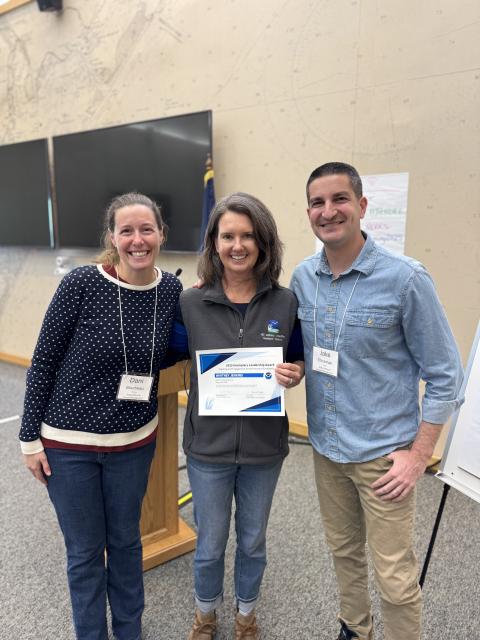
- From boat trips with dolphins and feral horses to learning about the Town of Beaufort’s coastal resilience work, the group collaborated on real estate agent outreach and created a facilitation activity guidebook to strengthen trainings across the NERRS.
- And a big congratulations to N.C. Coastal Reserve TE Coordinator, Whitney Jenkins, who received the TE Sector Award of Excellence for Exemplary Leadership at the meeting! This award reflects her dedication and impact both locally and nationally.
Scuppernong Engagement Strategy Informs Regional Water Management Study
For the past three years, a collaborative team led by Reserve has partnered to develop the Scuppernong Engagement Strategy to support local engagement for the Scuppernong Water Management Study, which was funded by the Division of Water Resources’ Water Resources Development Grant Program. The Study was requested by local governments and land managers to help with water related issues in the Albemarle-Pamlico region. The Engagement Strategy, funded by the NOAA Digital Coast Partnership, directly benefited residents and communities in the watershed by listening to their concerns and gathering detailed input on where flooding occurs, how it affects them, and what solutions they believe could work. This information was essential for grounding the scientific Watershed Management Study in the actual experiences of the people who live there and for addressing the lack of trust that some residents have in government processes.
The engagement work helped build stronger relationships among watershed residents, local governments, and regional agencies, creating more understanding and support for solutions that will eventually be implemented on the ground.
The team included Whitney Jenkins, Training and Engagement Coordinator, and Woody Webster, Buckridge Reserve Site Manager, both with the N.C. Coastal Reserve, Stacey Feken with the Albemarle Pamlico National Estuary Partnership, and Lora Eddy with The Nature Conservancy.
Read more at this link.
None of this work happens alone. As we move into 2026, we are grateful for the volunteers, partners, educators, researchers, and community members who support the Reserve’s mission every day. Together, we look forward to another year of collaboration, discovery, and stewardship across North Carolina’s coast.