
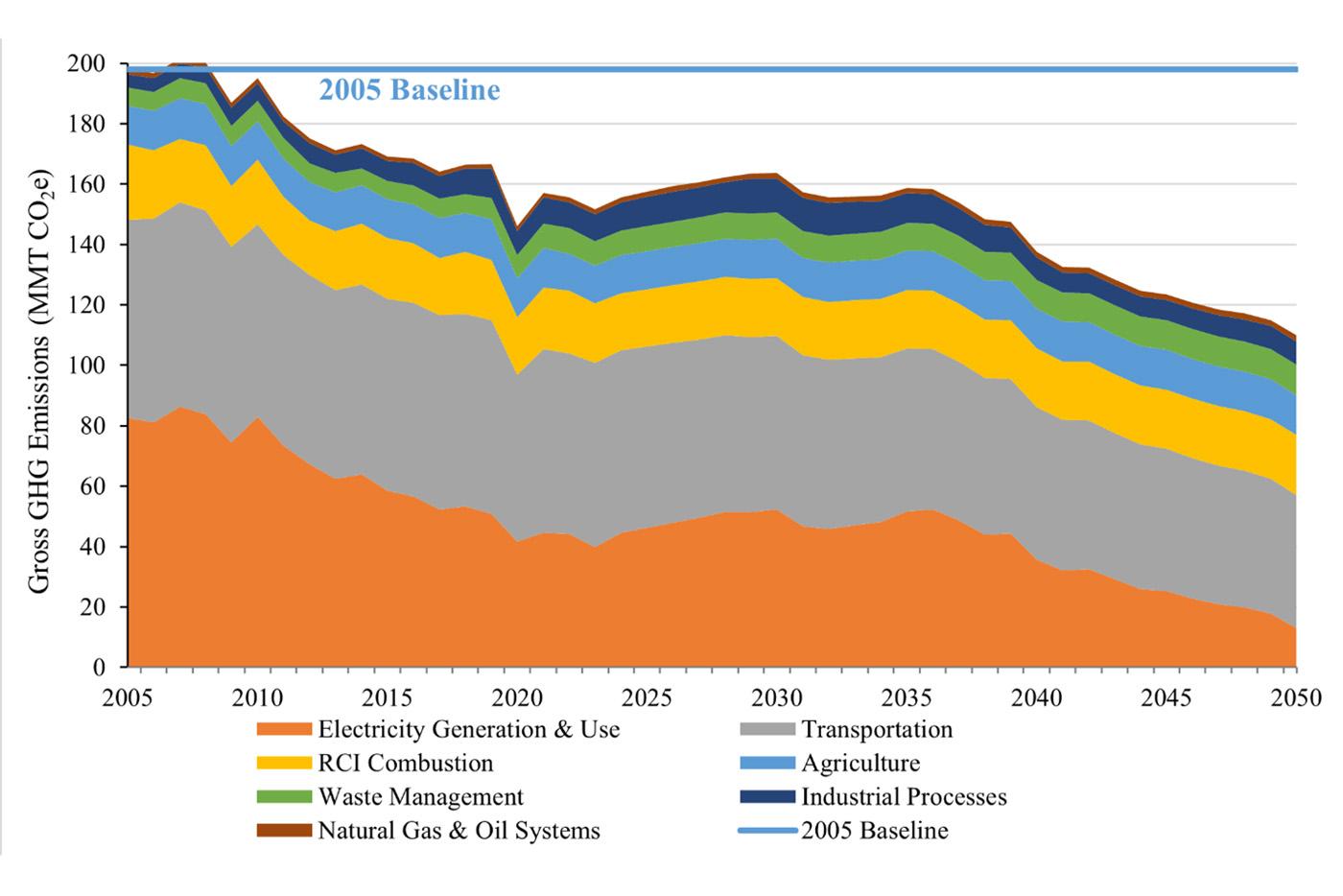
North Carolina’s annual greenhouse gas emissions are now at their lowest levels in decades. However, forecasts indicate that increased reliance on natural gas and coal for electricity generation could temporarily offset these gains in the coming years.
The North Carolina Department of Environmental Quality (DEQ) has released an update to the state’s greenhouse gas inventory. The comprehensive report contains detailed estimates of greenhouse gas emissions in key source categories from 1990 to 2022 (the most recent year for which historical data are consistently available) and projects emissions through 2050.
“This report shows that common sense policies to reduce our state’s carbon emissions have succeeded while our economy has flourished,” said DEQ Secretary Reid Wilson. “We know that the demand for energy is growing. This inventory and the recent interim report from Governor Josh Stein’s Energy Policy Task Force underscore the need to redouble efforts to keep greenhouse gas emissions trending downward and transition our state to a clean-energy economy that produces thousands of high-quality jobs.”
The inventory found that between 2005 and 2022, North Carolina reduced gross greenhouse gas emissions by approximately 21% and net emissions (which account for all carbon absorbed by natural lands) by 30%. Emissions fell even as North Carolina's population grew 23% and real Gross State Product increased 38% during the same time.
Emissions peaked in 2007 and began to decline rapidly after 2010 due to electricity generation migrating away from coal toward natural gas and renewable energy sources and overall reductions in fossil fuel combustion. Also, federal fuel and engine standards have brought down emissions from cars and trucks.
Net emissions are projected to increase 7% between 2022-2030 before beginning to drop again through 2050. The increase is largely driven by new forecasts from Duke Energy showing an increase in burning natural gas and coal.
DEQ’s Division of Air Quality produces and updates the inventory every two years. Other key findings in this year’s update:
- The largest contributor to the state’s carbon footprint continues to be the transportation sector, which in 2022 accounted for 39% of the state’s gross emissions.
- Forests, natural lands and agricultural lands absorbed an estimated 32% of the state’s gross emissions in 2022.
- With the exception of 2020’s emissions, which decreased due to effects from the pandemic, emissions in 2022 were the lowest on record since 1994.
For this inventory, DEQ staff updated emissions estimates for all sectors and significantly refined inventory methods for certain sectors. These updates include incorporation of newly available data and EPA methodologies. For this reason, DEQ cautions against directly comparing the findings in this updated inventory to those in DEQ’s previous inventories.
This year’s inventory update does not factor in potential emission increases from EPA’s recent repeal of all greenhouse gas emissions standards for cars and trucks, announced Feb. 12.
Policymakers and planners can use the inventory to understand past, current and expected future greenhouse gas emissions. It can also be used as a baseline to evaluate and develop mitigation options and predict their effect on reducing emissions in future years.
This inventory update also supports North Carolina’s Climate Pollution Reduction Grant program to identify and prioritize actions to reduce greenhouse gas emissions and absorb carbon from the air.
The full state greenhouse gas inventory, executive summary and quick facts infographic are available online at deq.nc.gov/GHGinventory.
Pictured: Chart of gross greenhouse gas emissions trends by source sector, 2005-2050.