
Call For Entries!
DEQ's Division of Air Quality (DAQ) invites seventh-grade students to participate in the annual AQ-IQ Contest. Students create a project that highlights an air quality issue and provides a solution to that issue. The projects can be a poster, an artistic project, a video, or a web-based project, and students can work independently or in groups of up to four.
The project puts students in the role of presenting the information, which is one of the most effective ways to learn. The contest is correlated with the N.C. Department of Public Instruction Essential Standards in Science, Technology, and Social Studies.
Learn more about the AQ-IQ Contest
Any seventh-grade student in North Carolina may participate. We encourage students to work in small groups and find an adult sponsor (teacher, parent, etc.).
You can register and submit a project by completing our online Entry Form.
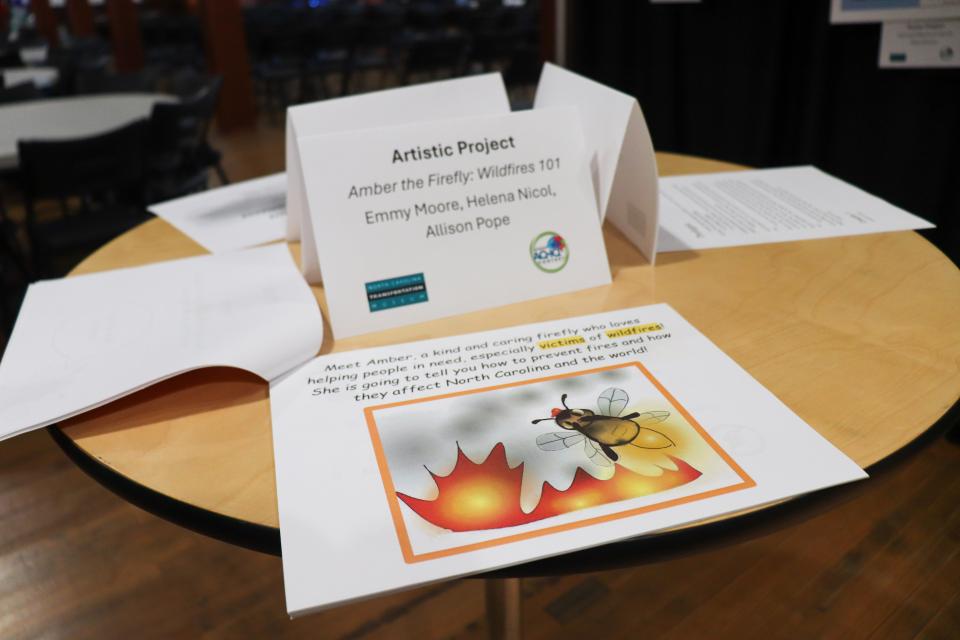
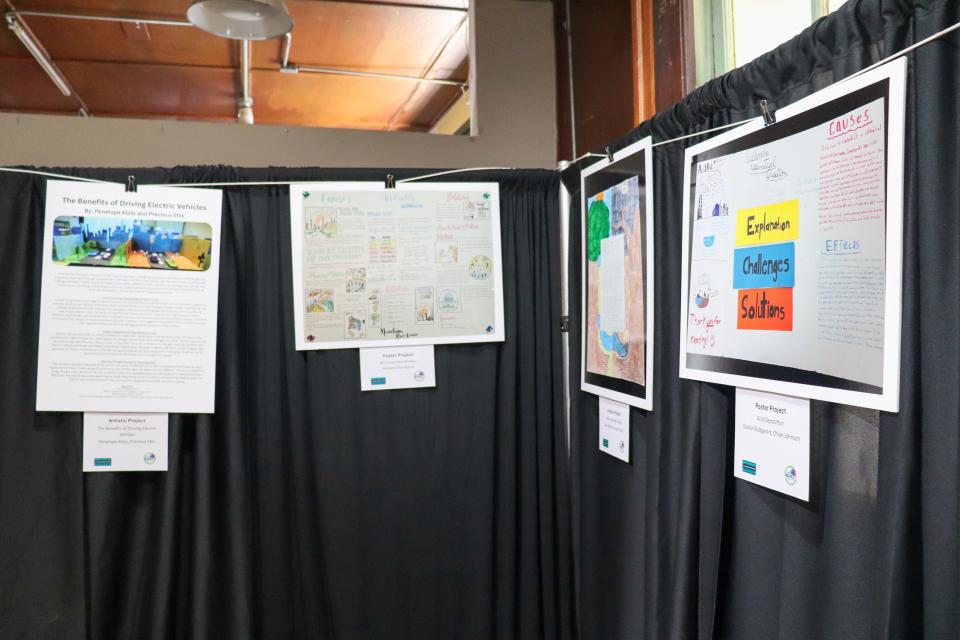
Projects usually fall into four categories, including but not limited to:
- Poster
- Web-based (website, online games, Minecraft creations, etc.)
- Artistic/creative
- Video
Projects are evaluated based on their facts, quality and creativity.
All submissions are accepted through the online form through our Entry Form and can be submitted anytime from now through the due date.
Due date for the 2026-2027 contest is March 8, 2027.
Each year the AQ-IQ Contest highlights special topic areas with additional recognition because they highlight current air quality challenges, successes, and educational goals. The Division of Air Quality will recognize the best project in the three categories at the State Recognition Ceremony in July 2027.
Special Categories for the 2026-2027 contest!
From the Directors Office: 25 years of the NC Clean Smokestacks Act - Celebration is near! On June 20, 2027, we will be celebrating 25 years of the NC Clean Smokestacks Act. The NC Clean Smokestacks Act was created to cut air pollution from the state’s coal fired power plants. This helped create cleaner air, removed haze from the Blue Ridge and Smokey Mountains, and improved the health of all North Carolinians. Help us celebrate clean air through your project.
Camera, Lights, Action, Sing! - Air pollution in song and film – We’re looking for projects that bring all the drama to the big DEQ screen. Whether you are singing an original air quality song, acting out a skit about an air quality challenge, or filming your own air quality news, we want to see all your creativity and learn about how we can work to keep the air clean for all.
Wildfire Smoke: Impacts of on air quality and health – Cough. Cough. "Did you know wildfire smoke can travel far beyond the location of the fire?" Explore how wildfire smoke is made, investigate how it changes the air quality as it travels, and discover why certain pollutants can pose risk to human health.
Air Quality Acronyms – Give me a “A”, Give me a “I”, Give me a “R”, what does that stand for? AIR. This special topic explores acronyms commonly found in an Air Quality specialist’s vocabulary. From AQI, PM2.5, PM10, and NAAQS, there are many acronyms used to help scientists and communities understand what’s in the air, and how it affects health and the environment. Explore the meaning of one, or a few, of these acronyms and develop your own creative way to help others understand these important air-quality terms.
Why should I participate in the AQ-IQ Contest?
Hear it straight from fellow TEACHERS
who have brought AQ-IQ into their classrooms!
Check out what STUDENTS have to say
including tips, tricks and what made the experience unforgettable.
2026 State Recognition Ceremony
The North Carolina Division of Air Quality is excited to announce the winners of the 2026 AQ-IQ Contest! These winners from across the state embody the creativity and innovativeness the AQ-IQ contest strives for. Congratulations to those students!
2026 AQ-IQ Recognition Ceremony
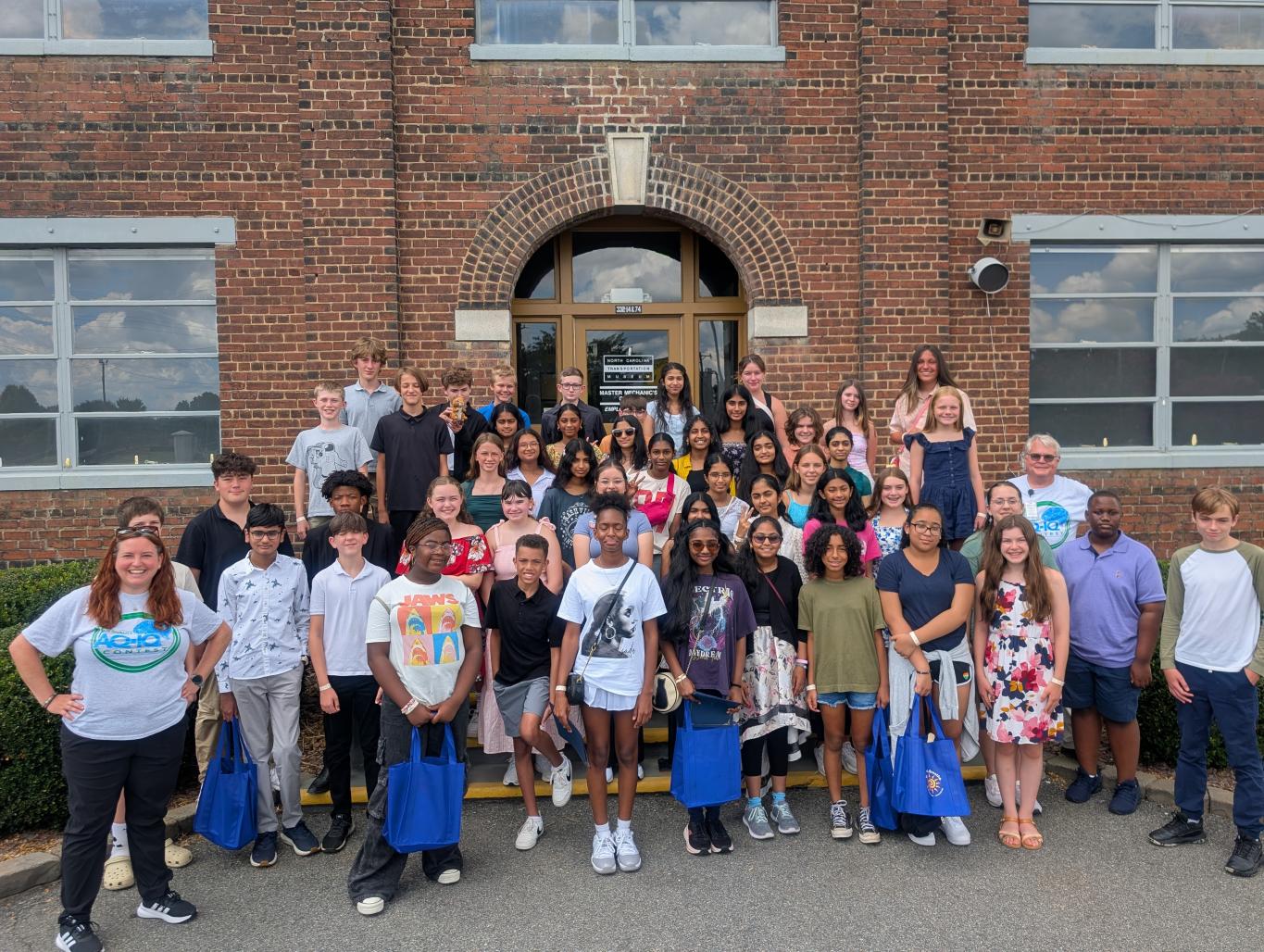
Students from across North Carolina gathered at the North Carolina Transportation Museum in Spencer to be recognized for their AQ-IQ projects. Students won awards for best poster, video, artistic, and interactive projects in the state. Congratulations to all of this year's winners!
Recognition Ceremonies
Students who’s projects are judged as the highest in their region are recognized at their regional level by receiving certificates and small award packages. These are delivered via mail or in-person drop off. The NC DAQ team takes requests to provide in-person awards during end-of-year presentations. Just ask!
Depending on the number of statewide entries, a larger statewide AQ-IQ award ceremony may be held in June or July. Location and specific date to be announced. In general, entries will compete against other entries from their regions. However, the best regional projects may then be evaluated in the statewide AQ-IQ Contest for a statewide award.
Contact
Feel free to reach out with questions!
Keith Bamberger (Western North Carolina)
keith.bamberger@deq.nc.gov
828-296-4553
Janina Millis (Eastern and Central North Carolina)
janina.millis@deq.nc.gov
919-707-8710
General Contact
air.awareness@deq.nc.gov
919-707-8400
North Carolina Standards
The AQ-IQ Contest has been modified to be an excellent asynchronous distance learning activity, and is correlated with the N.C. Department of Public Instruction Essential Standards in Science, Technology, and Social Studies.
- 7.P.2: Understand forms of energy, energy transfer and transformation and conservation in mechanical systems.
- 7.E.1: Understand how the cycling of matter (water and gasses) in and out of the atmosphere relates to Earth’s atmosphere, weather and climate and the effects of the atmosphere on humans.
- 7.SI.1: Evaluate information resources based on specific criteria.
- 7.TT.1: Use technology and other resources for assigned tasks.
- 7.G.1: Understand how geography, demographic trends and environmental conditions shape modern societies and regions.
- 7.E.1: Understand the economic activities of modern societies and regions.