
Never place rechargeable batteries in trash or recycling carts
Lithium-ion batteries power many of the rechargeable devices we use every day. These batteries don’t belong in the trash or recycling. They can spark dangerous fires at facilities and in trucks. Always take them to a designated drop-off location.
What types of batteries are lithium-ion?
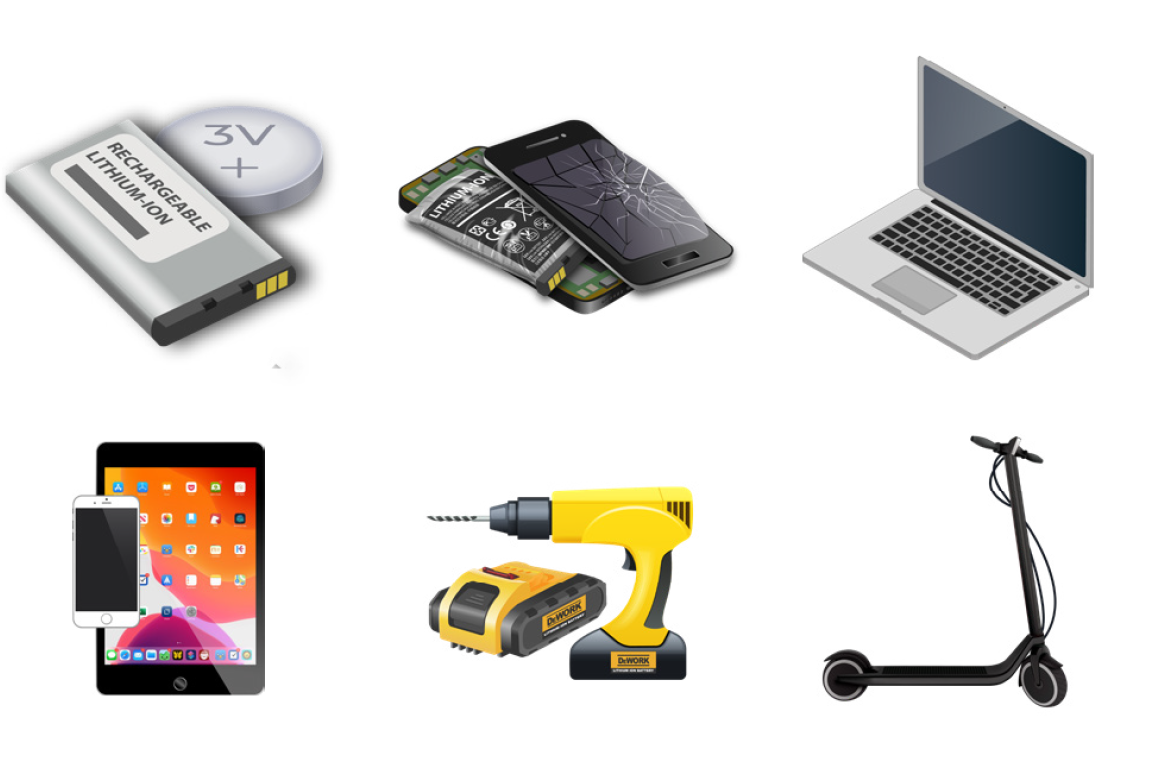
Lithium-ion batteries power many of the rechargeable devices we use every day, such as:
- Cellphones, tablets and laptops
- Smartwatches
- Wireless headphones
- Smart home devices
- Power tools
- Electric scooters and bicycles

Importance of Proper Battery Management
truckloads contain a lithium-ion battery
Rechargeable batteries cause fires in sanitation and recycling trucks. To keep workers safe, skip the bin and turn your batteries in.1
of battery materials are manufactured in the US
Recycling lithium-ion batteries provides a domestic source of critical minerals like lithium and cobalt, supporting energy independence.2
- 2
Less than 1% of lithium, nickel, cobalt, and manganese produced globally in 2020 were from the US (US Geological Survey)
of US lithium deposits are located in NC
North Carolina is home to 80% of the natural lithium deposit in the US. Recycling lithium-ion batteries helps preserve the Appalachian Mountains by reducing lithium mining.3