
Lithium-Ion Battery Management for Businesses
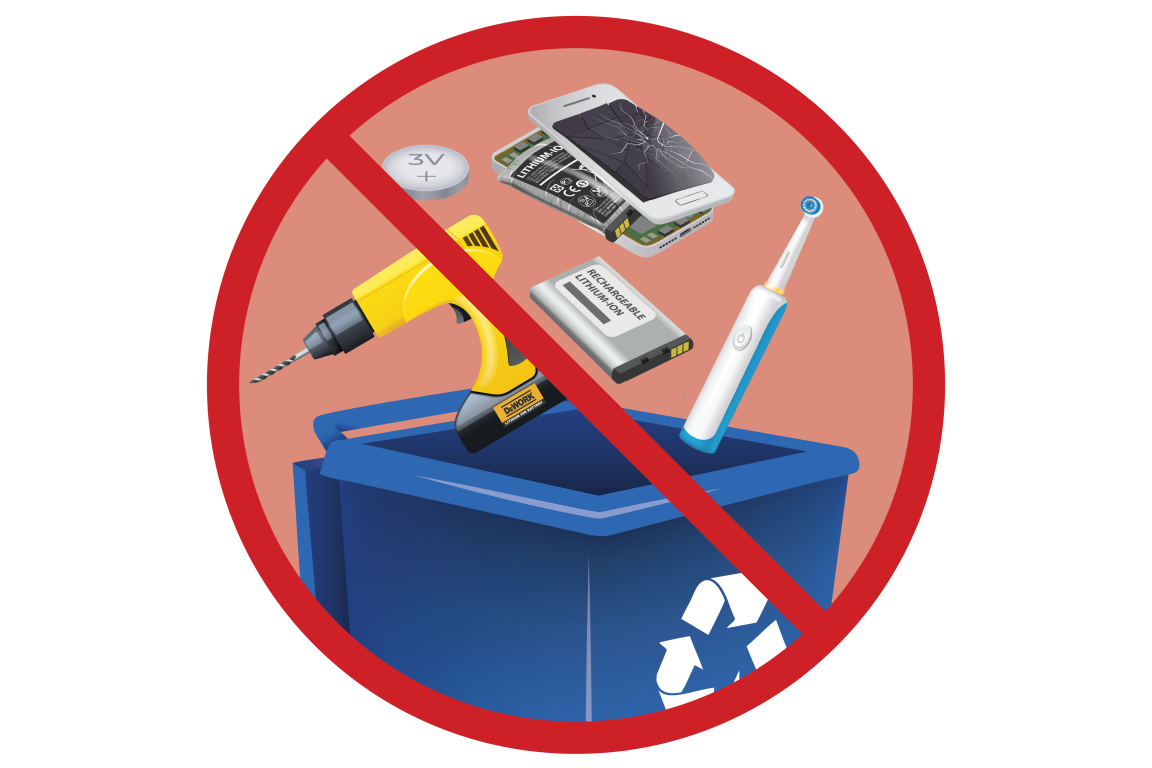
Lithium-ion batteries power many of the rechargeable devices used in workplaces today. These batteries should continue to be managed separately from trash and other discarded materials due to their fire risk and potential to cause damage during transportation and processing. Beginning December 1, 2026, lithium-ion batteries will be banned from landfill disposal in North Carolina under G.S. 130A-309.10.
This page is designed to help businesses understand how the landfill ban may apply to their operations, evaluate their current battery management practices, and identify appropriate pathways for the collection and management of lithium-ion batteries.
Lithium-ion Battery Guidance for NC Businesses
Beginning December 1, 2026, lithium-ion batteries will be banned from landfill disposal in North Carolina under G.S. 130A-309.10.
Businesses and organizations should begin preparing now to safely identify, collect, store, and recycle lithium-ion batteries generated through daily operations. The battery ban will apply to all lithium-ion batteries discarded within the state. If your business uses lithium-ion batteries, including in electronic devices and rechargeable tools, you will need to prepare to recycle these batteries at the end of their useful life.
The landfill ban applies to businesses and organizations that:
- Generate used lithium-ion batteries
- Sell battery-powered products
- Collect batteries from customers or employees
- Store batteries onsite
- Manage electronic waste
- Transport batteries
- Handle damaged or defective batteries
Examples include:
- Retail stores
- Warehouses and distribution centers
- Offices and commercial buildings
- Property management companies
- Manufacturers
- Construction contractors
- Healthcare facilities
- Electronics repair businesses
- Automotive and e-bike businesses
Many companies in the southeast collect, sort, process, or recycle lithium-ion batteries. Find contact details and other business information on the NC Recycling Markets Directory. The directory allows you to search by material type or company name. Results will be shown on a map to easily identify the closest solutions along with more details on what each company takes and how to contact them. If you're a vendor or company providing these services and interested in expanding in North Carolina, connect with the RBAC team and explore our grant opportunities. Find more information on our Recycling Business Development Grant page.
Mail-in and store drop-off options: These companies will send DOT-approved packaging for users to mail batteries to a recycler. They also have established drop-off sites at retail locations.
Hazardous and universal waste vendors: These vendors can work with a business to collect or receive these types of materials including batteries.
- Lighting Resources LLC
- Republic (Eco-flo)
- MXI
- Cleanlites
- Heritage-Crystal Clean
- Triumvirate Environmental
Electronics recyclers: Residents and businesses can send batteries still in their respective devices to these companies for disassembly and recycling.
Battery recyclers: These companies break batteries down into their component parts for reuse or recycling. They can extract rare earth metals, known as black mass, to manufacture new batteries.
Businesses are encouraged to begin preparing before the ban takes effect.
Recommended Preparation Steps
- Identify where lithium-ion batteries are generated onsite
- Separate batteries from trash and recycling containers
- Establish designated battery collection areas
- Review battery recycling or pickup options
- Train employees to identify lithium-ion batteries
- Develop procedures for damaged or swollen batteries
- Review fire prevention and emergency response procedures
- Evaluate storage containers and signage needs
- Coordinate with waste haulers, recyclers, or vendors
Storage and Handling Considerations
Improper handling and disposal of lithium-ion batteries can create serious fire risks. Businesses should review safe storage and handling practices for batteries generated onsite.
General Best Practices:
- Store batteries in a dry, cool location away from heat sources
- Keep batteries out of regular trash and recycling containers
- Protect battery terminals when appropriate
- Avoid crushing, puncturing, or damaging batteries
- Separate damaged, defective, or recalled batteries from intact batteries
- Use approved or recommended collection containers
- Limit accumulation in high-traffic areas
- Ensure employees know reporting and response procedures
Damaged, Defective, or Recalled (DDR) Batteries
Damaged, defective, or recalled lithium-ion batteries may present elevated fire and safety risks and may require special handling, packaging, transportation, or recycling procedures.
Examples may include batteries that are:
- Swollen or bulging
- Overheating
- Smoking or leaking
- Physically damaged
- Recalled by manufacturers
Businesses managing DDR batteries should consult appropriate recycling, transportation, or safety guidance before disposal or shipment.
Catalogue your battery type(s). Smartphone, laptop, e-bike, power tool and other batteries have different volumes, formats, and scrap values. Understanding what you have helps you match with the right recycler.
Plan for safety first. Store batteries in a cool, dry location away from flammable materials. Tape terminals and use anti-static bags or fire-resistant containers to reduce fire risk.
Assess your volume. High-volume, consistent streams may attract recyclers who will pay or pick up. Low or irregular volumes may be better suited to mail-in programs or dropping them off at a local recycler.
Build the cost in. If recycling carries a fee, consider how to incorporate it into your pricing or operating budget, rather than treating it as an unexpected expense.
Use the NC Recycling Markets Directory. Search recyclingmarkets.deq.nc.gov to find battery recyclers near you.
Contact RBAC for guidance. The NC DEQ Recycling Business Assistance Center provides free assistance to businesses navigating recycling and waste reduction. Contact us!
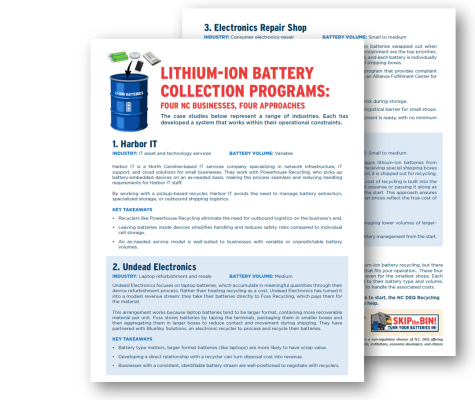
Four small businesses share their approaches to recycling lithium-ion batteries in advance of the battery ban. This case study provides an overview of their collection, handling, and storage practices.
The businesses profiled here each arrived at a workable solution by identifying a recycler or program suited to their battery type and volume, establishing a consistent collection and storage routine, and deciding how to handle the associated costs. Their experiences demonstrate that responsible battery recycling is achievable, even for the smallest shops.
Download the full case studies to learn more.
Additional Information
Are batteries inside devices included in the ban? Yes. Devices containing lithium-ion batteries should not be placed in the trash or recycling if the battery remains inside the device.
Are alkaline batteries included in the ban? No. This landfill ban specifically applies to lithium-ion batteries.
Can businesses use retail drop-off programs? Some retail programs may accept certain rechargeable batteries, but acceptance policies, quantities, and battery types vary by location.
What if my business only generates a small number of batteries? Even small quantities of lithium-ion batteries should be managed separately from trash and recycling streams.
Can lithium-ion batteries go into scrap metal containers? No. Batteries should not be mixed with scrap metal or placed loose into metal containers where damage or short-circuiting may occur.
What should we do with damaged or swollen batteries? Damaged batteries should be isolated from other materials and managed carefully due to elevated fire risk. See "What Can Businesses Do Now?" section above for more information about damaged, defective, or recalled batteries.
How should vapes be handled? Vapes require special management due to the presence of vaping liquids. Check with your hazardous waste vendor to determine if they can accept vapes and how they should be collected. Find more information about vapes:
Do employees need training? Businesses may benefit from training employees on battery identification, handling, storage, and emergency procedures.
You may have options for how you choose to manage lithium-ion batteries at your company. The following tool helps businesses determine how lithium-ion batteries generated, collected, stored, transported, or managed at their facility may be affected by North Carolina’s 2026 landfill disposal ban.
You can view this tool as a
North Carolina DEQ Resources
EPA Guidance
EPA Used Lithium-Ion Batteries Guidance
Includes handling, storage, transport, and worker safety guidance for businesses.
Recycling Facility & MRF Guidance
- Lithium-Ion Battery Management Guide for Materials Recovery Facilities (MRFs)
Guidance for MRF operators on establishing practices to identify, remove, store, and safely manage lithium-ion batteries that enter recycling facilities.
Safety & Fire Prevention
Raleigh Fire Department
Useful plain-language fire safety content about lithium-ion batteries.
ReadyNC
Safety tips for household and electric vehicle lithium-ion batteries.- National Waste & Recycling Foundation's 'Skip the Bin!' Campaign
National campaign materials, outreach graphics, and facts about battery safety.
Shipping Restrictions & Guidance
US DOT Battery Transportation Guidance
Detailed resources and guidance for transporting batteries for recycling.