
Lithium-ion Battery Environmental Impacts
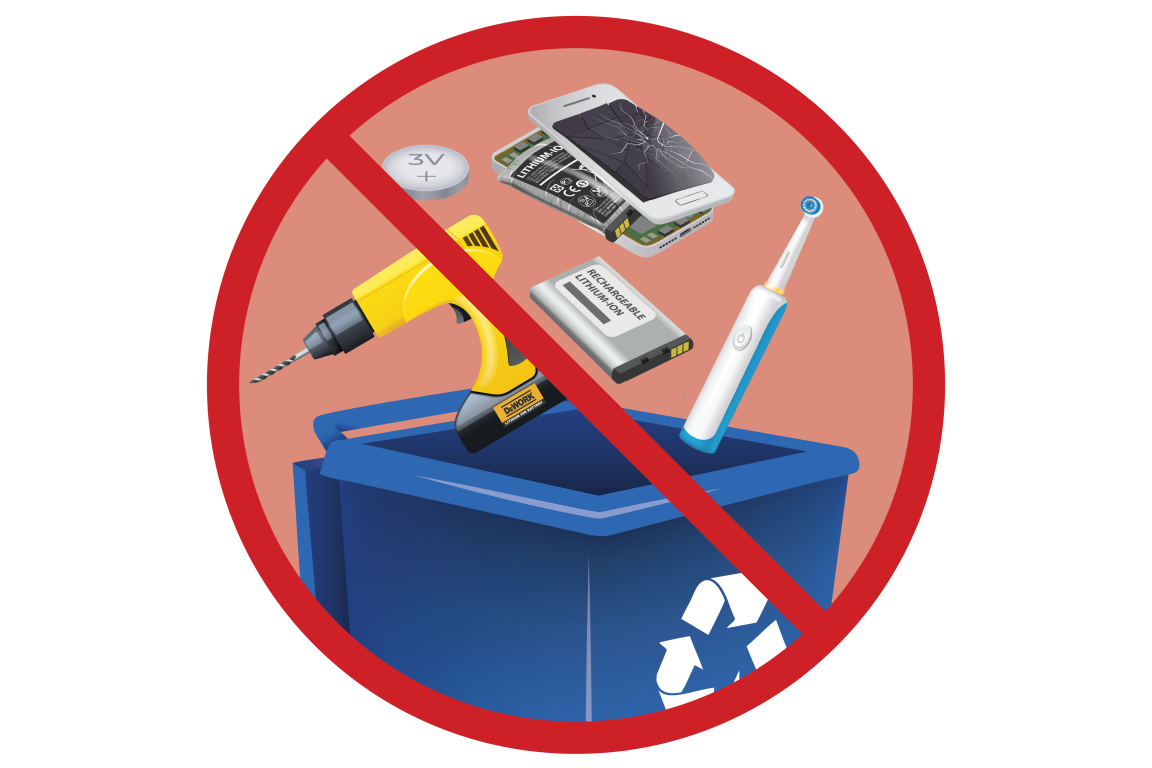
Lithium-ion batteries contain metals of critical importance to US infrastructure and energy independence. These batteries should be managed separately from trash and other discarded materials to protect your community from fires and keep critical minerals out of the landfill.
This page is designed to help North Carolina citizens stay informed about the benefits of recycling lithium-ion batteries. Taking them to a designated drop-off location supports local industry and protects NC's natural resources.
Critical Minerals
Batteries contain valuable materials like lithium, nickel, cobalt, manganese, graphite, iron, copper, and aluminum which are extractive, energy-intensive, and expensive to mine. Aluminum, lithium, nickel, cobalt, manganese, and graphite are considered “critical minerals” which the US Geological Survey defines as nonfuel minerals that are essential to the economic and national security of the United States. The US depends upon critical minerals to build electrical infrastructure and power the electronic devices we use every day.
According to International Energy Agency’s Critical Minerals Market Review, the United States manufactures less than 1% of essential battery materials and imports a majority of critical minerals, making supply chains vulnerable to geopolitical and trade disruptions. Mining operations are inherently dangerous and often located in areas with environmental and humanitarian instability such as the Democratic Republic of the Congo which produces 74% of the world’s cobalt. China mines 82% of global graphite and processes a majority of critical minerals mined elsewhere like Australian lithium and Indonesian nickel. Recycling lithium-ion batteries provides domestic sources of critical minerals, boosting US energy independence, economic security, and reducing the demand for extractive and energy-intensive global mining and production.
Environmental Impact
Properly disposing of used batteries at drop-off sites not only helps prevent fires, but it diverts critical minerals from going to waste in a landfill. Just as recycling cardboard, aluminum cans, plastic tubs, and glass bottles allows manufacturers to reuse existing materials, reducing energy consumption and carbon emissions, batteries can be reused as resources as well. The International Energy Agency reports that, on average, recycled nickel, cobalt, and lithium carbonate generate 80% less greenhouse gases and use 80% less water than their raw mineral forms.
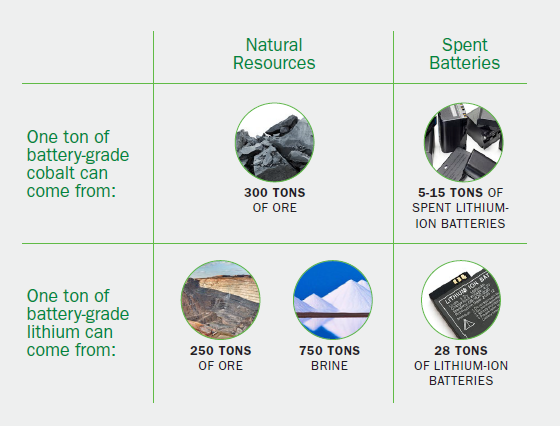
Specialty battery recycling companies like Powerhouse and Redwood Materials recover critical minerals from spent batteries, keeping these materials circulating domestically while reducing the demand for energy-intensive and often exploitative mining. This is because battery-grade cobalt and lithium can be more efficiently recovered from spent batteries, with hundreds of tons of raw cobalt or lithium ore being replaced by recovering as few dozen tons of batteries.
The International Energy Agency’s Recycling of Critical Minerals Report, battery recycling could meet 20-30% of lithium, nickel, and cobalt demand by 2050, but this depends upon collection. Dropping off your used lithium-ion batteries at a store drop-off or at your local government's collection site helps protect yourself and community against battery-sparked fires, but it also allows critical minerals to be reused, reducing greenhouse gas emissions, and demand for environmentally and socially exploitative mining.
North Carolina's Battery Belt
As Lithium-ion battery usage increases and geopolitics influence supply chains, more mining and manufacturing companies are seeking critical mineral sources within the United States. North Carolina lies in the “battery belt”, an area of battery manufacturing developing around the southern Appalachian Mountains’ rich lithium deposits, which according to the U.S. Geological Survey, contain 1.43 million metric tons of lithium oxide. A majority of the lithium deposits are concentrated in the Carolinas, with 80% of the nations’ reserves located within North Carolina.
Domestic lithium reserves have the potential to bolster the United States’ energy independence and provide economic opportunities in the region, but lithium mining has severe environmental and social impacts. Skipping the bin and turning your used lithium-ion batteries in at a store drop-off or at your local government's collection site ensures critical minerals are reused. The more batteries and critical minerals we can keep out of the landfill, the more resources are kept in circulation, decreasing the demand for mining in North Carolina and around the world.