
Air Quality Awareness Week is the perfect time to celebrate the progress North Carolina is making toward a cleaner, healthier future! DEQ’s Division of Air Quality produces a statewide inventory of greenhouse gas (GHG) emissions that represents the state’s “carbon footprint.” The 2026 update to the GHG emissions inventory provides a detailed look at emissions from human activity since 1990, along with projections of what North Carolina’s emissions could look like through 2050.
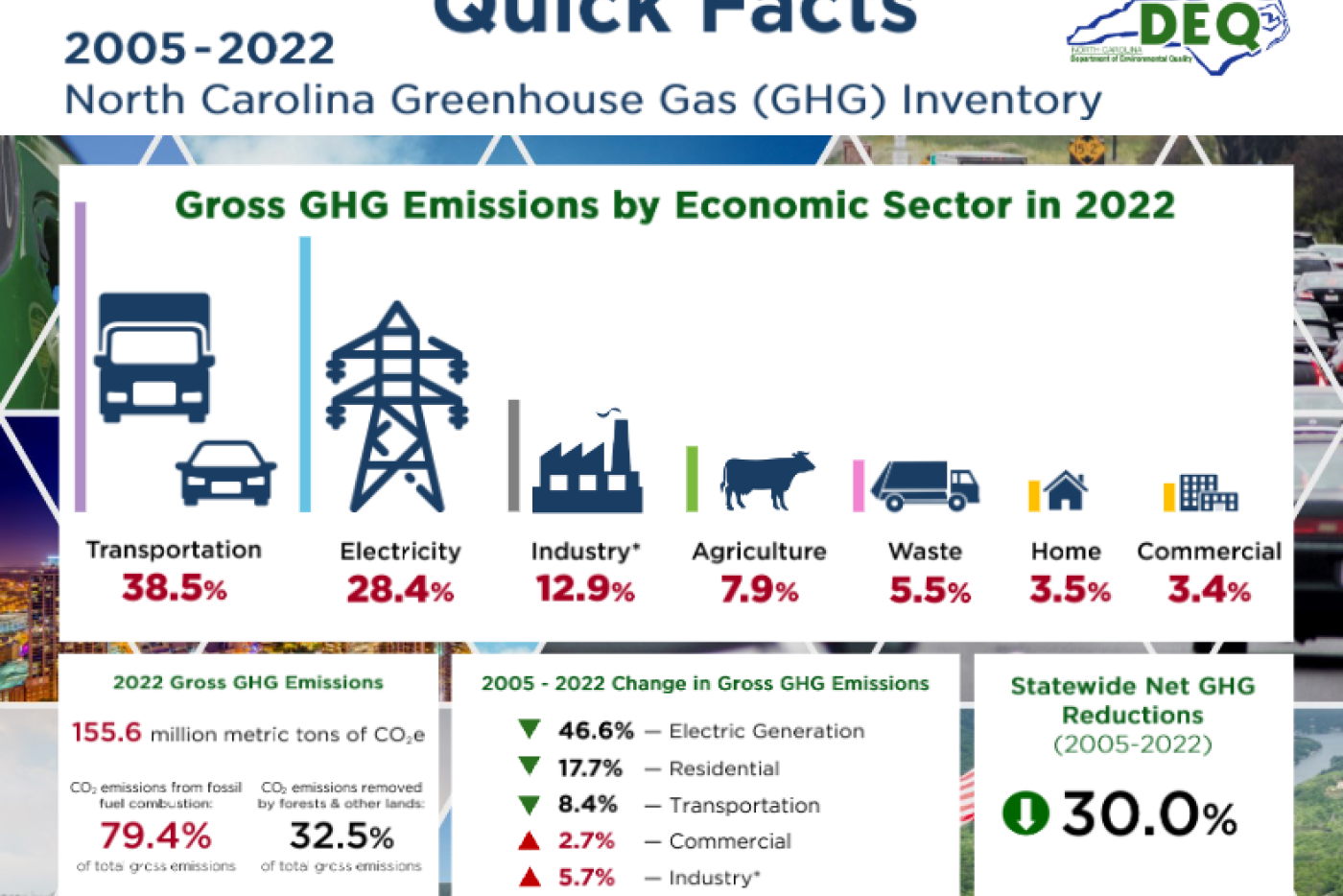
The latest North Carolina Greenhouse Gas Inventory shows encouraging progress: net GHG emissions have dropped 30% between 2005 and 2022 (the latest year for which we have consistent data). Even as our population grows and our economy expands, North Carolina is continuing to improve air quality.
Emissions peaked in 2007 and began to decline rapidly after 2010 due to electricity generation migrating away from coal toward natural gas and renewable energy sources and overall reductions in fossil fuel combustion. Also, federal fuel and engine standards have brought down emissions from cars and trucks.
Emissions from electricity generation have now fallen by nearly half since 2005.Transportation remains the largest contributor to the state’s carbon footprint, holding steady at 38.5% of gross emissions.
North Carolina’s forests and natural lands also play a critical role, offsetting 32% of gross emissions through carbon sequestration.
Looking ahead, the GHG report indicates that the state is on track for continued long-term reductions, with net emissions projected to fall 60% below 2005 levels by 2050.
Together, these trends highlight a positive path forward for cleaner air. Air Quality Awareness Week reminds us how far we’ve come — and inspires us to keep taking steps to protect the air we breathe for generations to come.
Want to explore the data or dive deeper into North Carolina’s progress? You can find the full Greenhouse Gas Emissions Inventory report and our press release online.