
Our Progress
North Carolinians are breathing the cleanest air they have in decades. Due to hard work and sound environmental policy, emissions of harmful air pollution like fine particles and nitrogen oxides continue to trend downward, even as our state's population and economy grow.
The proof is in the air: Data from DEQ's ambient monitoring network show near-record lows of concentrations of criteria air pollutants regulated under the Clean Air Act. Our state has been in compliance with every federal health-based air quality standard since 2015.
More information on how North Carolina has addressed air quality concerns in recent years is in the latest update of the “Air Quality Trends in North Carolina” report published by the DEQ's Division of Air Quality (DAQ).
Which air pollutants should North Carolinians be most aware of?
The two biggest air quality concerns in North Carolina are ground-level ozone (the main ingredient in “smog”) and particle pollution. Both pollutants are caused mainly by emissions from cars and trucks. Although technological improvements have reduced emissions, population growth may still contribute to declines in air quality, posing risks to public health and daily life.
Ground-Level Ozone: Colorless, harmful gas pollutant also known as smog. This is a concern during the summer months when the weather conditions needed to form ground-level ozone — lots of sun and hot temperatures — normally occur.
Particle Pollution: A mixture of tiny solid particles and liquid droplets floating in the air, like soot, smoke, dust, or dirt.
How does air pollution impact health?
Air pollution at certain levels can harm people’s health even if you can’t see or smell it. Even healthy people may experience wheezing, chest tightness, or shortness of breath when pollution levels are abnormally high. Air pollution can narrow the airways and cause breathing problems, make asthma worse, or cause the onset of asthma. Scientists have compared ground-level ozone’s effect on the lining of the lungs to the effect of sunburn on the skin. When cells are damaged, the old ones are shed and replaced, similarly to the way skin peels after sunburn.
Repeated damage, especially during childhood, can permanently reduce lung function. Particle pollution has been linked to serious cardiac problems, including arrhythmia and heart attacks.
Who is at risk for health impacts from air pollution?
Anyone, depending on the level of pollution! It is unpredictable how air pollution can impact an individual. Whether it’s noticed or unnoticed, everyone should be cautious.
Certain individuals can be more at risk for health impacts because of age, lifestyle, and health status. An Air Quality Index (AQI) between 101 and 150 (Code Orange) is deemed “Unhealthy for Sensitive Groups.”
These sensitive groups include:
People with preexisting health conditions, such as asthma, lung disease or heart disease
Pregnant people
Children & teenagers
Older adults (65+)
People who frequently exercise or work outdoors
Low-income communities: Residents often live in high-risk areas due to lower housing costs, and lack of resources like air purifiers, quality healthcare, and the ability to avoid pollution through occupation.
Preexisting health conditions such as asthma, lung disease or heart disease.
Why they’re at risk:
- Pollution can trigger inflammation and stress the cardiovascular system.
- Airways are more reactive and sensitive to pollutants.
Signs to watch for:
- Chest pain or pressure
- Irregular heartbeat
- Shortness of breath during mild activity
- Wheezing, coughing, or tightness in the chest (Worsening in the morning or at night)
- Needing a rescue inhaler more often
A pregnant person’s exposure to both heat and air pollutants together can increase the risk of adverse pregnancy outcomes, including preterm births.
Why they’re at risk:
- Pollution exposure may affect both the parent and the baby.
- Increased respiratory and cardiovascular demands during pregnancy
Signs to watch for:
- Shortness of breath beyond typical pregnancy symptoms
- Headache or dizziness on poor air quality days
Children are particularly vulnerable to air pollution, from when they are in the womb to when they reach adulthood. (Source: unicef)
Why they’re at risk:
- Developing lungs and immune systems
- Breathe faster and take in more air.
- Spend more time outside.
Signs to watch for:
- Dry/irritated eyes, headache, fatigue, allergies, or shortness of breath. In infants, look out for signs of exertion while breathing.
- People with asthma might experience more severe asthmatic attacks, shortness of breath, chest pain, coughing, or wheezing.
Why they’re at risk:
- Age-related lung and heart function
- Higher likelihood of chronic conditions
Signs to watch for:
- Chest tightening or discomfort
- Increased coughing or mucus
- Unusual fatigue or dizziness
Why they’re at risk:
- Longer exposure to outside elements
- Performing strenuous activities that increase inhalation
Signs to watch for:
- Persistent cough
- Difficulties breathing during work
- Unusual fatigue
Why they’re at risk:
- Limited ability to avoid exposure
- Fewer resources for managing chronic conditions
- Residents often live in high-risk areas due to lower housing costs and a lack of resources like air purifiers, quality healthcare, and the ability to avoid pollution through occupation.
Signs to watch for:
- Worsening of any existing health issues
- Persistent respiratory symptoms such as coughing, wheezing, or shortness of breath
The Air Quality Index (AQI)
| Code | Air Quality Index | Meaning |
|---|---|---|
| Green | Good | Air quality is considered satisfactory, and air pollution poses little or no concern. Go outside and enjoy the day! |
| Yellow | Moderate | There may be a moderate health concern for people who are unusually sensitive to air pollution. Consider limiting prolonged or heavy exertion outdoors. |
| Orange | Unhealthy for Sensitive Groups | Older adults, children, active people, and those with heart or lung disease may experience health effects. Limit prolonged or heavy exertion outdoors. |
| Red | Unhealthy | Older adults, children, active people, and those with heart or lung disease may experience more serious health effects. Everyone may experience health effects. Limit prolonged or heavy exertion outdoors. |
| Purple / Maroon | Very Unhealthy | Everyone is likely to be affected. Avoid all outdoor exertion |
What can you do to reduce your exposure to air pollution?
Make an Air Quality Action Plan
Making an air quality action plan helps you protect your respiratory health, and reduce your exposure to pollutants. Know when to limit outdoor activities and what steps to take to avoid poor air quality.
Protect yourself outdoors
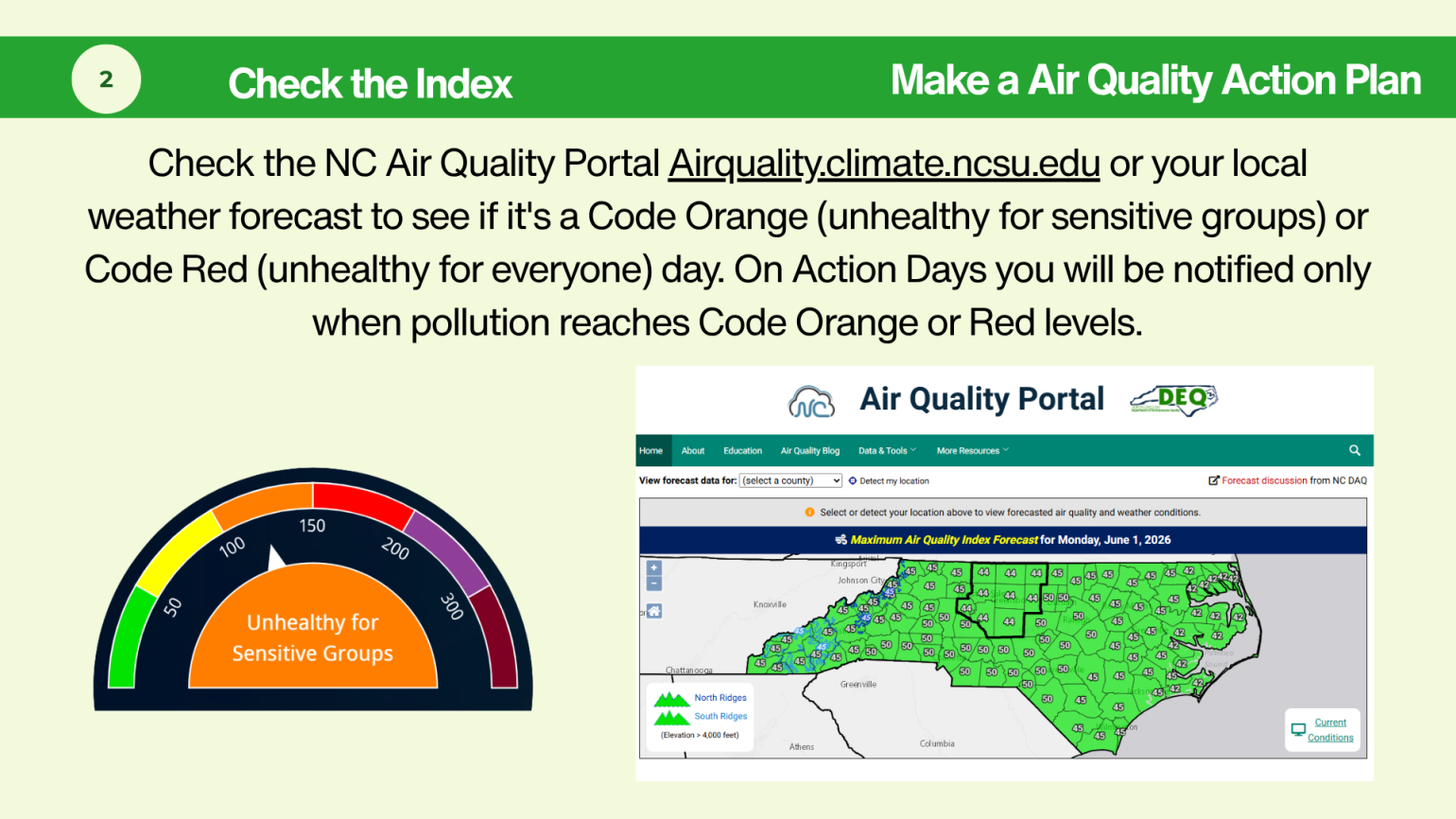
- Check the Air Quality Index
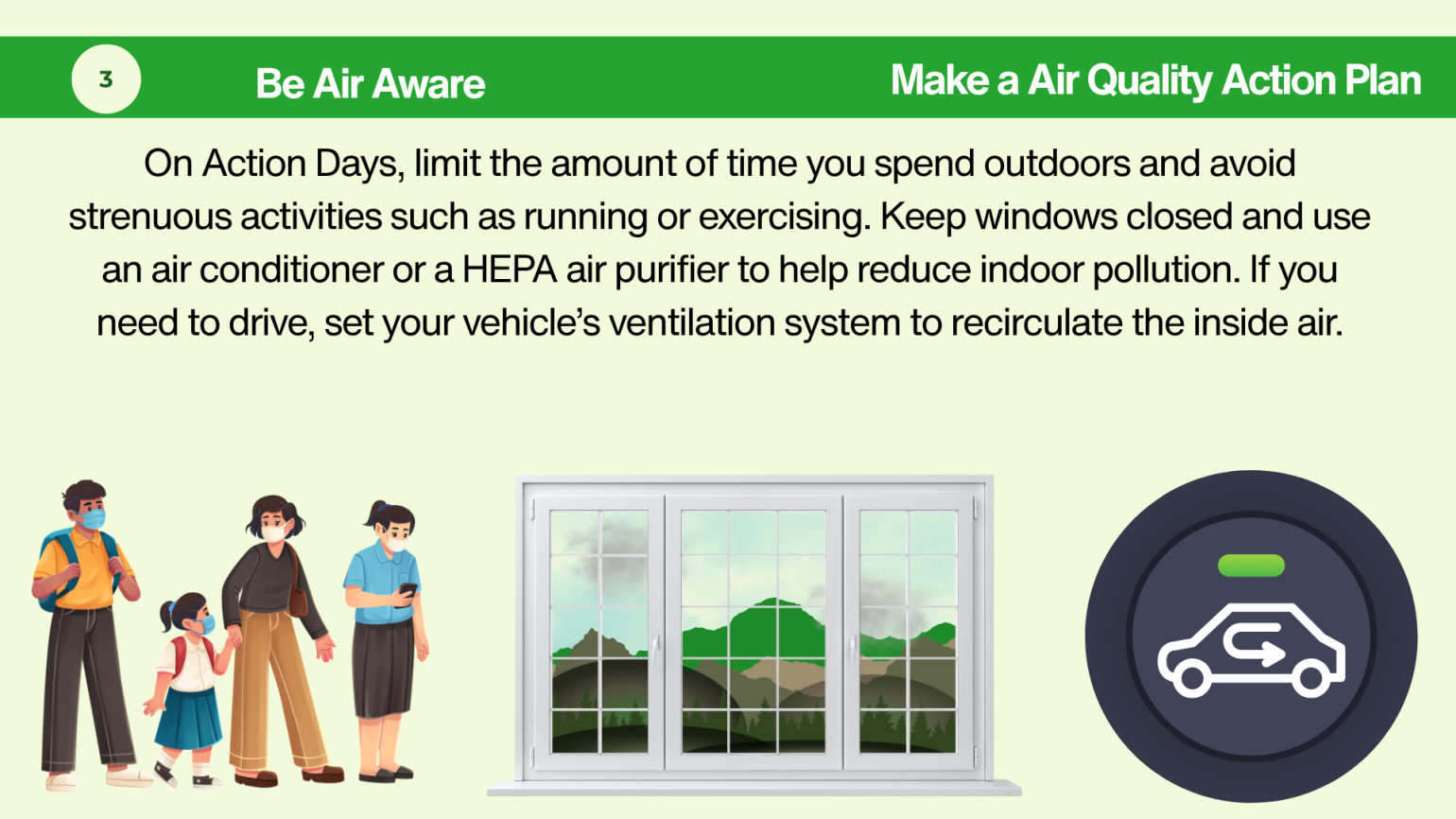
- Limit outdoor activities – Avoid exercising near high traffic areas. On Moderate to Unhealthy for Sensitive Groups days (Codes Yellow and Orange on the Air Quality Index), consider exercising indoors or reducing energy intensity.
- Smoke from wildfires near and far can make the air dangerous to breathe, especially for people with asthma or other lung conditions. Learn more about the Health Effects and Risk of Wildfire Smoke.
- Wear protection – Use an N95 mask during high smoke or dusty conditions
Stay informed & be watchful
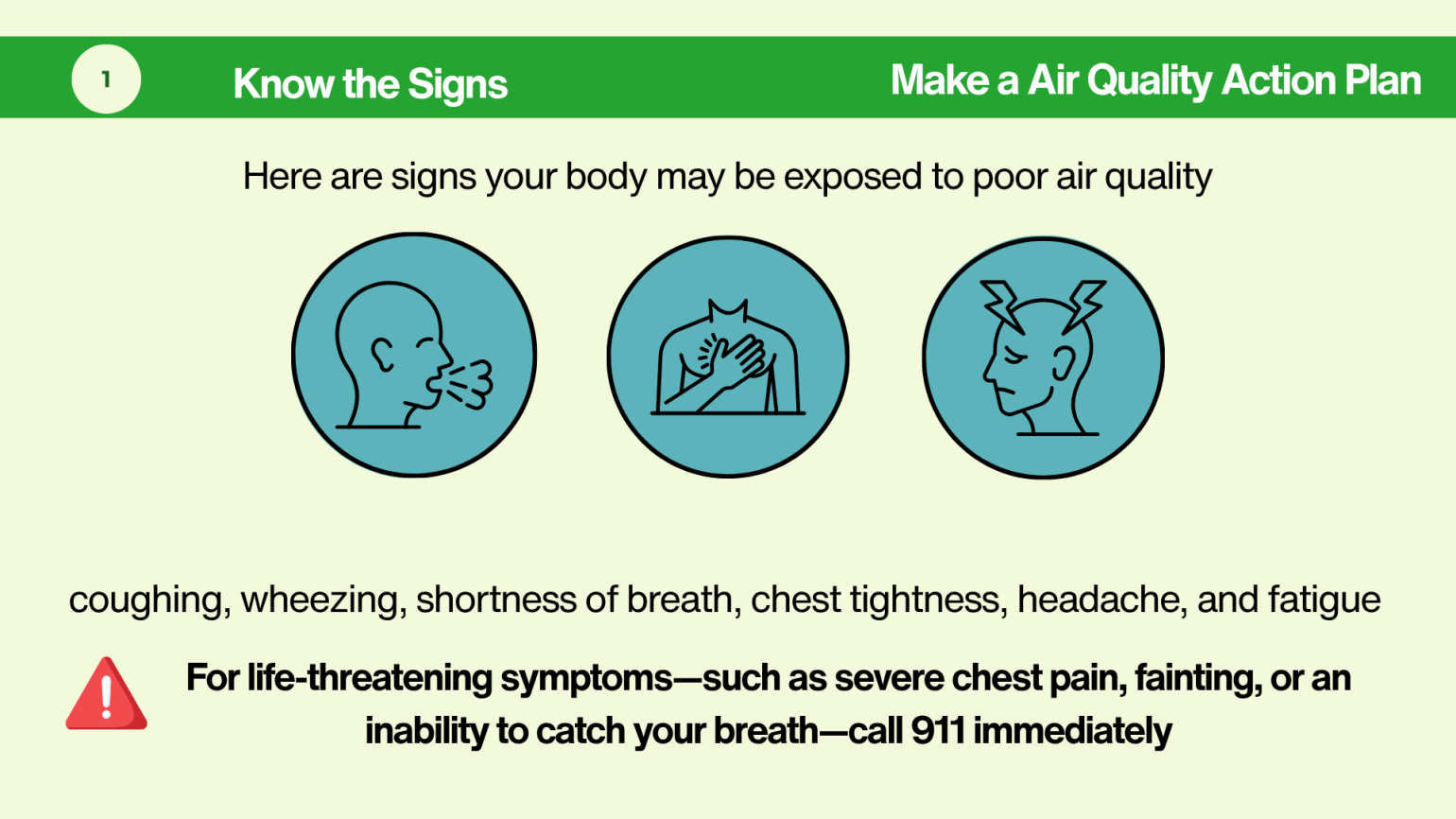
- Be aware of concerning symptoms such as wheezing, coughing, and other signs of breathing difficulties.
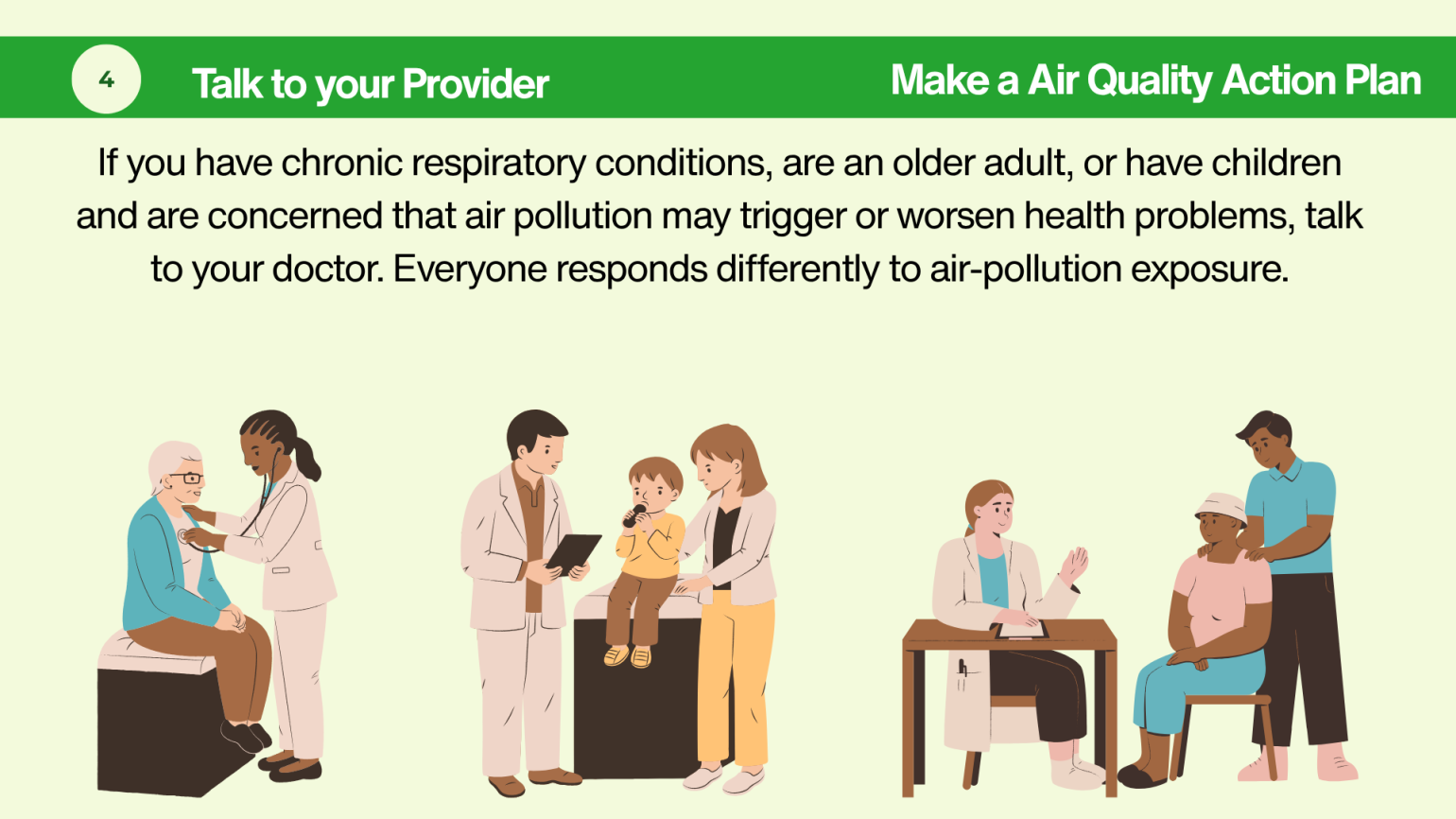
- Contact and consult your healthcare provider for advice on managing any health conditions.
Reduce your personal pollution footprint
- Change your commute – Carpool, use public transportation, bike, or walk whenever possible.
- Avoid backyard fires and illegal trash burning.
- Maintain vehicles – Keep tires inflated, filters clean, and maintain exhaust systems.