
Building/Dimension Stone of NC
Dimension Stone Overview
Not every rock can be dimension stone, but every dimension stone is rock. Dimension stone can be defined as natural rock material quarried for the purpose of obtaining blocks or slabs that meet specifications as to size (width, length, and thickness) and shape. Color, grain texture and pattern, and surface finish of the stone are normal requirements. Durability (essentially based on mineral composition, hardness, and past performance), strength, and the ability of the stone to take a polish are other important selection criteria. Although a variety of igneous, metamorphic, and sedimentary rocks are used as dimension stone, the principal rock types are granite, limestone, marble, sandstone, and slate. Other varieties of dimension stone that are normally considered to be special minor types include alabaster (massive gypsum), soapstone (massive talc), and various products fashioned from natural stone.
North Carolina Dimension Stone
In 2024, North Carolina ranked seventh in the United States in dimension stone production. Based on the most recent data available from 2019, North Carolina produced around 16,400 metric tons of dimension stone which was valued at over $16 million. The four major types of dimension stone now produced in North Carolina are: granite, argillite, flagstone and marble. Dimension stone is produced from limited geographic areas in North Carolina. The average production life of dimension stone quarries is measured in decades or longer, although flagstone quarries may be short lived.
Downtown Raleigh ROCKS! Join the NCGS on a tour of the building/dimension stones of downtown Raleigh's beautiful skyline.
Dimension Stone FAQs
According to the USGS Mineral Commodity Summaries 2024, the leading uses and distribution of rough stone, by tonnage, were:
- Building and construction (62%)
- Irregular shaped stones (29%)
According to the USGS Mineral Commodity Summaries 2024, the leading uses and distribution of dressed stone (cut and shaped), by tonnage, were:
- Ashlars and partially squared pieces (47%)
- Curbing (12%)
- Slabs and blocks for building, construction, and flagging (11% each)
In North Carolina, dimension stone is used in home improvements, historic preservation, and interior paneling for buildings and construction applications.
According to the USGS Mineral Commodity Summaries 2024, approximately 2.3 million tons of dimension stone, valued at $410 million was sold or used by U.S. producers in 2023. Dimension stone was produced by 176 companies operating 224 quarries in 33 states. States producing the most dimension stone (in descending order) were: Texas, Wisconsin, Indiana, Vermont, and Georgia. Combined, they accounted for nearly 70% of production quantity in the U.S.
By tonnage, limestone accounted for nearly 51% of dimension stone sold or used in 2023. This is followed by granite (20%), sandstone (14%), and dolomite (4%). The remaining 11% was divided among other rock types - miscellaneous stone, quartzite, marble, traprock, and slate.
The North Carolina Mining Act, passed in 1971, and its regulations require any dimension stone mining operation of one acre or more to apply for and receive a North Carolina mining permit. The permit is issued for 10 years but can be withdrawn if al requirements of the permit are not complied with. Many other local and state permits and environmental regulations control the operation of dimension stone plants. All site must be reclaimed before the reclamation bond will be released at the conclusion of mining.
Once reclaimed, dimension stone quarries are desirable as water reservoirs or recreational lakes, often with residential subdivisions nearby. Wetlands are often created as a result of mining. The industry is very sensitive to, and responds to, its need to be a good steward of the environment and a good neighbor in the community.
Refer the the DEQ's Mining Program for more information on mine permitting.
Most dimension stone is moved by truck. A large proportion of dimension stone is shipped overseas by ocean transport. Because dimension stone is a heavy, moderate to high cost per ton product, it can be transported considerable distance. Because of the value of North Carolina dimension stone and the low cost of ocean transport, a significant portion of NC dimension stone is shipped overseas for cutting and finishing.
Former North Carolina Granite Corporation
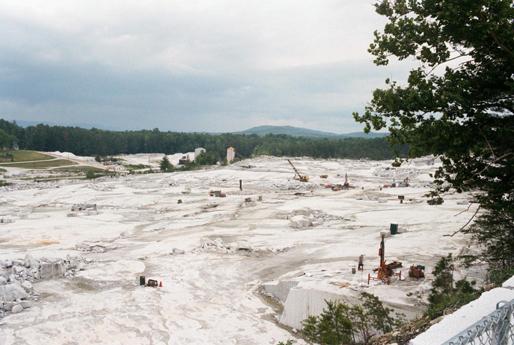
The former North Carolina Granite Corporation's granite mine, located two miles east Mt. Airy, North Carolina was the world's largest open-face granite quarry in the world. The land that it exists on was originally thought of as worthless because it could not be farmed. In 1888, the land that the quarry sits on was sold to Thomas Woodruff who began a granite quarrying business in 1889. With new rail lines in place, the business grew rapidly. The granite in this area is pure both in color and texture. A piece removed 100 years ago would match a piece removed today!
Ownership and Closure
In 2025 Luck Stone (the largest family-owned and operated producer of crusted stone, sand, and gravel in the U.S.) acquired the quarry in Mt. Airy. The $9 million acquisition includes a total of 264 acres spread across 15 different tracts of land. Luck Stone has indicated that while the site is being decommissioned by North Carolina Granite Corporation, they will be working on an operational strategy for the site, which is now named the Luck Stone Flat Rock Plant.
Although the fate of the dimension stone/Cut Stone Division is not yet final, Luck Stone indicated that it will be closing that part of the business.