
RCCP Project Types, Phases, and Examples
RCCP Phases
The Resilient Coastal Communities Program (RCCP) uses a phased approach to help coastal communities move from planning to implementation. Phases 1 and 2 focus on community engagement, risk and vulnerability assessment, project identification, and prioritization. Phase 3 supports engineering and design for priority projects, while Phase 4 supports construction and implementation of shovel-ready resilience projects.
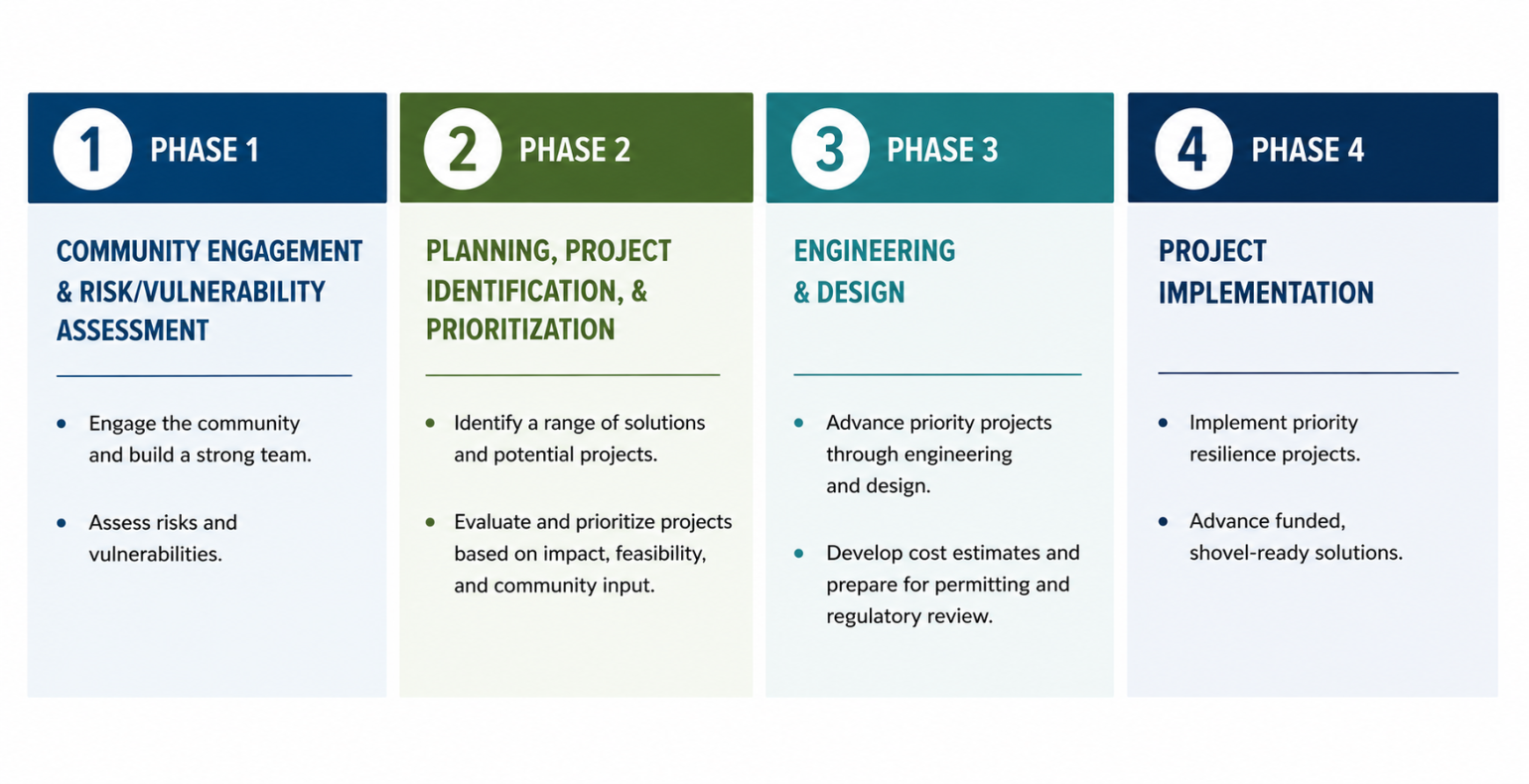
Project Types & Examples
RCCP communities identify a wide range of resilience projects based on local hazards, community priorities, and project readiness. The examples below reflect common project types and solutions identified through the program.
| Primary Project Type | Example Solutions | Example Project Focus |
|---|---|---|
| Infrastructure | Hard infrastructure, stormwater enhancements, culvert improvements, drainage upgrades, flood gauges, and emergency response improvements. | Reducing flooding, improving drainage capacity, protecting roads and utilities, and supporting emergency access. |
| Natural or Nature-Based | Living shorelines, wetland restoration, dune restoration, oyster reef creation, stream restoration, rain gardens, bioswales, and native plantings. | Using natural systems to reduce flooding and erosion while improving habitat, water quality, and long-term resilience. |
| Hybrid | Stormwater retrofits with nature-based features, floodplain improvements, vegetated drainage systems, shoreline stabilization, and green infrastructure. | Combining engineered and natural approaches to manage flooding, erosion, runoff, and water quality concerns. |
| Policy/Planning | Management plans, maintenance plans, ordinances, drainage easements, flood-resilient land use planning, feasibility studies, and hydrologic assessments. | Improving local decision-making, project readiness, long-term maintenance, and resilience planning. |
| Educational | Community outreach, education campaigns, public engagement, preparedness materials, signage, and resilience communication tools. | Building public awareness, supporting community preparedness, and encouraging participation in resilience efforts. |
Case Studies
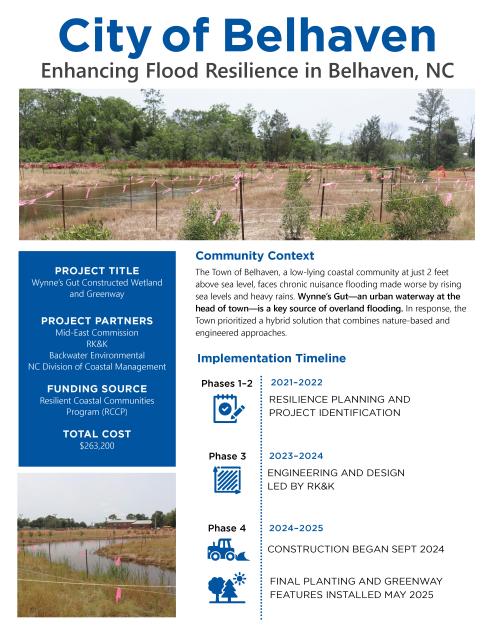
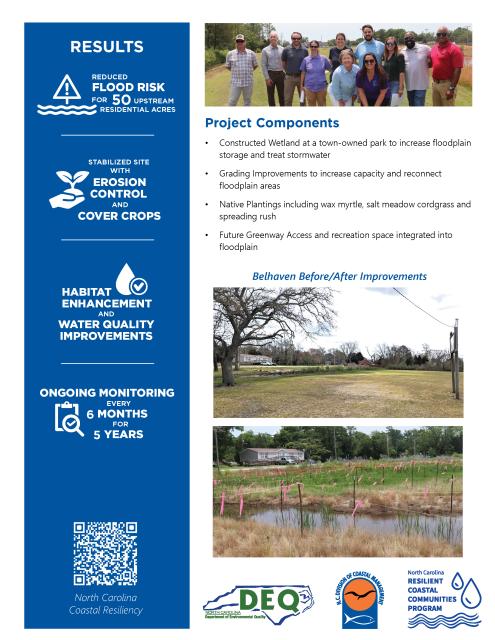
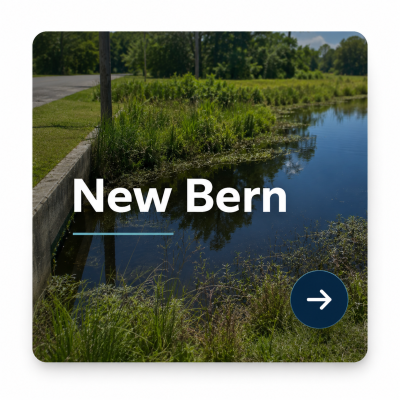
RCCP case studies highlight completed resilience projects from coastal communities across North Carolina and demonstrate the wide range of approaches communities are using to address flooding, stormwater management, shoreline erosion, public access, and other resilience challenges. The example below shows a sample two-page case study format used to summarize project background, implementation, partnerships, and resilience benefits. Additional case studies can be explored by clicking the image buttons below.
Stay tuned for more case studies in the near future!