
2016-2020 Recycling Works Archives
This webpage provides access to Recycling Works edition records from the past 10 years. Historical records older than 10 years are available upon request. Contact a staff member to request historical records.
2020
NC Recycling Jobs Report
DEACS recently completed the 2020 Recycling Employment Study and found that North Carolina has 15,712 jobs in the recycling industry. The total estimated payroll for North Carolina recycling businesses is $703 million, and more than 43 percent of recycling businesses plan to create more jobs throughout the next two years. Private sector recycling jobs have only decreased 3.4 percent since 2015, which is a testament to the resiliency of the state’s recycling industry. No single commodity dominates the state’s recycling economy as collectors, processors and manufacturers use a variety of recyclable feedstock in their businesses. North Carolina is home to recyclers of glass, paper, plastics, metal, electronics, organics, tires, and construction and demolition debris.
Thank you to the businesses that participated in our employment survey this spring. The full report will be released next month by NCDEQ.
New River Tire Launches Production Line RUBBERlogix
It is important to close the loop by manufacturing new items with recycled material. North Carolina has an extensive network of such companies and will be sharing a series of examples in upcoming newsletters. Some recyclers, such as New River Tire, have been working to find new uses for the materials they already have experience processing.
New River Tire Recycling in Pilot Mountain, N.C., has added a new segment to its operation called RUBBERlogix. RUBBERlogix manufactures high-quality sports floors, acoustical underlayment and transportation anti-friction mats along with many other multi-purpose rubber flooring products. The main composition of RUBBERlogix products is post-consumer recycled crumb rubber from car, truck and airplane tires. For more information visit RUBBERlogix webpage.
Copper Recycler Launches Multi-Million Dollar Expansion in Shelby
Ames Copper Group plans to expand operations in Shelby, N.C., with the construction of a new smelter plant to recycle and purify scrap copper. The company will invest more than $50 million over the course of the project, creating 46 new jobs with an average annual salary exceeding $50,000. Ames Copper Group is a joint venture of Prime Materials Recovery, Inc. and the Cunext Group that manufactures copper for wiring, lightning rods and devices for the defense industry.
Read more about the June 2020 announcement from the N.C. Department of Commerce.
Recycling Business Development Grants
The RBAC seeks viable, well-planned proposals that divert materials from the waste stream and create jobs from recycling businesses and nonprofit organizations for the 2021 Recycling Business Development Grant cycle. Applications are due by 5 p.m. on Thursday, Nov. 5. '
Funding priority this year will be considered for projects that involve:
- Single-stream material recovery facility upgrades;
- Plastics (non-bottle) recycling processing;
- Fiber (other than newsprint or office paper) recycling processing;
- Use of priority plastics or fiber in recycled product manufacturing; or
- Glass container recycling processing; or
- Food waste collection, donation or recycling.
Applicants can request up to $60,000 for priority projects or up to $40,000 for any project that does not fall into a priority category. All grants require a 50 percent match from the applicant.
Contact Mike Greene 919-707-8137 to learn more. Visit RBAC’s grant webpage for application materials.
DEACS Annual Report
The Recycling Business Assistance Center is a program of DEACS, which released its 2020 Annual Report this summer. Learn how DEACS works with a diverse set of clients to achieve positive results for North Carolina’s environment and economy.
Announcements and Opportunities
- Nov. 5: Carolina Recycling Association Tagging and Enforcement Webinar will feature local governments, recycling support businesses and haulers discussing how they have tackled contamination using tagging programs and enforcement mechanisms.
- Nov. 16 and 17: America Recycles Innovation Fair and Summit, hosted by the Environmental Protection Agency (EPA), will showcase recent advances in recycling technology, product development and material usage. EPA will also announce national recycling goals, provide an overview of its draft National Recycling Strategy, and facilitate discussions on the advancement of the nation’s recycling economy.
- Nov. 16 and 17: Increasing the Use of Recycled Content in Road and Infrastructure Projects Virtual Workshop, hosted by the Northeast Recycling Council and the Northeast Waste Management Officials’ Association, will present opportunities for using recycled glass, plastic drainage pipes, ground asphalt and crumb rubber in construction projects.
- Nov. 18 and 19: 2020 MRF Summit, hosted by the Solid Waste Association of North America (SWANA) and the Institute of Scrap Recycling Industries (ISRI), will explore key issues affecting material recovery facilities, including the impact of automation and technology on the workforce, the changing material stream, creating demand for recovered material, and the business economics of MRFs.
The Recycling Business Assistance Center (RBAC) is a program of the N.C. Division of Environmental Assistance and Customer Service (DEACS) that provides technical, business and financial assistance to recycling companies.
Survey Says: Our Recyclables are Staying in the Southeast
A new DEACS study shows the impact of recycling on the Carolinas’ economy. A survey of North Carolina material recovery facilities (MRFs) found that 56 percent of recyclables processed by local MRFs have market destinations in the Carolinas. Recyclables that stay in the Carolinas contribute to local economies, local jobs and local manufacturing. Further highlighting the independence from international markets, the survey shows that almost 80 percent of recyclables from North Carolina MRFs are shipped to companies in the southeast region. The complete results can be found below:
MRF End Market Destinations:
North Carolina: 33.98%
South Carolina: 22.13%
Other southeastern states: 23.67%
States outside of the southeast: 7.19%
Canada: 0.22%
Mexico: 0%
Nations not listed above: 12.91%
Paper Mill Opening in Chesapeake, Virginia
Total Fiber Recovery will open a new paper mill in Chesapeake, Virginia in 2021. The recycled pulp facility will source 300,000 tons of mixed paper and other recycled fiber from material recovery facilities throughout the mid-Atlantic region. Total Fiber Recovery products will be shipped to other paper mills to create new products. In addition to other mills coming online over the next two years in the mid-Atlantic and southeast, this development should help increase demand for mixed paper.
Join the FREE August 11 CRA Recycling Resilience Webinar
The Carolina Recycling Association will host a free webinar August 11 at 1 p.m. as part of its series about recycling resiliency during the COVID-19 pandemic. Recycling is facing challenges during the pandemic; some have continued to thrive by implementing creative solutions, making small changes together with their MRF partners and engaging citizen advocates. In this webinar, representatives from several recycling programs and communities will discuss how they achieved success through one or more of these solutions. This webinar is free, but registration is required.
The Recycling Partnership Announces MRF Grant
This summer The Recycling Partnership (TRP) announced a new grant opportunity to fund MRF recycling equipment for polypropylene processing. The Polypropylene Recycling Coalition is a project within The Recycling Partnership with millions in grant funds available to fund optical sorters, robots, conveyors or facility improvements, which can help recover and market polypropylene. Any publicly or privately owned MRF located in the United States is eligible to apply. TRP anticipates that each grant will have a maximum award of $500,000. An additional $75,000 can be used to inform the public about polypropylene being accepted in the recycling program. See the Request for Proposal at the Recycling Partnership website.
Coming Soon: 2021 Recycling Business Development Grant Cycle Kickoff
The 2021 Recycling Business Development Grant Request for Proposals, including the application materials, will be released and posted on RBAC’s grant webpage in September 2020. The 2021 Recycling Business Development Grant priorities will focus on materials impacted by challenged recycling market conditions. For more information, contact Mike Greene (919) 707-8137 or Matt James at (919) 707-8133.
SERDC Wants to Hear from Southeast MRFs
The Southeast Recycling Development Council (SERDC) is conducting a survey of the region's operating MRFs to identify existing infrastructure and recognize operational challenges. SERDC will evaluate barriers to strengthening the supply chain. SERDC has obtained funding from the Glass Packaging Institute and the North American Insulation Manufacturers Association to conduct the survey. If you operate a MRF in the Southeast and haven't taken the survey, please go online to take the survey. All individual results will be kept confidential.
Announcements and Opportunities
- Aug. 19: The Path Forward Webinar, hosted by Resource Recycling, will highlight recycling coordinators from across the country as they navigate budget constraints and ongoing safety concerns.
- Aug. 25-27: Circularity20: Accelerating the Circular Economy complimentary virtual event hosted by GreenBiz.
- Oct. 20-22: Paper and Plastics Recycling Conference virtual broadcast event.
- P2Assist Listserv: Sign up for the P2Assist Listserv to network with other environmental stakeholders across the state and beyond. P2Assist is a free environmental network for sharing information about waste reduction, reuse, recycling, and environmental stewardship. P2Assist is a forum that publishes news about grant opportunities, webinars, job openings and other relevant information for environmental professionals. For more information, contact Tom Rhodes at (919) 707-8140.
The Recycling Business Assistance Center (RBAC) is a program of the N.C. Division of Environmental Assistance and Customer Service (DEACS) that provides technical, business and financial assistance to recycling companies.
COVID-19 Updates and Resources
The Recycling Business Assistance Center (RBAC) offers its support to all businesses keeping North Carolina’s recycling infrastructure running as during the coronavirus pandemic. Please let the RBAC staff know if your operations have been impacted by this public health situation. RBAC staff are available Monday-Friday from 8 a.m. – 5 p.m. by phone or email to assist you with questions or concerns.
Worker Safety
While essential services continue, operations must adapt to prioritize the safety of employees and reduce the potential for exposure to COVID-19. The Institute of Scrap Recycling Industries, Inc. Guidance to Help Recyclers Operate Safely offers a Safety Checklist for recycling operations and specific guidance for Truck Operations. See additional resources on the OSHA website.
News and Information Sources
The following publications have dedicated pages to track COVID-19 updates and developments:
- North Carolina COVID-19 Response
- Resource Recycling: Coronavirus Impacts on the Recycling Industry
- Waste Dive: US Waste and Recycling Disruption Tracker
See Announcements and Opportunities for a list of upcoming and recorded webinars. Please contact the RBAC staff if you have other recommendations.
Jobs Study Survey
Are you a North Carolina-based recycling hauler, processor, broker or manufacturer using recycled feedstock? RBAC needs your response to the 2020 N.C. Recycling Business Employment Survey.
During this unprecedented pandemic situation, your response is critical to help measure and communicate the importance of recycling in growing the state's economy. The 2020 N.C. Recycling Business Employment Survey will help determine how many people are employed by recycling businesses across the state.
Responses are confidential and will be released as summaries in which no individual's answers can be identified. If you have questions about the survey, please contact Matt James at matt.james@ncdenr.gov or by phone at 919-707-8133. Take the survey.
2020 Recycling Business Development Grants Announced
State recycling business grants awarded this spring are expected to generate approximately 61 jobs, spur more than $2 million in new, private business investments and further reduce the state’s dependence on landfill disposal.
Twenty companies that collect, process and manufacture new products with recycled materials will receive more than $665,000 in funds from N.C. DEQ's Recycling Business Assistance Center in 2020. Grants will support increases in plastic processing capacity, upgrades to material recovery facilities, expansion of recycled end-product manufacturing capacity and recycling processing for a variety of other materials.
Recycling is an Essential Service
The role of recycling as a critical supply chain component has become abundantly clear during the pandemic. Governor Cooper designated “solid waste and recycling collection and removal” as an essential service in the
Below are testimonials from North Carolina recyclers about the critical roles they are fulfilling during the pandemic:
“Continued operation of Sonoco Recycling’s plants is critical to the supply chain that delivers toilet tissue and paper towels to homes across North America--both critical needs during this battle against the Coronavirus. Our paper mills use fiber supplied by Sonoco’s recycling plants to produce the lightweight paperboard used to make the cores onto which tissue and towel producers wrap their products.” – Patrick McDonald at Sonoco
“Strategic Materials is implementing new measures and continuing to expand on our response to the COVID19 pandemic at our operations and corporate level. Our North Carolina plants will operate without interruption until further notice or by direction from the State. Our primary partner is considered essential and manufactures glass containers used in food, medicine, and many other critical products. They depend on our cullet. A disruption to the glass supply chain into our NC plants will affect the products our essential partner can provide." – Thomas Syre at Strategic Materials
“The post-consumer plastic containers that we process are converted into raw materials used by many of our customers in packaging for food, cleaning supplies and wellness products, all of which are critical to the health, safety and security needs of consumers. As such, we play an important role in the supply chain, and we intend to maintain operations to keep our customers running so that they can manufacture packaging and products needed to keep our retailers stocked and our consumers supplied with the essential products they need to remain healthy and productive.” – Roberto Fontanillas at Envision
“So far during the COVID-19 crisis, we have provided 1000+ laptops to schools for at home learning, have been collecting and supplying used medical carts to one of the state’s largest healthcare systems, providing services to large utility companies, servicing healthcare systems by clearing room of obsolete IT hardware, and supplying and servicing a national airline with IT equipment for their work at home staff. Electronics recyclers generate refurbished IT equipment, clear valuable operational space by the removal of obsolete equipment and offer secure data destruction. These services are vital to education, healthcare, and other industries as they are quickly adapting work space and making operational changes.” – Brett Henderson at Powerhouse
“As a recycler and a mulch company, not only do we keep the supply lines from being bogged down by used or broken pallets, but we keep residuals from the forestry, lumber, home building, land clearing and other wood use businesses from backing up and halting production. Production can only happen when the residual stream is free moving. The mulch products we make are not only used for home beautification, but we make several products that are used in the growing of home vegetable gardens and nurseries.” – Roger Seale at Kamlar
Announcements and Opportunities
- May 21: What's New With Reducing & Recovering Wasted Food webinar by the Northeast Recycling Council and Northeast Waste Management Officials Association.
- May 27: Recycling Demand Champion Campaign: An Update webinar by The Association of Plastic Recyclers.
- Jun. 2: Market Trends and Actions: Overview of Material Supply Chains and Learnings from S.C. webinar hosted by the Upcyclers Network.
- Jun. 9: N.C. Composting Council Annual Members Meeting will be conducted virtually over Zoom with four engaging speakers offering updates and examples of composting successes across the state.
- Jul. 8: Evolving Fiber Markets and Expanding Carton Recycling Access webinar hosted by the Upcyclers Network.
Webinar Recordings
- Demystifying Cleaning in the Age of COVID-19 hosted by N.C. DEACS and N.C. Department of Labor on May 5.
- The Recycling Markets Outlook Forum hosted by the National Recycling Coalition, Environmental Protection Agency and Resource Recycling Systems on Apr. 30
- Recycling Resilience: MRF and Collection Safety During COVID-19 hosted by the Carolina Recycling Association, N.C. DEACS, S.C. Department of Health and Environmental Control and Resource Recycling Systems on Apr. 23
The Recycling Business Assistance Center (RBAC) is a program of the N.C. Division of Environmental Assistance and Customer Service (DEACS) that provides technical, business and financial assistance to recycling companies.
North Carolina Recycling Markets Development Roundtable
Representatives from the N.C. Department of Environmental Quality gathered with North Carolina manufacturing industry leaders and recyclers as part of the North Carolina Recycling Markets Development Roundtable on November 21 at the Grifols Therapeutics facility in Cary. This was an opportunity to discuss the importance of supporting and improving the state’s recycling infrastructure amid changing global markets. Many North Carolina businesses and manufacturers are increasingly concerned about sustainability and are seeking local recycling solutions that keep valuable materials in the state and support jobs.
The event concluded with attendees signing a pledge to work together to identify solutions that create a more resilient materials management system, strengthen the economy and protect the environment in North Carolina. Read more information about the event.
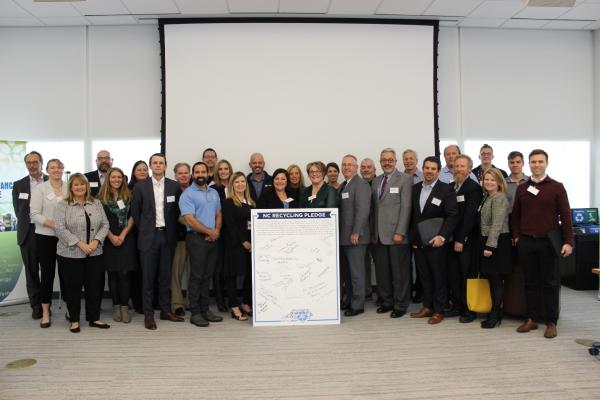
NCDEQ would like to thank the following organizations and companies for participating:
Ardagh Group / Bridgestone Americas / Burt's Bees / Can Manufacturers Institute / Carolina Recycling Association / Carton Council / Clear Path Recycling / Coca-Cola Consolidated / Eaton / Economic Development Partnership of NC / Envision Plastics / Evergreen Packaging / Fiberon Recycling / Grifols Therapeutics / McGill Environmental / NC Beverage Association / NC Governor's Office / Pepsi Bottling Ventures / PepsiCo / Pfizer / Plastic Materials / Polywood / Republic Services / Resource Recycling Systems / Southeast Recycling Development Council / Sonoco Recycling / Strategic Materials / The Recycling Partnership / Unilever / Waste Reduction Partners
Carolinas Glass Recycling Summit
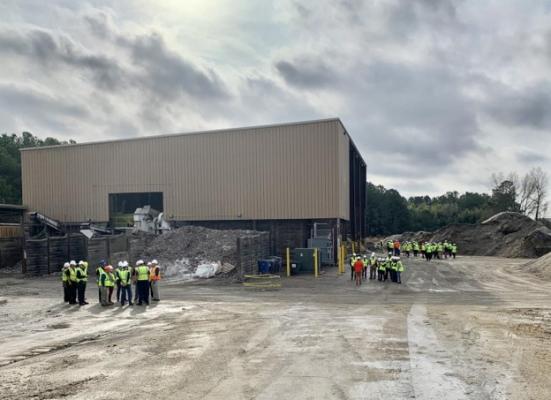
The Carolinas Glass Recycling Summit was held on December 10 in Wilson. The event, hosted by Strategic Materials, the Carolina Recycling Association (CRA) and NC DEACS, attracted a standing-room-only crowd of more than 125 recycling professionals. In addition to a tour of Strategic Material’s glass beneficiation plant, attendees heard the latest information on glass recycling.
The presentations were broken out into two sections. The first covered information on glass demand and economics, and featured speakers from The Ardagh Group, North American Insulation Manufacturing Association and Glass Packaging Institute. These organizations represented different product segments and shared the common message that a steady supply of glass from the Carolinas is important for manufacturing.
In the current state of low markets for recyclables, some communities are evaluating the option of taking glass out of their recycling to try to alleviate costs. The second part of the day focused on glass collection and processing methods in the Carolinas, and featured several communities that have found creative ways to keep their glass recycling programs.
If you missed the Carolinas Glass Recycling Summit, you can still watch a webinar of the event and see all of the presentations on the CRA website.
CRA 2020
The Carolina Recycling Association will return to North Carolina this year, holding the 30th CRA conference at the Raleigh Convention Center March 23 through 26. The conference is geared toward recycling professionals from North and South Carolina as well as different parts of the southeast. The conference program features tours, workshops and sessions in addition to the exhibition hall, which features vendors representing various recycling companies and equipment manufacturers.
For more information or to register, visit the Carolina Recycling Association website.
North Carolina Lands Jobs and Investment with New Airplane Recycler
On December 19, Governor Roy Cooper welcomed a new subsidiary of Aircraft Solutions USA Inc. to Lenoir County where the company will decommission and recycle commercial and military aircraft. Aircraft Solutions plans to invest nearly $100 million to establish the recycling center and expects to create 475 new jobs. For more information, see the announcement from the Economic Development Partnership of North Carolina.
Tracking Growth of Plastic Recycling Capacity in North America
The Northeast Recycling Council recently released a report outlining expanded capacity for plastics recycling in North America. The report identifies 15 new facilities and 10 expansions that will use more recycled plastic to make new products or process recyclable plastic into feedstocks ready for remanufacturing.
Announcements and Opportunities
- Feb. 17-19: Plastics Recycling Conference 2020 will be held in Nashville, TN. The event brings together international plastics reclaimers, equipment manufacturers, brand owners, brokers, government officials and leading sustainability voices to move the plastics recycling industry forward. Last year’s conference attracted 2,000 attendees from 35 countries.
- Feb. 20: Facts and Figures 2017 Webinar from the Environmental Protection Agency will present the latest trends in materials generation, recycling, composting, combustion, energy recovery and landfilling in the United States.
- Mar. 18-19: National Zero Waste Conference will be held in Berkeley, CA. The two-day educational and networking event is organized by the National Recycling Coalition and promotes efforts around zero waste, circular economy, waste prevention, reuse, recycling and composting.
- May 12-13: Carpet America Recovery Effort Conference will be held in Portland, OR. Hear about innovations in the carpet recycling industry, including new and existing products created with post-consumer carpet, policy impacts, the rise of the circular economy, and the voluntary product stewardship program.
- New opportunity: Glass Certification Program offers material recovery facilities the opportunity to be recognized for effective glass recycling by the Glass Recycling Coalition.
The Recycling Business Assistance Center (RBAC) is a program of the N.C. Division of Environmental Assistance and Customer Service (DEACS) that provides technical, business and financial assistance to recycling companies.
2019
Clear Path Recycling Upgrades Bottle Wash to Expand PET Recycling Capacity
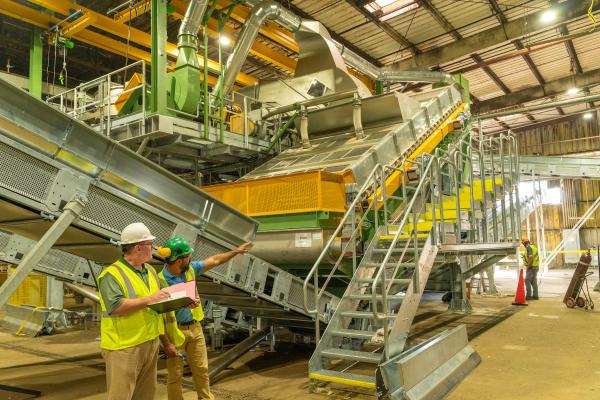
Funding from the 2019 Recycling Business Development grant program helped Clear Path Recycling modernize the bottle wash stage of its Fayetteville facility, allowing the company to increase its recycling of PET bottles annually. The modernization included the purchase of a new custom-designed wash trommel to replace two aging trommels. The company re-engineered the feed system to and from the new trommel to further improve efficiency and maximize throughput. Grant funding was used to help purchase a conveyor belt and vibrating screen as part of the redesigned infeed system.
Clear Path Recycling, LLC was created in 2010 as a joint venture between Shaw Industries, the world’s largest carpet manufacturer, and DAK Americas, the largest PET resin producer in the Americas and the second largest Polyester Staple Fiber producer in the Americas. The Clear Path Recycling upgrade this summer allows the company to process higher volumes of waste bottles through the facility and buy more locally generated plastic waste to meet the increasing demand for recycled PET in North Carolina. The majority of recycled PET flake produced by Clear Path Recycling is used as feedstock in the production of flooring, fibers and resins.
Applications for 2020 Recycling Business Development Grant projects are being accepted now through Nov. 14.
Carolinas Plastics Recycling Event
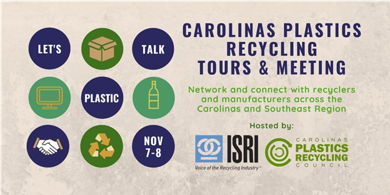
The Carolinas Plastics Recycling Council (CPRC) and the Institute of Scrap Recycling Industries (ISRI) are partnering to host an industry-focused event on Nov. 7-8 in Ft. Mill, S.C. The first day will feature tours of Sun Fiber, an international manufacturer of PET staple fiber fill, and WEIMA, an international manufacturer of industrial shredders and briquetting presses. The second day will feature networking and presentations on plastics identification, processing technology, chemical recycling, market trends and end uses.
The CPRC/ISRI event is open to recycling professionals, haulers, collectors, plastics processors and recyclers, end-users, material recovery facilities (MRFs), recycling equipment sales, and other related organizations who supply, produce or use recycled plastic materials. This is a great opportunity to network with new contacts, renew friendships with peers and learn from experienced veterans to improve efficiency and profitability. Register at:
Recycle Right NC Campaign is helping residents be 'cart smart'
In early September, the Division of Environmental Assistance and Customer Service’s Recycling Program, along with 215 local governments across the state, launched the Recycle Right NC campaign. The 10-week public education campaign is designed to encourage North Carolinians to recycle right by knowing which items are recyclable and which items go in the trash bin.
The goal is to recover more valuable materials like cans, bottles, paper and cardboard while reducing the amount of non-recyclables in the recycling bin to maximize economic and environmental benefits to the state.
“Recycling is not simply an environmental endeavor,” said DEACS Recycling Section Chief Wendy Worley. “The recycling industry employs more than 16,000 North Carolinians in private sector jobs alone. These companies prepare and supply recyclables to manufacturers who rely on receiving clean, high-quality materials to make new products.”
Since its launch, the DEACS Recycle More NC page on Facebook has reached more than 600,000 people and has generated almost 20,000 responses, likes or shares. Communities across the state have been sharing the Facebook posts and getting involved with their residents directly. In addition to social media work, local governments have been involved with the media to highlight positive recycling stories. Haywood, Greene and Brunswick counties passed Council resolutions in support of the campaign.
Working with local government partners, the campaign aims to clean up the recycling stream to create a more resilient recycling industry, conserve North Carolina’s natural resources and boost the local economy. Collective outreach with consistent messaging across the state will help reduce confusion and give residents confidence that North Carolina is and continues to be a leader in recycling.
2019 Recycling Economic Impact Report
The Institute of Scrap Recycling Industries (ISRI) released the 2019 Economic Impact Study Executive Summary highlighting the significant economic and environmental impact of the United States’ recycling industry.
The economic analysis shows that the scrap recycling industry is a major economic engine powerful enough to create 531,510 jobs, generate nearly $110 billion in economic activity and provide $12.9 billion in tax revenues for governments across the country – while protecting the earth’s air, water and land for future generations.
Joe Pickard, chief economist, states in a press release from ISRI that “the recycling industry continues to power America’s manufacturing base, creating jobs, generating tax revenue, and proving valuable feedstock for new products.
“In the U.S., we continue to process more material into valuable commodities, 70 percent of which is used right here by American manufacturers. With the innovation and new technologies coming online, this trend is expected to continue upward,” Pickard adds.
The study identifies direct and indirect economic impacts and allows users to break down impacts at the national, state and congressional district levels. The analysis shows North Carolina’s scrap recycling industry accounting for 15,909 jobs with wages of more than $850 million and generating $3.1 billion in economic impact.
The study defines the scrap recycling industry as firms in the private sector involved in the processing and brokerage of scrap metals, plastics, rubber, paper, textiles, glass and electronics. The study does not include impacts from the recycling of construction and demolition debris, organic materials, or hazardous or special wastes.
Accepting Applications for 2020 Recycling Business Development Grants
The RBAC seeks viable, well-planned proposals that divert materials from the waste stream and create jobs from recycling businesses and nonprofit organizations for the 2020 Recycling Business Development Grant cycle. Applications are due at 5 p.m. on Thursday, Nov. 14.
Funding priority this year will be considered for projects that involve:
- Single-stream material recovery facility upgrades;
- Plastics (non-bottle) recycling processing;
- Fiber (other than newsprint or office paper) recycling processing;
- Use of priority plastics or fiber in recycled product manufacturing; or
- Glass container recycling processing.
Applicants can request up to $60,000 for priority projects or up to $40,000 for any project that does not fall into a priority category. All grants require a 50 percent match from the applicant.
Contact Sandy Skolochenko at 919-707-8147 or Mike Greene at 919-707-8137 to learn more. Visit the RMMS grant webpage
DEACS Annual Report
The Recycling Business Assistance Center is housed in DEACS, which released its inaugural annual report this summer that highlights its work with a diverse set of clients to achieve positive results for North Carolina's environment and economy. Read the report on the DEQ website.
Announcements and Opportunities
- Oct. 31: Using More PCR webinar from the Association of Plastics Recyclers. – This session will provide an in-depth overview of how to incorporate postconsumer recycled content (PCR) into packaging, how to source and reduce costs of PCR, as well as a summary of Walmart’s PCR goals and feasible PCR percentage by packaging format.
- Dec. 10: Carolinas Glass Recycling Summit hosted by Strategic Materials, DEACS and the Carolina Recycling Association (CRA) will be held at the Strategic Materials facility in Wilson, N.C. The summit will include a tour of the facility along with presentations and conversations about recycled glass end markets, collection ideas, success stories and available grant programs.
- Jan. 28-31: Compost 2020 in Charleston, S.C. will offer three days of learning and networking with the U.S. Compost Council. Meet businesses, government leaders and organizations who lead the industry in compost production, healthy soil and climate change mitigation. The three-day conference will offer dozens of workshops on policy, operations and program planning and a trade show featuring organics recycling equipment, products and services.
The Recycling Business Assistance Center (RBAC) is a program of the N.C. Division of Environmental Assistance and Customer Service (DEACS) that provides technical, business and financial assistance to recycling companies.
Coming Soon: 2020 Recycling Business Development Grant Cycle Kickoff
The 2020 Recycling Business Development Grant Request for Proposals, including the application materials, will be released and posted on RBAC’s grant webpage in September 2019. It is anticipated that the 2020 Recycling Business Development Grant priorities will focus on materials impacted by challenged recycling market conditions. For more information, contact Mike Greene at (919) 707-8137.
Recycle Right NC Campaign
The Division of Environmental Assistance and Customer Service (DEACS) is excited to announce the Recycle Right NC campaign. This 10-week anti-contamination campaign, which will be launched this fall, is the culmination of meetings with material recovery facilities (MRFs), local haulers and local governments’ representatives to create unified messaging to reduce residential curbside recycling contamination.
Residential recycling collection companies and local governments will have access to newly designed educational materials that have been approved by each MRF in North Carolina. Participating recyclers will be able to request customized outreach materials with features such as company logos, specific collection instructions and collection calendars. They will also have access to free social media posts and website content to educate communities about what to put in the bin and what to leave out. The division is also providing customizable press releases and facts to support a unified message about reducing residential curbside recycling contamination.
Companies or organizations involved with residential curbside recycling collection are encouraged to participate. For more information, contact Mike Greene at (919) 707-8137.
North Davidson Garbage Rebuilds MRF with First Awarded DEACS Recycling Infrastructure Grant
In August of 2018, Lexington’s North Davidson Garbage Service and Recycling Center suffered a devastating loss when its 54,000 square-foot material recovery facility (MRF) was destroyed by a fire. One year later, it is re-opening the MRF – thanks to commitments from the City of Thomasville and Forsyth County – and with assistance as the first recipient of DEACS’ Regional Recycling Infrastructure Grant.
North Davidson Garbage, which operates as a residential recycling processor, was able to maintain all of its waste collection operations and some of its recycling collection during reconstruction. While some communities were forced to find other outlets for recyclables, North Davidson Garbage was able to haul some recyclables to other MRFs in the state.
“Even with the set-back of the fire, we never stopped providing waste and recycling collection service in Davidson County and the surrounding areas,” said North Davidson owners Brad and Brooke Everhart.
As of August 1, North Davidson Garbage sold its curbside collection operations to Waste Industries as they plan to focus on recycling processing. The Everharts will continue to receive residential recyclables once their MRF re-opens this summer, and they anticipate the new MRF will have improvements in efficiency and throughput.
The grant funds from the Regional Recycling Infrastructure Grant will be used to purchase a metering bin for the new MRF, which is scheduled to reopen in the summer of 2019.
DEACS Regional Recycling Infrastructure Grants
The Regional Recycling Infrastructure Grant program was designed to assist areas in need of developing or refurbishing residential comingled recycling infrastructure on a regional basis. Eligible applicants include local governments or private recycling businesses who are partnering with local governments. Grant funds must be used to develop new infrastructure or upgrade a MRF or recycling transfer station that will serve customers from multiple counties.
Proposal Deadline: None – applications accepted on an ongoing basis
Maximum Grant Award: $80,000
Minimum Cash Match: 20 percent of grant award
Contact: Matt James, (919) 707-8133
Announcements and Opportunities
- Aug. 26-28: Resource Recycling Conference in New Orleans, Louisiana, brings together the recycling industry’s most influential policy-makers, industry leaders and government officials. Key conference topics include: the latest from Asia, concerns and opportunities in plastics and paper, drilling down on contamination, and safety throughout the chain.
- Aug – Oct: Association of Plastics Recyclers Webinar Series offers five upcoming webinars around designing for plastics recyclability.
- Nov. 7-8: Carolinas Plastics Recycling Council will hold its annual meeting in partnership with the Institute of Scrap Recycling Industries (ISRI) in Fort Mill, South Carolina. The event will offer tours of nearby recycling facilities, networking opportunities and presentations from industry leaders on plastics identification, processing, end uses, market trends and chemical recycling.
The Recycling Business Assistance Center (RBAC) is a program of the N.C. Division of Environmental Assistance and Customer Service (DEACS) that provides technical, business and financial assistance to recycling companies.
MRFshed and Outreach Support

Like the more familiar term “watershed,” a MRFshed refers to all of the communities, haulers and local governments that feed recyclables into a single material recovery facility (MRF). The Division of Environmental Assistance and Customer Service (DEACS) offers specialized assistance to each MRFshed across the state since each region has specific recycling needs.
The division provides graphic design support based on the materials that each region’s respective MRFs accept for recycling. This information gives local governments and independent curbside recycling collection companies the ability to make informed decisions on the materials they want to include on their accepted items list. Division staff members also are able facilitate focus meetings with staff, government leaders and recycling businesses to offer technical and educational support.
This fall, DEACS is planning to launch a statewide education campaign that communities, haulers and MRFs will be able to opt-in to participate. As part of the campaign, DEACS will provide:
- Social media posts
- Direct mailers
- Outreach successes
- Press releases to share with local media
If you have any questions or would like to request more information, please contact Sandy Skolochenko at 919-707-8147.
State Environmental Officials Urge Residents to Continue to Recycle Amid Changing Market Conditions
Department of Transportation Paves the Way for Increased Recycled Content
As of April 1, the N.C. Department of Transportation (NCDOT) approved post-consumer plastic for use in corrugated pipes purchased by the agency. Previously, all recycled plastic HDPE used in piping had to come from industrial sources, but the American Association of State Highway and Transportation Officials approved the use of post-consumer plastic in pipes a year ago. The agency followed suit this April and expects to purchase more corrugated pipe made from post-consumer HDPE plastic in the coming months.
Glass Recycling Foundation Established
This April, the Glass Recycling Foundation (GRF) formed as a non-profit organization with the goal to raised funds and offer assistance to increase glass recycling across the country. GRF will collaborate with the Glass Recycling Coalition – a 40-member industry group – to highlight best practices in the industry and support local-level glass recycling projects.
For more information, go to the Glass Recycling Foundation's website.
2019 CRA Annual Conference
The Carolina Recycling Association (CRA) celebrated its 29th year at the annual trade show and conference Mar. 18 - 21 in Charleston, South Carolina. More than 500 recycling professionals from North and South Carolina attended the conference.
This year’s conference continued the promotion of the CRA conference app over the printed program, which reduces paper use, provides users with up-to-the-minute updates on conference events and offers extended speaker information.
Hot topics including contamination, enforcement and back-to-basics recycling were discussed throughout the conference. Presentations from all the sessions are available at: Carolina Recycling Association website.
Mark your calendars! The conference returns to Raleigh next year from March 23 - 26.
Announcements and Opportunities
- Jun. 18: N.C. Compost Council Annual Meeting will be held at the N.C. Zoo in Asheboro. The Annual Meeting provides a great opportunity to network with other compost enthusiasts, discover what the Composting Council has accomplished over the past year and gain insight to future plans. The meeting will include two breakout sessions on carbon sequestration and neighborhood organic recycling programs, along with lunch and a tour of the N.C. Zoo’s Composting facility. Registration is required.
- Ongoing: Regional Recycling Infrastructure Grant applications will be accepted on a rolling basis while funding is available. Funding may be used to develop new infrastructure, or upgrade a MRF or recycling transfer station that will serve more than one local government residential recycling program across multiple counties. Eligible applicants include local governments or private recycling businesses who are partnering with local governments.
The Recycling Business Assistance Center (RBAC) is a program of the N.C. Division of Environmental Assistance and Customer Service (DEACS) that provides technical, business and financial assistance to recycling companies.
Market Update: Reflecting on 2018
Recycling markets around the world experienced major disruptions after Chinese import restrictions went into effect in early 2018. The N.C. Recycling Business Assistance Center (RBAC) tracks quarterly pricing trends for household recycling commodities. Prices are averages from three recycling processors located in the state’s eastern, central and western regions. The two graphs below show quarterly prices over the past five years for containers and fiber.
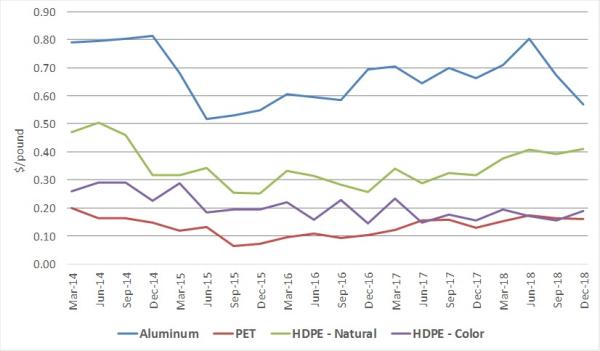
Fortunately for North Carolina, the southeastern United States has strong processing and end-use markets for PET and HDPE, which kept markets fairly insulated from market instability seen in other parts of the country. Values for these commodities remained relatively steady throughout the year, finishing 2018 at values slightly higher than at the end of 2017 with the most growth seen in HDPE Natural pricing. Aluminum value dropped during the last two quarters of 2018, which is a trend seen nationwide as a result of Chinese tariffs imposed on scrap imports.
Fiber markets, on the other hand, have not been insulated from the effects of global market shifts. Exports of mixed paper and old corrugated cardboard (OCC) to China dropped significantly leading to an abundance of supply in the United States. Except for office paper, fiber materials experienced a sharp decrease in market value that remained low for most of 2018. In addition to lower prices, material recovery facilities (MRFs) and processors are being held to higher quality standards, which requires investments in labor and equipment to remove contaminants. With the value of mixed paper hovering just above $0, some MRFs returned to separating paper into higher-value material grades (e.g., office paper, magazines). This is a reversal of the trend seen for the past several years. Although the immediate future of fiber markets is unclear, demand for recovered fiber is expected to grow during the next couple of years, which should lead to improved pricing. According to the Northeast Recycling Council, 15 paperboard mills have announced plans for construction or expansion in the United States. The list includes:
- Ecomelida will open a new facility in South Carolina to process food and beverage cartons, and paper mill byproducts;
- Shanying will reopen a closed paper mill in Kentucky to consume OCC and potentially mixed paper;
- Nine Dragons, China’s largest fiber company, is purchasing an existing mill in West Virginia to consume office paper, newsprint and other grades;
- Cascades will temporarily reopen a closed mill to produce linerboard and corrugated medium, using OCC and mixed paper;
- Pratt Industries will open a new cardboard mill in Ohio, which will consume OCC and mixed paper; and
- International Paper will convert a facility in Alabama to produce linerboard and containerboard using OCC.
Reminder - Request for Proposals: Regional Recycling Infrastructure Grants
The N.C. Division of Environmental Assistance and Customer Service (DEACS) reminds you of a new grant funding opportunity available to local governments and private businesses through the Regional Recycling Infrastructure Grant program.
Eligible applicants include local governments or private recycling businesses who are partnering with local governments. Grant funds must be used to develop new infrastructure or upgrade a MRF or recycling transfer station that will serve customers from multiple counties.
Proposal Deadline: None – applications accepted on an ongoing basis
Maximum Grant Award: $80,000
Minimum Cash Match: 20 percent of grant award
Contact: Matt James, (919) 707-8133
N.C. Recycling Business Grants Spur Private Investment, Job Creation
State recycling business grants awarded this spring are expected to generate approximately 38 new jobs, spur more than $1.3 million in new, private business investments and further reduce the state’s dependence on landfill disposal. Seventeen companies that collect, process and manufacture new products with recycled materials will receive $511,000 in funds from DEQ’s Recycling Business Assistance Center in 2019.
“Recycling businesses provide high quality jobs for North Carolinians, spur economic growth and keep valuable materials out of the waste stream,” said DEQ Secretary Michael Regan. “These businesses convert recyclables into raw materials for American manufacturing companies. The result is stronger local economies that use less energy, rely less on imported materials, and are more resilient to global market shifts and changes. The projects funded by these grants help build more sustainable and resilient North Carolina communities.”
Awarded grant projects include:
- Expanding plastic processing capacity: Seven companies will increase the quantities and types of recyclable plastic they are able to process, including PVC, colored HDPE, and post-industrial plastic by installing new shredding, sorting and screening equipment.
- Upgrading material recovery facilities to increase processing capacity: Two companies will add equipment to better manage incoming volume and effectively sort plastics into higher value grades.
- Building recycled end-product manufacturing capacity: One company will manufacture new products using recycled rubber and plastic.
- Increasing shipping efficiency of recyclable materials: Three companies will increase shipping efficiency of recycled materials by upfitting an abandoned rail spur and purchasing trailers for improved transportation.
- Expanding domestic processing of other materials: Two companies will expand food waste processing and improve end-product compost quality by installing new technology. One company will improve material identification to expand carpet recycling, and another company will increase collection of construction and demolition debris for recycling.
For additional information, read the 2019 awards press release or go to the Recycling Business Development Grant Program website. For questions, please contact Sandy Skolochenko at (919) 707-8147.
Register Now for the Carolina Recycling Association Annual Conference
The Carolina Recycling Association (CRA) will return to South Carolina this year holding its 29th annual conference at the Charleston Area Convention Center March 18-21. Recycling professionals from North and South Carolina as well as well as different parts of the southeast will attend the conference. In addition to tours, workshops and sessions, the exhibition hall will feature vendors representing various recycling companies and equipment manufacturers.
The Carolina Recycling Association will host an evening networking event Tuesday, March 19, at Henry’s on the Market in downtown Charleston. Tickets are $25, and include several shuttles to and from the heart of Charleston, refreshments, and access to a private room at Henry’s while enjoying stunning roof-top views of Charleston.
For more information or to register, please visit the Carolina Recycling Association website.
Anti-Contamination Workshops and Messaging
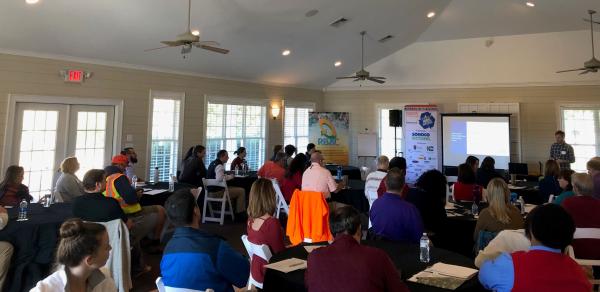
The Division of Environmental Assistance and Customer Service (DEACS)and the CRA co-hosted two contamination workshops in December in Greenville and Newton. The turnout at both events was outstanding. Thank you to all who attended! The workshops featured speakers from DEACS, local governments and private companies, including MRFs and haulers. Presentations are available on the CRA website.
New Recycling Outreach Materials
At the workshops, DEACS presented new tools to help haulers, MRFs and communities educate customers on contamination issues and what to recycle. These include materials like the social media toolkit, accepted materials standardized guideline signage, brochures, mailers/postcards, OOPs tags and talking points for productive communication with decision-makers. All of the tools are available online, including some Spanish versions.
DEACS staff can customize these tools for individual community or business needs. Contact Mel Gilles for assistance.
10 Steps to Stop Contamination
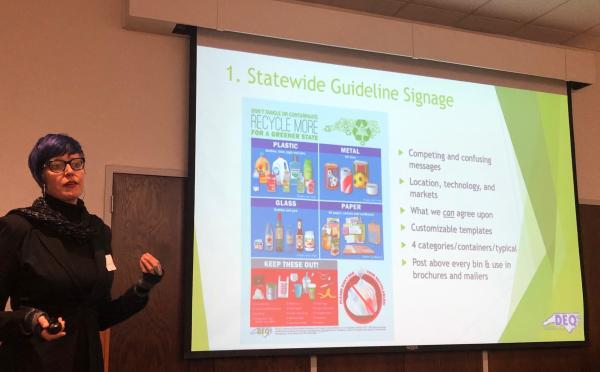
Mel Gilles, DEACS education and outreach coordinator, gave a presentation on “10 Steps to Stop Contamination.” The steps below are what recyclers or haulers can do tomorrow to reduce contamination:
- Use Statewide Guideline Signage – standardized list of accepted materials statewide;
- Provide Training and Messaging – consistent communication across communities, employees, haulers, MRFs and local governments;
- Maintain Standardized and Consistent Bin Set Up – ideas include Twin the Bin, color code, consistent signage and stationary bins;
- Give
OOPs Tags at the curb – direct feedback and encouragement at the curb; - Use Brochures – wide selection available on the DEACS website, including accepted list and schedule of curbside pick-up or drop off locations;
- Pay for Advertisements – example: customizable bus advertisements;
- Provide
Direct Mailers/Postcards – for a concise message to highlight top issues; - Use the Social Media Toolkit – DEACS offers 12 ready-to-post images with text and The Recycling Partnership has many more;
- Provide Additional Materials – Know Your No’s, Reduce Single Use, Office Guidelines;
- Believe that education works and that it’s worth it.
Announcements and Opportunities
- Mar. 9-12: C&D World 2019, the annual meeting of the Construction and Demolition Recycling Association, will take place in Brooklyn, NY. Experts will provide information on the economy, today’s tight labor market, biochar, recycled concrete, C&D glass and asphalt shingle end products.
- Mar. 11-13: Plastics Recycling Conference 2019 will take place at the Gaylord National just outside of Washington, DC. The event brings together international plastics reclaimers, equipment manufacturers, brand owners, brokers, government officials and leading sustainability voices to move the increasingly complex international plastics recycling industry forward. Last year’s conference attracted nearly 2,000 attendees from 35 countries.
- Always Available: NC WasteTrader is a free online platform to market reusable or recyclable commodities. Businesses, industries, recycling companies, waste haulers, local governments, institutions and other commercial generators of waste commodities can visit NC WasteTrader to list available and wanted materials, and search for potential new feedstocks. For further information and assistance, contact Tom Rhodes at (919) 707-8140.
The Recycling Business Assistance Center (RBAC) is a program of the N.C. Division of Environmental Assistance and Customer Service (DEACS) that provides technical, business and financial assistance to recycling companies.
2018
Milk Jugs Get a New Life With Polywood
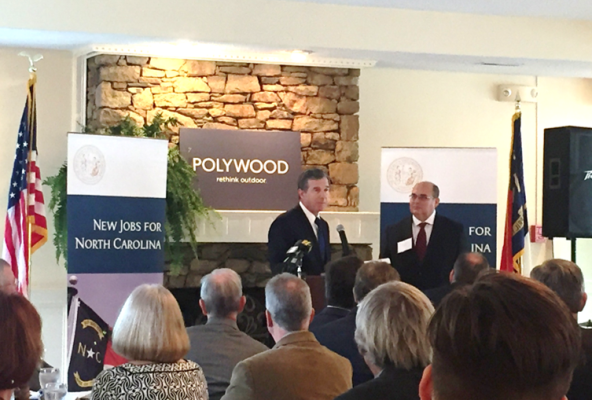
Governor Roy Cooper announced on October 16 that POLYWOOD, a manufacturer of outdoor furniture made from recycled plastics, will create 384 jobs over five years in Person County. Headquartered in Syracuse, Indiana, the company is investing $35.3 million into North Carolina to open its second full scale production campus in Roxboro.
“Innovative companies like POLYWOOD show how North Carolina’s furniture industry can continue to adapt and succeed, thanks to our strong workforce,” said Governor Cooper.
POLYWOOD was founded by Doug Rassi and Mark Phillabaum in 1990 with the idea of taking milk jugs and recycling them into plastic lumber furniture. The company developed state-of-the-art technology to manufacture wood alternative lumber from recycled plastics to make low-maintenance durable outdoor furniture.
The North Carolina facility will serve as a full manufacturing and distribution center consuming 34-40 million pounds of recycled HDPE plastic each year. The site will also house a reclamation center for other types of recycled plastics that will be processed, washed and sold to other plastics end users.
The Recycling Business Assistance Center (RBAC) worked with the Economic Development Partnership of N.C. (EDPNC) and Person County Economic Development to support the company’s expansion to N.C. Contact Sandy Skolochenko at 919-707-8147 for more information.
Anti-Contamination Workshops for Community Recycling
The Carolina Recycling Association and N.C. Division of Environmental Assistance and Customer Service (DEACS) will host two workshops in December to provide recycling professionals with the opportunity to participate in solution-based information sessions and discuss contamination reduction in the recycling stream. The workshops will provide tools, strategies and resources to combat contamination, along with recycling market updates and opportunities to network.
Lunch will be provided, and space is limited. The two events will be in Greenville (Pitt County) and Newton (Catawba County) from 10 a.m. to 2 p.m.
- Dec 4: East Workshop - Bradford Creek Golf Course in Greenville
- Dec 6: West Workshop - Catawba County Government Center in Newton
Please visit
Accepting Applications for 2019 Recycling Business Development Grant
The RBAC seeks viable, well-planned proposals that divert materials from the waste stream and create jobs from recycling businesses and nonprofit organizations for the 2019 Recycling Business Development Grant cycle. Applicants can request up to $40,000 of grant funds, and a 50 percent match is required. The application period ends at 5 p.m. on Thursday, Nov. 1.
Funding priority this year will be considered for projects that address single-stream material recovery facility upgrades, non-bottle plastics recycling processing, use of recycled non-bottle plastics or residential mixed paper in recycled product manufacturing, or printing of DEACS-designed and approved education materials (handouts/mailers/oops tags) for curbside recycling customers.
Contact Sandy Skolochenko at 919-707-8147 or Mike Greene at 919-707-8137 to learn more and visit the DEQ website
Plastics Recyclers of the Carolinas - Join Us in Charleston!
The 2018 Carolina Plastics Recycling Council meeting will be collocated with the Southeast Recycling Development Council (SERDC) Summit in Charleston, South Carolina. Come meet your peers and discuss industry developments, impacts from China policies and recycling opportunities in the Carolinas. Speakers include the Association of Plastics Recyclers, RBAC, S.C. Department of Commerce, US Fibers, Custom Polymers, Bromley Plastics and other plastics industry representatives. This meeting is open to all plastics recyclers, local/state/federal government officials, recycling industry professionals and related interested parties.
Recycling Business Connections 2018
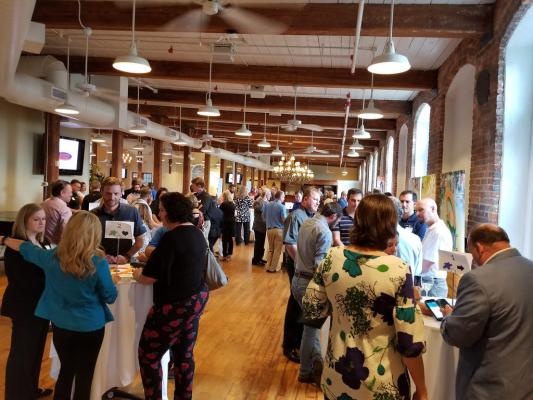
Earlier this month, the Carolina Recycling Association and the RBAC hosted the 5th annual Recycling Business Connections networking event at Revolution Mill in Greensboro. The event attracted 85 participants representing a full spectrum of recycling companies from the Carolinas and the Southeast.
The networking portion of the evening, best described as “speed dating” for recycling businesses, gave participants the opportunity to meet a large number of contacts in one place.
The event was sponsored this year by Company Wrench, Metaltech Systems, Coastal Wire, Republic Services and Sonoco Recycling.
Recyclers connect during the new “networking remix” at Recycling Business Connections 2018.
Announcements and Opportunities
- Nov. 1: 2019 Recycling Business Development Grant applications are due to RBAC. Recycling businesses and nonprofits organizations are eligible to apply for grants to divert materials from the waste stream and create jobs. Contact Sandy Skolochenko at 919-707-8147 for more information.
- Nov. 2: 2018 Diesel Emission Reduction Grant applications are due to the N.C. Division of Air Quality. Individuals, businesses and organizations from the public and private sector are eligible to apply for grants to reduce diesel emissions. Example projects include repowering non-road construction or agricultural equipment with cleaner burning engines, converting vehicles to run on alternative fuels and repowering a locomotive.
- Nov. 6: Sustainable Materials Management: A Compliment or a Barrier to Recycling? Webinar from the Association of Plastics Recyclers. Learn about the basic principles of sustainable materials management and why recycling should remain a crucial element in its adoption.
- The Natural Capital Investment Fund is partnering with the Carolina Small Business Development Fund and Mountain BizWorks to offer Access to Capital workshops across western North Carolina. These workshops are designed for western North Carolina small business owners looking to grow their operation or might need capital. It is an opportunity to hear from successful entrepreneurs about how they've accessed and used funding to grow their business. Events are free of charge and will be held:
- Nov. 12-14: Southeast Recycling Development Council (SERDC) Summit in Charleston, South Carolina, will provide a platform to identify successes and challenges around fighting contamination, creating cohesive relationships, and improving markets. This premier event brings together influential industry leaders, policy makers, budget decision-makers, government officials and key recycling organizations. The Carolinas Plastics Recycling Council Annual Meeting will be collocated with the SERDC Summit on Nov. 12.
The Recycling Business Assistance Center (RBAC) is a program of the N.C. Division of Environmental Assistance and Customer Service (DEACS) that provides technical, business and financial assistance to recycling companies.
Weathering Market Adjustments of National Sword
For months, those in the recycling industry have felt the impacts of China’s recent change in import policies. While the southeastern United States is faring better than other parts of the county, local impacts are still being felt in North Carolina with rising processing costs and declining material values. With ongoing reports about recycling challenges, it is important to understand this complex issue.
The reasons to recycle remain the same. Recycling creates jobs, and spurs local economic development and private investment. Recycling creates high-quality end-products. Recycling conserves natural resources and saves energy. Recycling reduces dependence on landfills.
Your business is one of more than 650 in the state with employees and livelihoods dependent upon quality recyclable materials as supply. It’s important for local and industrial collection and diversion programs to continue feeding materials into the system while focusing on the heart of the matter: quality and quality.
Unwanted materials in recycling are costly to remove and strain the economics of the entire system. Maximizing the capture of recyclables from the waste stream and minimizing the things that do not belong are the key to stabilizing the market and ensuring that local collection and processing systems are efficient, effective and resilient.
What can the private industry do to respond?
- Educate customers to keep contaminants out. The Division of Environmental Assistance and Customer Service (DEACS) developed a free toolkit to help.
- Continue to invest in infrastructure to improve and expand domestic processing of post-consumer and post-industrial recyclables, so materials can be fed back into the economy as valuable manufacturing feedstock.
- Consider applying for grant funding to invest in infrastructure improvements.
- Commit to buying products with recycled content to close the loop and drive demand.
- Be up front about anticipated price increases. Advanced notice and transparency about higher processing costs and lower market values will allow customers – be it haulers, individuals or local governments – to plan ahead and brace for change.
The Recycling Business Assistance Center (RBAC) is available to help! Contact Mike Greene at 919-707-8137 or Sandy Skolochenko at 919-707-8147.
Sonoco Raleigh’s Optical Sorter is Reducing Contamination in Mixed Paper
Sonoco Recycling recently completed installation of a new optical sorter at its Raleigh material recovery facility (MRF). Sonoco was awarded a $33,000 Recycling Business Development Grant in 2017 to help purchase the equipment to clean up material quality at the MRF. Sonoco installed an optical sorter on the mixed paper line to remove flattened aluminum, plastic containers and other contaminants that make it through the automated paper screen. The optical sorter has allowed Sonoco to reduce mixed paper contamination by at least a third and possibly as much as one-half, resulting in a cleaner and more marketable end product. Additionally, the containers that were previously exiting the MRF in mixed paper bales are now rerouted to the container line where PET, HDPE and aluminum are appropriately sorted into higher value commodity streams, resulting in additional revenue for the MRF.
Staffing Updates
The Division of Environmental Assistance and Customer Service is pleased to announce the addition of two new employees to its Recycling and Materials Management Section.
Bruce Fulford began work in June as the new organics recycling specialist. He provides communities and businesses with technical assistance regarding composting and organic material management. He comes to North Carolina with 20 years of experience managing his own composting facility that served the City of Boston, Massachusetts. Bruce can be reached at bruce.fulford@ncdenr.gov or (919) 707-8123.
Mel Gilles began in July as the new recycling education and outreach specialist. She provides technical assistance and resources to help businesses, local governments, schools and the recycling industry promote waste reduction and recycling in North Carolina. She comes to North Carolina from Boulder, Colorado, with extensive experience in recycling and zero-waste initiatives, having served as Commercial Sector Sustainability Manager of Eco-Cycle. Mel can be reached at mel.gilles@ncdenr.gov or 919-707-8127.
Coming Soon: 2019 Recycling Business Development Grant Cycle Kickoff
The 2019 Recycling Business Development Grant program’s Request for Proposals, including the application materials, will be posted on RBAC’s grant webpage in mid-September 2018. It is anticipated that the 2019 Recycling Business Development Grant priorities will focus around materials impacted by foreign recycling import policies. For more information, contact Mike Greene at 919-707-8137 or Sandy Skolochenko at 919-707-8147.
Repeal of Privilege Tax for Recycling Equipment
Effective July 1, 2018, sales and purchases of qualifying equipment for specific industries (including recycling) are no longer subject to the one percent privilege tax. They continue to be exempt from sales and use tax.
Purchases that qualify for sales tax exemption are outlined in N.C. General Statute 105-164.13 (5k) and include equipment, fuel, piped natural gas and electricity purchased by recyclers.*
*The statute refers specifically to secondary metals recyclers; however, a secondary metals recycler is defined in N.C. General Statute 105-164.3 (37g) as a person that gathers, obtains and converts metals and items that have served their original economic purpose. The RBAC has confirmed with the N.C. Department of Revenue that the bold clause broadens the applicability to recyclers of any material – not just metal.
See the N.C. Department of Revenue's Important Notice about the July 1, 2018 change, and visit the NCDOR
Register Now! Recycling Business Connections Returns to North Carolina

Mark your calendar! The highly successful Recycling Business Connections networking event is set for Tuesday, Oct. 9 in Greensboro. Hosted by RBAC, the Carolina Recycling Association and the South Carolina Department of Commerce, this business-to-business networking event will provide a unique opportunity for recycling business owners and operators to forge new partnerships. Register today to take advantage of early bird rates.
Announcements and Opportunities
- Sept. 25: Plastic Bale Sorting Best Management Practices Webinar from the Association of Plastics Recyclers (APR). Learn about APR’s standardized guidelines for plastic bale sorts and how they can benefit material recovery facilities, municipalities and reclaimers.
- Oct. 15-18: Biocycle REFOR18, the 18th annual national biogas conference, will be held in Raleigh this fall. Make valuable connections and learn from the experts in anaerobic digestion, biogas, renewable energy, composting and food recovery.
- Oct. 22-24: Resource Recycling Conference in St Louis, Missouri, brings together the recycling industry’s most influential policy leaders, CEOs and government officials. Conference topics include materials processing trends, tactics to boost diversion rates, legislative talking points and market analysis.
- Nov. 6: Sustainable Materials Management: A Compliment or a Barrier to Recycling? Webinar from the Association of Plastics Recyclers. Learn about the basic principles of sustainable materials management and why recycling should remain a crucial element in its adoption.
- Nov. 12-14: Southeast Recycling Development Council (SERDC) Summit in Charleston, South Carolina, will provide a platform to identify successes and challenges around fighting contamination, creating cohesive relationships, and improving markets. This premier event brings together influential industry leaders, policy makers, budget decision-makers, government officials and key recycling organizations.
- Nov. 12: Carolinas Plastics Recycling Council Annual Meeting will be collocated with the SERDC Summit. The meeting will offer networking opportunities and will cover current topics in the plastics recycling industry including how purchasing policies can innovate demand, the "Your Bottle Means Jobs" outreach campaign.
The Recycling Business Assistance Center (RBAC) is a program of the N.C. Division of Environmental Assistance and Customer Service (DEACS) that provides technical, business and financial assistance to recycling companies.
DEACS Announces New Recycling Section Chief and Division Director

The Division of Environmental Assistance and Customer Service (DEACS) is pleased to announce that Wendy Worley has accepted the position of Recycling and Materials Management Section chief. In this role, Worley will lead the state’s recycling section, overseeing the Recycling Business Assistance Center (RBAC) and the local government assistance team. She succeeds Rob Taylor who transitioned to a new position in the private sector.
Worley has been with the state’s recycling section for the past 15 years, and has more than 25 years of experience in recycling, solid waste management and program planning. Most recently, she served as the RBAC manager, leading the recycling economic development team to develop strategies to expand and support private sector recycling capacity in the state. Prior to coming to state government, she worked in local government recycling program management and private consulting.
Worley can be reached at 919-707-8136 or wendy.worley@ncdenr.gov.

DEACS also welcomes Jamie Ragan as the new division director. Ragan will oversee the state’s recycling section; environmental assistance section, which includes the permit assistance providers and Environmental Stewardship Initiative; resource and energy efficiency section, including Waste Reduction Partners; and the Department of Environmental Quality’s regional office administrators.
Ragan began working with the department in 2003. She has 20 years of experience providing pollution prevention technical assistance to the agricultural community, businesses, industries and government entities. She can be reached at 919-707-8141 or jamie.ragan@ncdenr.gov.
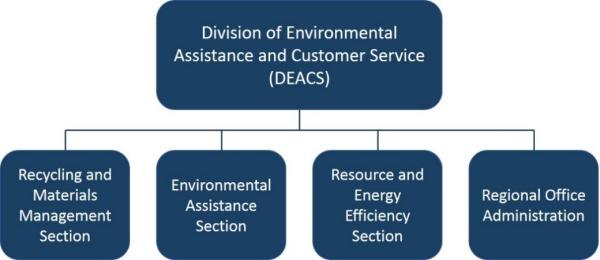
Visit the DEACS website for more information about programs and assistance.
N.C. Recycling Business Grants Spur Private Investment, Job Creation
State recycling business grants awarded this spring are expected to generate approximately 66 jobs, spur more than $2.1 million in new, private business investments and further reduce the state’s dependence on landfill disposal. Twenty-one companies that collect, process and manufacture new products with recycled materials will receive more than $570,000 in funds from N.C. DEQ's Recycling Business Assistance Center in 2018.
“Recycling businesses benefit the state’s long-term economic development while working to provide a cleaner environment for future generations,” said DEQ Secretary Michael Regan. “The projects funded by these grants build lasting ways to divert materials from the waste stream, redirect recyclables back into the economy as manufacturing feedstock and spur job growth. It just shows that the environment and industry are not mutually exclusive.”
Awarded grant projects include:
- Expanding plastic processing capacity: 10 companies will increase the quantities and types of recyclable plastic they are able to process such as agricultural plastic, PVC, polystyrene (Styrofoam) and post-industrial plastic.
- Upgrading material recovery facilities: Two companies will install glass clean-up systems, while another will install an optical sorter – these upgrades will improve material quality and processing efficiency.
- Building recycled end-product manufacturing capacity: Two companies will manufacture new products using recycled wood waste and plastic, respectively.
- Increasing processing capacity of other recyclable materials: Four companies will increase recovery of other recyclables, including electronics, tires, and wood waste from pallets and construction and demolition debris.
- Expanding residential curbside recycling: Two companies will offer curbside recycling collection to new customers in rural areas.
For additional information, read the 2018 awards press release and see the Recycling Business Development Grant Program
DEQ Leadership and N.C. House Representatives Visit Synergy Electronics Recycling
Synergy Electronics Recycling hosted a facility tour on March 28 and welcomed DEQ leadership staff and N.C. House Representatives Jon Hardister (Guilford County) and Kyle Hall (Rockingham and Stokes counties). Synergy is an R2-certified electronics recycler located in Madison and is one of the six electronics recycling vendors on the statewide convenience contract for electronic recycling services. Established in 2000, Synergy has steadily grown and made investments with support through RBAC grants to manage the increasing volume of electronics collected for recycling in the state.
Synergy Electronics Recycling hosts facility tour with DEQ leaders and area members of the N.C. House of Representatives.
2018 CRA Annual Conference and Trade Show

The Carolina Recycling Association (CRA) celebrated its 28th year at the annual trade show and conference March 19-22 in Cherokee. More than 500 recycling professionals from North and South Carolina attended the conference.
In addition to new features like the Healthcare Sustainability Workshop that focuses on recycling in the healthcare industry, this marked the first time in CRA history that the conference took place while it snowed.
Hot topics including China’s National Sword program and recycling contamination were discussed throughout the conference. Presentations from all the sessions are available at the CRA 2018 Conference website.
Next year the conference returns to Charleston, S.C. March 18 - 21.
DEACS staff promote new outreach materials to help educate the public and reduce contamination. Outreach materials are available at no cost for local governments and recycling collectors to use and distribute.
Announcements and Opportunities
- May 16: Northeast Recycling Council Webinar on Finding Opportunity in MRF Glass. Hear from the Closed Loop Fund (CLF) about a recent MRF glass study; the Governmental Advisory Associates' about data that informed CLF study; and Aero Aggregates, a manufacturer of foam aggregate from 100 percent post-consumer, mixed color recycled glass. Need to register?
- May 17: Environmental Protection Agency (EPA) Webinar on Business Innovations in reducing food loss and waste. Hear from three companies that are leading the way to help the U.S. reach its goal of 50 percent food loss and waste reduction by 2030. Want to register?
- May 21: Carolina Recycling Association (CRA) Lunch and Learn at Reconsidered Goods in Greensboro. Join the CRA, Reconsidered Goods, and the Scrap Exchange for a lunch, learn and network event all about creative reuse, selling used materials for good, and a make-and-take buffet of activities. Register here.
- May 22: Association of Plastics Recyclers (APR) Webinar on the Recycling Demand Champions Campaign: Proactively Building Demand for Recycled Plastics. Learn about how the Recycled Demand Champions Campaign is expanding the market for residential plastics, driving investment, increasing supply and producing more high-quality applications for post-consumer recycled plastics. Need to register?
- June 26: Association of Plastics Recyclers (APR) Webinar on Sustainable Materials Management: A Compliment or a Barrier to Recycling? Learn about the basic principles of sustainable materials management and why recycling should remain a crucial element in its adoption. Want to register?
The Recycling Business Assistance Center (RBAC) is a program of the N.C. Division of Environmental Assistance and Customer Service (DEACS) that provides technical, business and financial assistance to recycling companies.
Unifi Hosts Governor Cooper
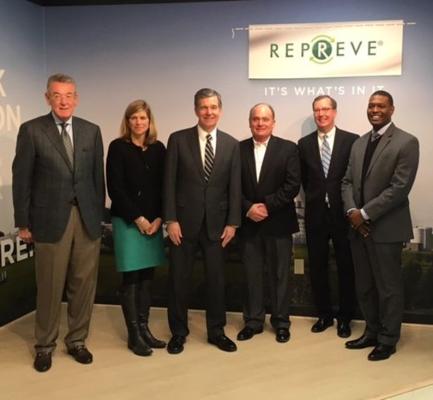
North Carolina Governor Roy Cooper and N.C. Department of Environmental Quality (DEQ) Secretary Michael Regan visited Unifi’s REPREVE sustainable fiber facility in Yadkinville on Tues., Jan. 16. The visit gave Unifi the opportunity to highlight how its recent investments totaling $130 million over the past three years have provided good-paying jobs to North Carolinians and moved the company closer to its goal of transforming 20 billion plastic bottles into high-quality consumer goods. The group discussed Unifi’s vision of increasing “opportunities for North Carolina businesses to turn waste into value, thereby creating revenue streams while continually and meaningfully reducing environmental impact,” as stated by CEO Kevin Hall.
Others in attendance included representatives from the N.C. Department of Commerce, Economic Development Partnership of N.C., UNC Chapel Hill and VF Corporation.
2018 N.C. Markets Update
New Market Pricing Coverage
As recycling markets are constantly evolving, the materials covered need to be updated. Beginning with this issue, RBAC is adding two new categories to the quarterly market pricing survey: 3-7 Plastics and Bulky Rigids. As discussed below, tightening export markets are impacting recycled plastics and RBAC sees value in obtaining market data and tracking these commodities along with PET and HDPE.
National Sword Impacts 3-7 Plastics and Bulky Rigids
China’s National Sword policy has put pressure on pricing and the ability to move materials that have traditionally relied heavily on export markets. While the southeast has remained more insulated than other regions thanks to strong domestic markets for many plastics, some streams such as 3-7 plastics and bulky rigids are experiencing more noticeable impacts. Based on information collected from some of North Carolina’s largest volume material recovery facilities, market conditions are mixed with unstable or zero-profit markets in some instances and no market in others. In December 2017, RBAC investigated domestic market options for bulky rigids and found that processors still have demand for this material and are accepting bales on a case-by-case basis, including KW Plastics in Alabama, IntegriCo Composites in Louisiana, and Prime Plastic Products with a processing facility in Kentucky.
The strain on export options presents an opportunity to improve and expand domestic processing and end markets, and some efforts are already underway. IntegriCo Composites, with support from the Closed Loop Fund, is expanding its processing capacity to meet growing demand for composite railroad ties made from low value mixed plastics. In October 2017, the Association of Plastic Recyclers announced the Recycling Demand Champion Campaign to increase demand for materials made with post-consumer recycled polyolefin content.
Additional Market Challenges
During the last quarter of 2017, RBAC researched the status of carpet and shingle recycling in North Carolina. The market for roofing shingles has not been as robust as it has been in recent years as fewer companies are able to move them. As oil prices have declined, the price for liquid asphalt cement has gone down as well. The current low price for liquid asphalt cement has lowered the demand for scrap shingles, which has led to most facilities at capacity storage with slow moving material. While 2018 opened with a forecast of increased oil prices, it remains to be seen if it will be enough to bring shingle recycling back to previous levels.
Last year also saw some challenges for carpet recycling in North Carolina. The closing of a Shaw plant and decreased oil prices led to one vender shutting its doors; however, there are still vendors in the state that are hungry for supply: DC Foam Recycle Center in Morrisville and RCG Group in High Point. If oil prices increase in 2018, carpet will be one of many recycling sectors that could benefit.
Leigh Fibers Announces Plans to Acquire J.E. Herndon
Leigh Fibers — a global fiber and polymer reprocessing company headquartered in Wellford, S.C. — recently announced plans to acquire J.E. Herndon Co., a privately held company in Kings Mountain that reprocesses textile fibers and by-products primarily connected to the cotton industry. The acquisition of J.E. Herndon is expected to be finalized in January 2018.
Established in 1922, Leigh Fibers trades and reprocesses fibers and polymers worldwide, manufacturing branded products and specialty fibers through sustainable product engineering. Established in 1928, J.E. Herndon’s focus in the cotton area compliments Leigh Fiber’s overarching goal to become a global leader of sustainable recycled solutions across diverse markets, materials and product lines.
The acquisition of J.E. Herndon follows the 2014 acquisition of ICE Recycling based in Lake City, S.C. ICE Recycling specializes in zero-waste-to-landfill, turn-key recycling programs and waste consulting.
For more information, contact Daniel Mason, Leigh Fibers’ senior vice president business development, at (864) 804-9502.
Recycling Management Resources Acquires New Facilities
Recycling Management Resources (RMR) – a commercial fiber recycling company headquartered in Raleigh – acquired the assets of National Paper Recycling on Jan. 1, 2018. The acquisition gives RMR three new facilities in New Jersey, Delaware and Virginia. The company plans to relocate its existing Philadelphia facility to the newly acquired plant in New Jersey but will maintain its other existing facilities throughout the southeast, including two North Carolina facilities located in Raleigh and High Point.
Recycling Management Resources characterizes itself as a “boutique” recycler due to its ability to handle around 60 types of recyclables in various forms, relying on equipment such as roll cutters, balers and shredders to process the diverse range of materials. This acquisition will give RMR a stronger presence along the east coast, bringing its total number of plants to eight.
Statewide Market and Networking Tours
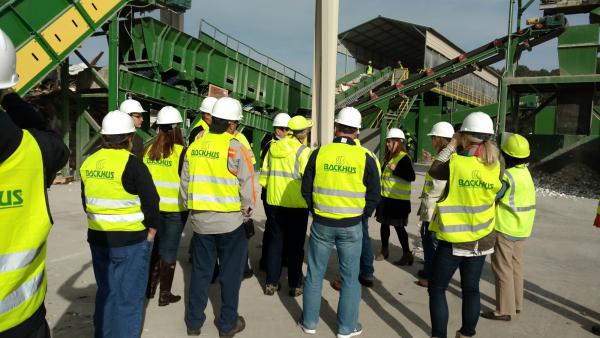
Last fall RBAC joined its sister local government assistance team in hosting a series of networking tours and workshops statewide. Several morning networking meetings were followed by tours of different recycling facilities that gave recyclers a chance to showcase their operations and highlight services that could benefit local government diversion programs.
RBAC would like to thank the following North Carolina recyclers for opening their doors to make these programs possible:
- Sonoco Recycling, Wilmington
- New River Tire Recycling, Pilot Mountain
- American Recycling, Candler
- Warren Wilson College, Swannanoa
- New Hanover County Household Hazardous Waste and Recycling Facilities, Wilmington
- Pitt County C&D Recycling Center, Greenville
- Mecklenburg County Compost Central and Recycling Center, Charlotte
If your facility would like to be considered for tours and programs in the future, please contact Wendy Worley at (919) 707-8136.
Carolinas' Recycling Industry Gathers for Year-End Networking Event
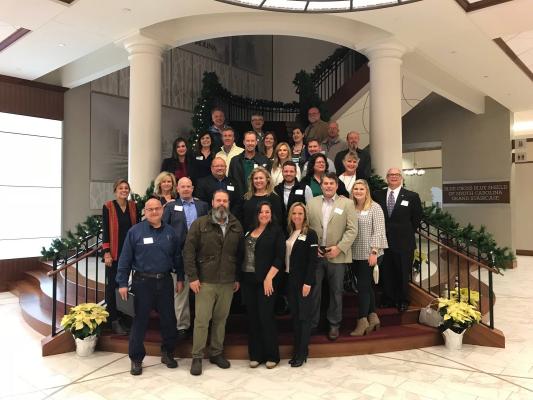
Wrapping up the eventful year for recycling markets, recycling businesses from North and South Carolina gathered in Columbia, S.C. for the fourth annual Recycling Business Connections on Dec. 6. Hosted by the Carolina Recycling Association, the S.C. Department of Commerce and the N.C. Recycling Business Assistance Center, the networking event was attended by more than 85 participants representing a full spectrum of recycling companies from the Carolinas and the Southeast.
Participants had the opportunity to meet others in the industry to discuss market conditions, ways to partner and build new business relationships, and how to expand and grow their recycling businesses.
This year’s event was sponsored by Company Wrench, Pratt Industries, MetalTech Systems, EZ Products LLC, Lighting Resources, Cleanlites Recycling, Cox Recovery, EPS Industry Alliance, Republic Services and Resource Material Handling.
Announcements and Opportunities
- Mar 19 – 22 - 2018 CRA Conference - The 28th Carolina Recycling Association (CRA) Annual Conference and Trade Show will be held Mar. 19 - 22 at Harrah’s Conference Center and Resort in Cherokee, N.C. This conference is regularly attended by more than 500 recycling professionals from North and South Carolina and surrounding states. In addition to sessions covering a wide range of current recycling topics, the conference will feature a large exhibit hall with plenty of opportunities to network and do business. For more information, including sponsorship and exhibiting details, please visit the CRA website.
- Feb 19 - 21 – Plastics Recycling 2018 – The 13th Plastics Recycling conference will be held at the Gaylord Opryland Resort in Nashville, TN. The event brings together international plastics reclaimers, equipment manufacturers, brand owners, brokers, government officials and leading sustainability voices to move the increasingly complex international plastics recycling industry forward. Last year’s conference attracted nearly 1,700 attendees from 40 countries. For more information and to register, visit the Plastics Recycling website.
The Recycling Business Assistance Center (RBAC) is a program of the N.C. Division of Environmental Assistance and Customer Service (DEACS) that provides technical, business and financial assistance to recycling companies.
2017
In the Fall 2017 Recycling Works issue:
- Subscribe to Recycling Works
- EGGER Group Builds North Carolina Manufacturing Facility
- Unifi Expands Capacity at Yadkinville Plant
- Accepting Applications for 2018 Recycling Business Development Grant
- Recycling Business Connections Event
- Privilege Tax for Recycling Equipment
- Announcements and Opportunities
- Pricing Trends
- Past RBAC Newsletters
EGGER Group Builds North Carolina Manufacturing Facility

Earlier this summer, EGGER Group, an Austrian manufacturer of wood-based materials for furniture, flooring and construction, announced that it will build its first U.S. manufacturing facility in Davidson County. The company will invest $700 million in the facility and is expected to create 770 jobs. The first phase of the project will be the construction of a particleboard plant that will use recycled wood chips as a feedstock for production. The Recycling Business Assistance Center (RBAC) worked with EGGER Group to provide the company with North Carolina wood recycling market information and identify potential recycled wood chip suppliers in North Carolina. Expected to begin construction in 2018, the new facility will benefit the region by sourcing feedstock from local wood suppliers and using wood byproducts from regional producers. The new EGGER Group facility will be a positive example of sustainable manufacturing in North Carolina.
Contact Wendy Worley at 919-707-8136 for more information.
Unifi Expands Capacity at Yadkinville Plant
Unifi, Inc. recently installed a new pellet extrusion line at its REPREVE Recycling Center, making it the fourth pellet extrusion line at the Yadkinville plant. This expansion will increase the plant’s capacity to convert recycled PET flakes to pellets by 30 million pounds, bringing its total capacity to 100 million pounds annually. The recycled pellets will be used in the Yadkinville plant, where they are spun into REPREVE yarn and used by brands such as Patagonia, Ford, New Balance and Haggar. With the increased pellet production, Unifi also plans to begin marketing to other end users, like consumer packaging companies, seeking high-quality recycled PET.
Accepting Applications for 2018 Recycling Business Development Grant
Proposals are being accepted for the 2018 Recycling Business Development Grant round through 5 p.m. Oct. 19. RBAC seeks viable, well-planned proposals from North Carolina recycling businesses and nonprofit organizations to divert materials from the waste stream and create jobs in the state. Applicants can request up to $40,000 of grant funds, and a 50 percent match is required. Contact Wendy Worley at 919-707-8136 or another RBAC staff member to learn more.
Recycling Business Connections Event
Mark your calendar! The highly successful Recycling Business Connections networking event is scheduled for Wednesday, Dec. 6, from 4 p.m. – 7 p.m. in Columbia, S.C. Hosted by the Carolina Recycling Association (CRA), S.C. Department of Commerce and N.C. RBAC, this business-to-business networking event will provide a unique opportunity for North and South Carolina recycling business owners and operators to forge new partnerships and grow recycling businesses in the Carolinas. Visit the CRA Registration page to sign up as a sponsor or an attendee.
Privilege Tax for Recycling Equipment
Did you know: Qualifying recycling equipment purchased in North Carolina is exempt from state and local sales and use tax; it is instead subject to a privilege tax of 1 percent and capped at $80 per article. To qualify for the privilege tax, the equipment must be used as part of the recycling conversion process. Qualifying equipment may include: balers, shredders, grinders, material recovery facility (MRF) equipment and repair parts. Motor vehicles, forklifts and loaders are not eligible for the privilege tax. For additional information and applicable forms, see the
Certain Recyclers Important Notice.
Announcements and Opportunities
- Oct 18 - Carolina Recycling Association Lunch-and-Learn at Atlas Organics - Representatives from Greenville County, S.C., and Atlas Organics will talk about their partnership to reduce food waste and divert it from the landfill through composting on Oct. 18. The event will begin with presentations and lunch at the Twin Chimneys Landfill in Greenville, S.C. followed by a tour of Atlas Organics. Visit the CRA Registration page for more information and to register.
- Oct 19 - The Recycling Partnership Webinar on Markets - The Recycling Partnership will host a webinar on Oct. 19 from 1 p.m. to 2:30 p.m. about how China’s National Sword could impact recycling markets. Hear from brokers, material recovery facility (MRF) operators and industry experts about what it is, where it came from and methods for managing short-term impacts. Visit the Recycling Partnership website to learn more and register.
- Oct 19 - Recycling Business Development Grant deadline - Proposals for the 2018 Recycling Business Development Grant Round are due by 5 p.m. on Thursday, Oct. 19. Contact Wendy Worley at 919-707-8136 for more information.
- Nov 3 - Carolina Plastics Recycling Council Meeting - Businesses and local government representatives engaged in plastics recycling are invited to attend a meeting of the joint North and South Carolina Plastics Recycling Council (CPRC) on Nov. 3 from 10 a.m. to 3 p.m. at the Polymer Center of Excellence in Charlotte. Visit the CPRC Registration page for more information and to register.
- Nov 17 - Carolina Recycling Association Lunch & Learn at Pitt County - Representatives from Pitt County and RBAC will discuss opportunities to divert construction and demolition (C&D) debris from the landfill on Nov. 17. Enjoy a networking lunch and presentations at the Pitt County Agricultural Center followed by a tour of Pitt County’s public C&D sorting facility. Visit the CRA Registration page for more information and to register.
The Recycling Business Assistance Center (RBAC) is a program of the N.C. Division of Environmental Assistance and Customer Service (DEACS) that provides technical, business, and financial assistance to recycling companies.
In the Summer 2017 Recycling Works issue:
- Subscribe to Recycling Works
- NC Budget Update--State Recycling Program Remains
- DEACS Announces New Recycling and Materials Management Section Chief
- Colt Recycling Expands to NC
- Anson County Welcomes USB Recycling
- Verity Resins Blends New Jobs and Increased Tonnage
- MAPS AVAILABLE: Permitted Composters and Compost in Bulk
- Announcements & Opportunities
- Pricing Trends
- Past RBAC Newsletters
NC Budget Update--State Recycling Program Remains
North Carolina’s state budget was finalized on June 28 when the N.C. General Assembly voted to override
Early versions of the budget proposed eliminating the state recycling program, which is a part of the N.C. Department of Environmental Quality’s Division of Environmental Assistance and Customer Service (DEACS). The final budget,
The final budget reduces funding for DEACS by $500,000 and eliminates seven DEACS positions in the state’s regional offices. The division will likely need to trim expenses during the next two years as part of broader cuts to the N.C. Department of Environmental Quality. Details of how these funding reductions will impact the division have not yet been determined.
However, the state recycling program was not directly impacted and expects to continue its work to advance recycling in North Carolina including the operation of grant programs that support strategic investments by local governments and recycling businesses to advance materials recovery.
During the budget deliberations, many stakeholders in North Carolina’s recycling industry took the time and effort to express support for the state recycling program and the Division of Environmental Assistance and Customer Service. RBAC staff would like to share their gratitude for this show of support and to let you all know that we look forward to continuing to serve the recycling industry in North Carolina.
DEACS Announces New Recycling and Materials Management Section Chief
DEACS is pleased to announce that Rob Taylor has filled the role of section chief for Recycling and Materials Management. Rob succeeds longtime State Recycling Program Manager Scott Mouw, who retired from state service at the end of February.
Rob brings nearly 20 years of recycling experience at the state and county levels to his new role, including seven years as the leader of the Local Government Recycling Team for the state recycling program and 12 years with the Orange County Department of Solid Waste Management. Rob can be reached at 919-707-8139, or rob.taylor@ncdenr.gov.
Colt Recycling Expands to NC
New Hampshire-based electronics recycler, Colt Refining & Recycling, recently expanded with a new location in Hickory. The company purchased the Hickory facility and associated equipment through auction after the previous owner, e-scrap recycling company Zloop, filed for bankruptcy. After making some additional investments and upgrades, Colt’s Hickory facility is now fully operational and processing electronic scrap and copper wire.
Colt Recycling primarily serves industrial and commercial clients in addition to processing consumer devices from electronic collection vendors. The company has a metal refining facility in New Hampshire, allowing them to further process electronic scrap and extract precious metals. Colt Recycling is R2 certified and, with more than 20 years of electronics recycling experience in the Northeast, the company looks forward to expanding their business in North Carolina and the Southeast.
Anson County Welcomes USB Recycling
Anson County welcomes USB Recycling this summer following their purchase of the former Anson Shirt Company factory in Wadesboro. The 23,000 square-foot facility is now home to USB Recycling, an electronics recycler serving North Carolina and South Carolina clients. The company offers data destruction and recycles computer and electronic equipment, televisions, nonferrous metal and commercial and industrial plastics. USB is R2 certified and has strong international connections with additional facility locations in Tianjin, Hong Kong and Toronto. The company can arrange truckload pickups throughout the region and accepts material in any quantity delivered to the Wadesboro facility. Contact Richard Yang at 704-695-3923 or main@usbrecycilng.com for more information.
Verity Resins Blends New Jobs and Increased Tonnage
Recent equipment investments at Verity Resins in Forest City have yielded new jobs in addition to major increases in throughput. Specializing in post-industrial and post-consumer waste streams, the plastics recycling and compounding company used a 2016 Recycling Business Development Grant to purchase a double spiral ribbon blender, increasing their blending capacity by more than 45 metric tons per day. As a result of this investment, the company has already hired one additional employee with short-term plans to hire two more. For more information, contact sales@verityresins.com.
MAPS AVAILABLE: Permitted Composters and Compost in Bulk
Two new North Carolina-specific maps have been created to expand the awareness of composting options in the state. DEACS created an updated map showing the composting facilities permitted by the N.C. Division of Waste Management and the N.C. Division of Water Resources. In addition to traditional composting facilities, the map also includes yard waste notification sites and the anaerobic digesters that process off-site materials, such as food waste, slurries and food manufacturing byproducts. Featured information includes contact information, permit number and amount of material managed last fiscal year.
Additionally, the North Carolina Composting Council released the new N.C. Bulk Compost Map in June 2017, listing more than 150 retailers who sell compost by the cubic yard. The information shown includes contact information, the source of compost, compost certifications and website.
NC Composting Council’s Compost in Bulk
Announcements & Opportunities
- Compost Operations Training If you are interested in refreshing your composting knowledge or learning how to start a composting operation, consider participating in the Composting Council Research and Education Foundation Compost Operations Training Course held Sept. 11-15 in Raleigh. This five-day course is focused on building the knowledge and skills needed to run a successful composting facility and includes hands-on activities, PowerPoint presentations, group discussions and site visits to the city of Raleigh’s Yard Waste Center, McGill Compost, Universal Leaf and the N.C. Department of Agriculture’s Soil Testing Lab. For more information, please visit the Composting Council website or email nccotc@carolinacompost.com.
In the Spring 2017 Recycling Works issue:
- Subscribe to Recycling Works
- Celebrating Scott Mouw's 28 Years of Service (and Still Counting!) to the Recycling Industry
- Manufacturers Demand for Recycled Materials Fuels NC Economy
- Your Bottle Means Jobs Recycling Campaign Launches in Raleigh-Durham
- Wake County Food Recovery Summit
- 2017 CRA Annual Conference and Trade Show
- Announcements & Opportunities
- Pricing Trends
- Past RBAC Newsletters
Celebrating Scott Mouw's 28 Years of Service (and Still Counting!) to the Recycling Industry

In celebration of 28 years of dedicated service to the state of North Carolina and the recycling industry, the Carolina Recycling Association (CRA) and the Environmental Protection Agency (EPA) presented former DEQ Recycling and Materials Management Section Chief Scott Mouw with a commemorative plaque. Scott was also surprised with a pair of custom-made one-of-a-kind Nike running shoes made with REPREVE, an engineered yarn derived from recycled plastic bottles by Reidsville-based recycler and manufacturer Unifi.
Beginning with a four-year stint as Franklin County's Solid Waste Manager and followed by more than 24 years with the State, Scott was involved in much of the history and development of the recycling infrastructure of NC, leading grant and assistance programs to expand material collection and processing efforts that provide vital feedstocks to manufacturers in NC and around the world. He successfully led efforts to increase public access to efficient, comprehensive local recycling services while expanding and streamlining the state's recycling economy. Scott was also involved in crafting and implementing policies and engaged in many regional and national dialogues to help support increased material recovery.
Upon retirement from the State, Scott accepted a part-time position with The Recycling Partnership, a national non-profit dedicated to improving the US recycling system.
Manufacturers' Demand for Recycled Materials Fuels NC Economy
At the close of 2016, the Southeast Recycling Development Council (SERDC) released a study that revealed more than 60 North Carolina manufacturers consume recycled feedstock to produce new consumer goods. These manufacturers collectively employ more than 14,000 North Carolinians and have sales exceeding $4 billion.
The economic data is presented in an interactive, online map which allows users to filter by state and view by location, commodity, manufactured product, sales or employees.
“When communities invest in local recycling collection programs, they’re supporting regional manufacturers who depend on recycled plastic, glass, metal, and paper to make new consumer goods,” said Will Sagar, SERDC Executive Director.
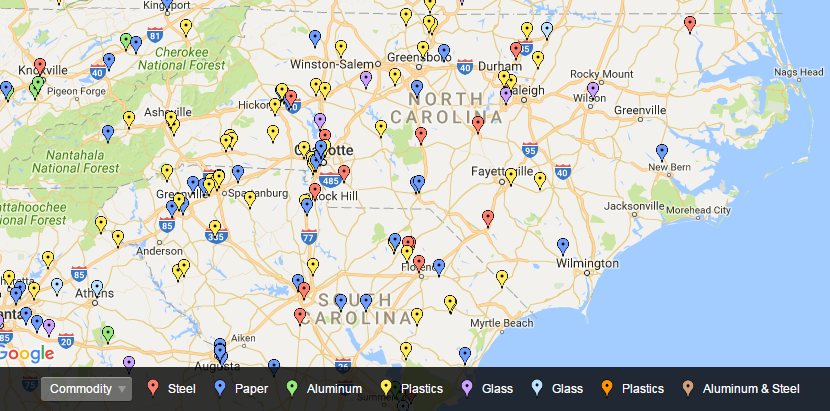
For more information, contact Will Sagar, SERDC Executive Director, at 828-507-0123.
Your Bottle Means Jobs Recycling Campaign Launches in Raleigh-Durham
Increased demand for recycled plastic bottles by Carolinas plastics recyclers spurred the development and debut of the Your Bottle Means Jobs multimedia campaign in the Raleigh-Durham, NC region. On March 20, 2017, Triangle area residents began hearing radio ads and seeing billboard and digital messages demonstrating that ‘Your Bottle Means Jobs,’ a campaign sponsored by the Carolinas Plastics Recycling Council (CPRC). The campaign urges households to pledge to recycle at least two more plastic bottles a week to help create jobs in this region. Those pledging online to recycle plastic bottles will allow participants to enter a prize drawing. To determine success, organizers will collect data to measure how many pounds of bottles that were recycled during the Raleigh-Durham, N.C. campaign.
The Your Bottle Means Jobs campaign runs through May 15, 2017, featuring radio advertisements, billboards, and targeted internet and social media promotions featuring the pledge to recycle two more bottles a week. More than forty local governments, industry members and trade associations including Wake County, City of Raleigh, Orange County, Food Lion, the American Chemistry Council and Carolina Recycling Association, support this campaign. A full list of sponsors and more information about the Your Bottle Means Jobs campaign is located at www.yourbottlemeansjobs.com. A video illustrating how recycling bottles helps create jobs in the Carolinas is available below:
[video:
For more information and to make a campaign pledge, contact campaign organizer Blair Pollock at 919-968-2788.
Wake County Food Recovery Summit
More than 70 business and organizational leaders from Wake County came together at the Wake County Food Recovery Summit in February 2017 to discuss ways to reduce the amount of food wasted every year. NCDEQ’s Division of Environmental Assistance and Customer Service (DEACS) partnered with the NC Farm Bureau Federation and numerous business, governmental, nonprofit and trade associations to highlight current recovery efforts and to seek solutions to the problem of wasted food in the community. As an outgrowth of the Summit, a new working group, the Food Recovery Circle, formed under the Capital Area Food Network (Wake County’s Food Policy Council) to develop a plan to reduce wasted food at the source and to increase food waste recovery programs through food rescue, food bank programs, and composting.
For more information on food recovery and the Food Recovery Circle, please visit the DEACS
2017 CRA Annual Conference and Trade Show
The Carolina Recycling Association (CRA) celebrated its 27th year at the annual trade show and conference March 27-30, 2017 in Myrtle Beach, SC. The conference was attended by close to 600 recycling professionals from North and South Carolina as well as different parts of the southeast.
This year’s conference marked retirement celebrations for two veterans of the recycling industry – Diane Davis, former Executive Director of CRA, and Scott Mouw former Recycling and Materials Management Section Chief for NCDEQ.
This was also the first year with an organics recycling track that ran through the entire conference. Composting developments from around the Carolinas and beyond were highlighted. The organics track concluded with an interactive session where participants discussed potential next steps for the industry.
The conference returns to North Carolina in 2018 and will take place in Cherokee.
In the Winter/Spring 2017 Recycling Works issue:
- Subscribe to Recycling Works
- 2017 RBAC Grant Awards Spur Private Investment
- Recycle Better: Two NC MRFs Invest in Glass Processing Improvements
- New River Tire Recovers, Grows
- Construction Drywall Finds Second Life as Soil Amendment with A.L. Baucom Farms
- NC Challenge: Expand Food Waste Haulers
- Announcements & Opportunities
- Pricing Trends
- Past RBAC Newsletters
2017 RBAC Grant Awards Spur Private Investment
State recycling business grants awarded this spring are expected to generate about 39 jobs, spur more than $1.4 million in new, private business investments and further reduce the state’s dependence on landfill disposal.
Twenty-six companies that collect, process and manufacture new products with recycled materials will receive more than $550,000 in funds from N.C. DEQ’s Recycling Business Assistance Center in 2017. Grants will support food recovery, food waste collection and composting processing capacity, upgrades to material recovery facilities, and recycling processing and end-use market capacity for a variety of other materials.
Additional information about the Recycling Business Development Grant Program and the 2017 awards can be found
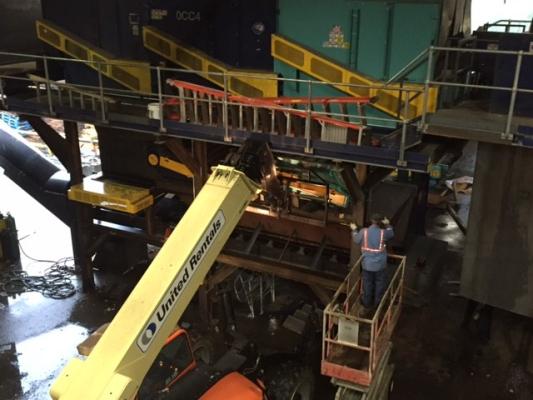
Recycle Better: Two NC MRFs Invest in Glass Processing Improvements
With grant support from the Recycling Business Assistance Center and the Glass Packaging Institute, two North Carolina material recovery facilities made significant capital investments in 2016 to modify their glass processing systems to improve glass quality and production efficiency.
In the fall, Sonoco Recycling of Raleigh reconfigured its processing line by relocating and installing a glass-breaker screen and adding an OCC screen. The project helped increase overall annual processing capacity at the MRF by an estimated 15,000 tons. Sonoco has already observed less wear on rubber discs and belts and reduced cross-contamination of multiple grades of paper and plastic. Preliminary data indicates that total glass recovery in the system has also increased. A photo depicting the installation of Sonoco's glass-breaker screen can be seen below.
Similarly, American Recycling of Western North Carolina in Candler replaced its glass breaker with a larger, more efficient model and installed a glass screening line to improve the quality of glass yield from single-stream collection. American also installed new glass bunkers to store source-separated glass. These facility improvements have allowed American to increase the volume of glass produced by an additional 100 tons of glass per month. Further, American is now receiving a better price for its higher quality glass cullet.
These two success stories illustrate that strategic investments in glass handling at MRFs can increase overall processing capacity, improve the yield of recyclables, raise production efficiency, and enhance the quality of the recycled glass for market. The projects also demonstrate the potential benefits of partnerships between the glass industry, MRFs and state recycling programs to address glass issues in single stream processing.
For more information, contact RBAC Manager Wendy Worley at 919-707-8136 or wendy.worley@ncdenr.gov.
New River Tire Recovers, Grows
In what could have been a devastating turn of events, New River Tire Recycling of Pilot Mountain has fully recovered from a fire at the company’s recycling facility last year.
The fire started around 1 a.m. on Jan. 12, 2016, and burned for several days. Although there was damage to the roof and one wall, the fire primarily affected the loading area that held tires waiting to be processed. The fire was ruled to be arson and is unsolved at this time. Service to local government and corporate customers continued uninterrupted during the recovery process.
Facility repairs and improvements have led to a more effective operation. In replacing the only piece of damaged equipment, a newer tire grinder has allowed New River to increase its processing capacity.
According to New River Tire’s owner, Ben Bryant: “The fire was the hardest thing we have been through as a business. Thankfully, the determination and extremely hard work of my team resulted in New River Tire Recycling bouncing back to be better than ever.”
Construction Drywall Finds Second Life as Soil Amendment with A.L. Baucom Farms
A.L. Baucom Family Farms has partnered with Mecklenburg County to divert clean drywall construction waste from disposal, using the material instead as a valuable soil amendment in its local farming operations. Mecklenburg County’s Foxhole Landfill and Recycling Center receives, grinds and screens the drywall into a “spread-able” agricultural product. A.L. Baucom, a third generation family farm in Monroe, picks up the finished recycled gypsum product for direct land application to grow a wide variety of crops, including corn, wheat, soybeans, cotton, strawberries, squash, cucumbers and other seasonal produce. Utilizing more than 7,000 tons per year of the locally-sourced recycled drywall, the farm is able to replace nearly all (95.5%) of its expected annual need for virgin ag gypsum. With its experience in determining a utilization rate of the recycled drywall and its success in partnering with a local C&D operation, this effort can serve as a model for other farms to source and use recycled gypsum.
For more information, contact RBAC Manager Wendy Worley at 919-707-8136 or wendy.worley@ncdenr.gov.
NC Challenge: Expand Food Waste Haulers
North Carolina is fortunate to enjoy a geographically widespread and growing infrastructure able to process food waste in a regenerative manner. One of the state’s next challenges is to expand the collection infrastructure to move food waste from generators to these processors.
A core set of companies, some connected directly to composting operations, have been spearheading food waste collection for years, some for more than a decade. These food waste haulers move anywhere from 1-2 tons per week of food waste to more than 200 tons per week. Haulers’ pickup locations include corporate cafeterias, grocery stores, residences, schools, universities, hospitals and factories, within 100 miles of their drop off locations. Some collectors have about 100 accounts while others have more than 800.
However, for the state to meet its food waste diversion goals, the collection infrastructure needs to grow. Some areas of the state lack access to these services and some potential food-diverting sectors are underserved. For example, the only areas with access to residential food waste collection are downtown Charlotte and the Triangle.
Food waste generators can play a vital role in helping build this infrastructure by seeking and using food waste collection services. If you generate commercial or institutional food waste and would like to learn who can haul it to a processor, please visit the NC Organic’s Recycling Program website on the topic.
Announcements & Opportunities
- RBAC Welcomes New Team Member The Recycling Business Assistance Center is pleased to welcome Sandy Skolochenko to its team. Sandy is transitioning from her former role within the Recycling and Materials Management Section as the state agency recycling coordinator and as part of the Local Government Assistance Team. Her experience in working with public programs, including her previous time as Chatham County’s recycling coordinator, brings an important perspective to RBAC on how those programs rely on and work with markets. With the RBAC, Sandy will oversee the Recycling Markets Directory, administer grants, and take responsibility for a range of technical issues affecting the state recycling economy.
- CRA's New Executive Director RBAC congratulates Mary McClellan on her new position as the executive director of the Carolina Recycling Association. Mary brings many years of experience in the public and private sectors of the recycling industry to her new role. See the full story at the CRA website.
- 2017 CRA Conference The Carolina Recycling Association’s 27th Annual Conference and Trade Show will take place March 27-30 at the Kingston Plantation in Myrtle Beach, S.C. This conference is regularly attended by more than 500 recycling professionals from North and South Carolina, as well as different parts of the Southeast. In addition to sessions covering a wide range of current recycling topics, the conference will feature a large exhibit hall with many different kinds of vendors and plenty of opportunities to network and do business. For more information, including sponsorship and exhibiting details, please visit the CRA website.
- Marketing Commodities for Free via NC WasteTrader North Carolina recyclers are reminded to check and use NC WasteTrader, a no-cost, online waste exchange for recyclable and reusable materials that might otherwise be discarded in landfills or disposed of inappropriately. Businesses, industries, recycling companies, waste haulers, local governments, institutions and other commercial generators of waste commodities can visit NC WasteTrader to list available and wanted materials, and search for potential new feedstocks. For further information and assistance, contact Tom Rhodes at 919-707-8140.
2016
In the Fall 2016 Recycling Works issue:
- Unifi Opens PET Bottle Processing Plant
- 3rd Annual Recycling Business Connections Event a Success for Recyclers in the Carolinas
- New Recycling Campaign Aims for Increase in Plastic Bags and Wraps in Mecklenburg County
- McGill Compost Celebrates 25 Years
- Stanley Environmental and Earth Farms Organics Acquired
- Announcements & Opportunities
- Pricing Trends
- Subscribe to Recycling Works
- Past RBAC Newsletters
Unifi Opens PET Bottle Processing Plant
On Sept. 7, 2016, Unifi officially cut the ribbon at its new, $28 million PET bottle processing facility in Reidsville, N.C. The operation allows Unifi to directly source PET bales from materials recovery facilities (MRFs), complementing and supporting the company’s PET recycled content Repreve yarn manufacturing plant in Yadkinville. Repreve is used by a wide variety of brand name companies, including Patagonia, Ford and Haggar. Increased demand for Repreve helped lead Unifi to vertically integrate into direct bottle sourcing.
The recent Unifi investments in Reidsville and Yadkinville, along with other substantial plastic bottle processing capacity in the state, underscore the importance of North Carolina’s plastic bottle disposal ban and the need to recover more of the material in local government and private collection programs. See Unifi’s new system in action.
3rd Annual Recycling Business Connections Event a Success for Recyclers in the Carolinas

The 3rd annual Recycling Business Connections networking event took place on Oct. 5, 2016, at the Big Chill in Charlotte. The event, which is hosted by the Carolina Recycling Association with the N.C. Recycling Business Assistance Center (RBAC) and the S.C. Department of Commerce, attracted more than 100 participants representing a full spectrum of recycling companies from the Carolinas and the Southeast.
The networking portion of the evening, best described as “speed dating” for recycling businesses, gave participants the opportunity to meet a large number of contacts in one place. Jeff Miller, president of Foothills Sanitation and Recycling in North Wilkesboro, said that the concept was a great way for small businesses to find new connections in the industry. He added: “We met several new possibilities to market to in addition to getting new ideas on equipment.”
The event was sponsored this year by Company Wrench, Metaltech Systems, Cleanlites Recycling, Cox Recovery, Ice Recycling, Lighting Resources and Republic Services.
New Recycling Campaign Aims for Increase in Plastic Bags and Wraps in Mecklenburg County
Mecklenburg County and Charlotte City officials recently kicked off a new campaign to increase recycling of plastic bags and wraps, noting that a survey finds most people in Mecklenburg County are not yet aware of where and what to recycle. The campaign is part of Mecklenburg County’s WRAP (Wrap Recycling Action Project), an innovative public/private partnership that promotes recycling of plastic film beyond bags.
As part of his remarks at the kickoff event, Mecklenburg County Chairman Trevor M. Fuller put the need for increased film recycling into context, offering, “When plastic bags or wraps are put in curbside bins, it makes recycling more difficult, time consuming and expensive, which winds up costing all of us more money. Recycling plastic bags and wraps at participating retailers diverts materials from the landfill and creates useful new products so we are asking all of Mecklenburg County to spread the message, pitch in, and recycle plastic bags and wraps by taking them back to participating retail stores.”
McGill Compost Celebrates 25 Years
Last summer, McGill Compost celebrated serving North Carolina with composting solutions for 25 years. Through two facilities in Chatham and Sampson counties, McGill is able to receive materials from a large region of the state. Both McGill sites are N.C. Department of Environmental Quality-permitted Type 4 composting facilities that use a proprietary aerated and automated composting technology. McGill is able to process yard waste, pallets, gypsum board, biosolids, grease trap, pre- and post-consumer food waste, industrial food manufacturing byproducts, animal manures, slurries and more. The company also has a composting facility in Virginia and two in Ireland, and it operates a public-private facility in Florida. For more details, please visit the McGill website.
Stanley Environmental and Earth Farms Organics Acquired
Charlotte-based Stanley Environmental and Earth Farms Organics have both been acquired by Massachusetts-based Wind River Environmental (WRE). Stanley Environmental has been providing septage and grease trap services to much of the state since its founding in the early 1970s. Earth Farms Organics, a N.C. DEQ Type 3 composting facility using windrow composting, has been providing composting services since 2006. The company’s operation in Gaston County can process yard waste, pre- and post-consumer food waste, grease trap, industrial food manufacturing byproducts, animal manures, slurries and a range of other organic materials. While WRE has been acquiring other related companies since 1999, Earth Farms Organics is the first composting facility that it acquired.
Announcements & Opportunities
Register Today: Carpet Recovery Coalition and Carolina Plastics Recycling Council Meetings
North Carolina and South Carolina businesses and local governments are invited to attend South Carolina’s Carpet Recovery Coalition annual meeting on Nov. 3, 2016 from 10 a.m.-2 p.m. N.C. DEQ is helping organize the meeting, which will provide updates on carpet recycling markets and initiatives.
Additionally, businesses and local government representatives are also invited to attend a meeting of the joint NC/SC Carolinas Plastics Recycling Council (CPRC) on Nov. 4, 2016 from 10 a.m.-2:30 p.m. The CPRC meeting will focus on market updates and new developments in plastic recycling in the Carolinas.
Both meetings will be held at Winthrop University's DiGiorgio Campus Center Richardson Ballroom, located on Alumni Drive in Rock Hill, S.C., just south of Charlotte. A networking reception will be held on Thursday for attendees following Carpet meeting from 3:30-6:30 pm. Register today for either or both events!
In the Summer 2016 Recycling Works issue:
- Recycling Business Connections Event Returns to Charlotte on Oct. 5, 2016
- Foothills Sanitation and Recycling Adds Single Stream Processing Capacity to Rural NC
- Composting in NC Going Strong, Food Waste Recovery Increasing
- NC Agricultural Plastics Recycling Program Growing Greener
- Johnson Brothers Utility & Paving Company Increases Shingle Recycling Capacity in Robeson County
- Announcements & Opportunities
- Pricing Trends
- Subscribe to Recycling Works
- Past RBAC Newsletters
Recycling Business Connections Event Returns to Charlotte on Oct. 5, 2016
Recycling’s highly successful, business-to-business networking event returns to the Carolinas this fall. All North and South Carolina recycling business owners and operators are invited to attend the 3rd annual Recycling Business Connections event Oct. 5 in Charlotte.
This is your chance to forge new partnerships with other recyclers across the Carolinas and grow your recycling business. The event is hosted by the Carolina Recycling Association, N.C. Recycling Business Assistance Center, and the S.C. Department of Commerce. Sponsorship levels are available with added promotional opportunities to maximize your company’s exposure.
Space is limited and early registration is strongly recommended. Get those business cards ready and come to Charlotte to grow your business! Mark your calendars and register online today!
Foothills Sanitation and Recycling Adds Single Stream Processing Capacity to Rural NC
Foothills Sanitation and Recycling just completed a major renovation of its North Wilkesboro Materials Recovery Facility (MRF) that will increase processing capacity to up to eight tons per hour. Built in partnership with Green Machine, the new elevated U-shape layout effectively uses space in MRFs with a smaller building footprint. See a virtual tour of the MRF.
Composting in NC Going Strong, Food Waste Recovery Increasing
In June 2016, the N.C. Department of Environmental Quality (DEQ) released its NC Organics Recycling Study, analyzing organic materials recycled at permitted composting facilities since 2011 and food waste recovered in the year 2015. The report shows healthy signs of organics recovery, such as a stable amount of organic material managed, a consistent number of facilities spread throughout the state, available permitted capacity to compost more material, steady product demand and competitive tipping fees. Close to 100,000 tons of food were recovered through food rescue, animal feeding and composting. Still, for the state to meet the EPA/USDA 50% food waste reduction goal by 2030, North Carolina would have to quintuple food recovery, assuming current management practices continue.
This is the first study of its kind in the state and provides a benchmark to further analyze organics management in North Carolina. DEQ will continue to support food waste diversion through targeted grants and technical assistance, working to expand necessary services and infrastructure.
For more information, contact Jorge Montezuma at Jorge.Montezuma@ncdenr.gov.
NC Agricultural Plastics Recycling Program Growing Greener
On average, more than 6,000 tons of nursery pots and flats are consumed each year in the state. Much of what is consumed has ended up in North Carolina landfills. Now that “ag plastics” recycling is coming of age with the development of the NC Agricultural Plastics Recycling Program, farms, nurseries, landscapers and home gardeners have recycling options for those discarded pots and flats. Ag plastics recycling consolidation centers are available across the state including the Robert G. Shaw Piedmont Triad Farmers Market and the Raleigh State Farmers Market. Commercial generators of used agricultural plastics should visit the NC Ag Plastics website to find options for recycling their plastic discards and tips for preparing materials for market. NC plastics recyclers interested in receiving ag plastics should contact Bev Fermor at BFermor@wrpnc.org or Tom Rhodes at tom.rhodes@ncdenr.gov.
Johnson Brothers Utility & Paving Company Increases Shingle Recycling Capacity in Robeson County
This summer, Johnson Brothers Utility & Paving Company opened a second asphalt shingle recycling location in Robeson County at its asphalt paving plant at 2053 N.C. Highway 20 East in Saint Pauls. Roofing contractors, waste hauling companies and local landfills can bring loads of asphalt roofing shingles free of metal, wood, insulation, flashing and other trash. Similar to the company’s plant in Dunn, the shingles will be ground and used as a replacement to liquid virgin asphalt binder for paving area roads. For more information, contact Carson Harrington, Johnson Brothers Utility and Paving asphalt manager, at (910) 893-8378 or jchjbros@embarqmail.com.
Announcements and Opportunities
Coming Soon – Release Date for 2017 Recycling Business Development Grant Applications
The 2017 Recycling Business Development Grant program’s Request for Proposals, including the application materials, will be posted on RBAC’s Financing webpage by early September 2017. For more information, contact Wendy Worley at 919-707-8136, or wendy.worley@ncdenr.gov.
Large Anaerobic Digestion Plant Opens in Charlotte
Entropy’s Anaerobic Digestion (AD) Plant will begin to accept food waste starting in August. When fully operational, the plant will process 480 tons a day of organic waste and create 5.2 megawatts of electrical energy. The plant is designed to convert food waste, dissolved air flotation (DAF), and FOG (fats, oils, and greases) into renewable energy. In addition to electricity, the plant will also create a nutrient rich soil amendment (40 tons/day) that can be a blend stock for compost and a high nitrogen liquid soil nutrient (4 tons/day)
Upcoming C&D Webinars
This fall and winter, Construction & Demolition Recycling magazine is offering a series of webinars designed to provide the tools and insights industry professionals need to get as much value out of the construction and demolition material stream as possible.
The Increasing Diversion webinar is a three-part series of hour-long virtual events, providing insights from industry professionals employing various approaches to recycling. The following webinars are from 1-2 p.m. ET.:
Oct. 5: Going the Extra Mile—Recycling Additional Material Types – Mixed C&D recyclers and demolition contractors have the opportunity to recycle additional materials from a job site or at their facility beyond wood, metals and concrete. This webinar examines how to go about recycling more difficult materials from carpet to ceiling tiles and drywall, that could increase diversion and earn further points toward LEED certification.
Nov. 3: Maximum Impact—Maximizing Separation Capabilities – Having the right equipment to achieve maximum separation is important to maximizing the recovery rate of mixed C&D. This webinar examines some of the processing equipment trends and variations to help operators and managers get the desired results from their processing lines.
Dec. 1: Better Grades—Producing High-Value Commodities from Mixed C&D – High-grade wood, aggregates and metals can be recovered at a mixed C&D plant, which fetch a premium price over lower grades. Speakers share how they’ve been able to produce high-value end products from the materials they process.
Webinar registration is now open. A discount is available for registering for multiple events.
In the Spring 2016 Recycling Works issue:
- RBAC Celebrates Matt Ewadinger's 23 Years of Service
- 2016 RBAC Grant Awards Spur Private Investment
- Sonoco Recycling Opens New MRF in New Hanover County
- Upcoming Study to Show Progress and Trends in NC Composting
- Carolina Recycling Association Celebrates 26th Annual Trade Show and Conference
- Announcements & Opportunities
- Pricing Trends
- Subscribe to Recycling Works
- Past RBAC Newsletters
RBAC Celebrates Matt Ewadinger's 23 Years of Service
When the Recycling Business Assistance Center was founded in 1993 and Matt came on board as a member of the RBAC team, the goal was to create markets in the purest sense of the term. Like many states at the dawn of mass recycling, North Carolina needed access to manufacturers and end-users of the materials now busily being collected. The task was to find and, in some cases, to grow end-users from scratch, and then develop ways to connect the disparate collection and processing efforts to those end-users.
In that formative stage, Matt played a critical role in setting North Carolina on a smart path, leading an innovative Feedstock Conversion project and documenting the ready supply of commodities available to recycled content manufacturers. Matt helped establish the early sense that North Carolina was an open and welcoming place for recyclers of all kinds, and especially for entrepreneurs whose business dreams would create critically needed infrastructure and material demand.
But Matt also had the wisdom to know that the state environmental department could not do the job alone and that we needed the help of business partners to accelerate the evolution of the recycling economy. To succeed, recycling companies needed business expertise, access to capital, and the support of the state’s economic development agencies. As such, Matt helped form the relationships that remain the cornerstone of market development efforts in North Carolina, including close collaboration with the N.C. Department of Commerce. He also helped foster innovative programs like SBTDC training and the Self Help Credit Union recycling revolving loan fund that got many fledgling recyclers on the right track.
In short, Matt understood that if you offer a range of resources and services tailored to the needs of recycling companies, including state recycling business grants, it would not only quicken the development of recycling markets but also help create synergies between the collection, processing and manufacturing parts of the recycling economy. To this day, other states still call North Carolina to ask how the state implemented this range of tools and programs that proved to be so productive and consequential.
Telling the story of a successful process can reinforce and amplify that process, helping success build on success. With a state recycling economy clearly light years from where it started, Matt led his team in producing two documents in 2005 and 2006 that demonstrated the remarkable expansion of recycling business in North Carolina. The two publications, along with the Recycling Works newsletter, were really almost a celebration of the early efforts to develop recycling markets. Who would have known that only a decade or so after a focused effort on demand that North Carolina’s next challenge would be to create a supply of materials to feed the growing appetite for recycled commodities? In answering that challenge, Matt’s RBAC team was able to build and then show the diverse strength of the recycling economy, populated by businesses large and small, recycling an amazing array of different commodities.
Plastics recycling is a big part of North Carolina’s recycling success but plastics is complicated and often requires highly technical expertise. Fortunately, Charlotte has one of the premier plastics research groups in the nation, the Polymers Center for Excellence. Matt worked to build bridges with PCE early on, harnessing the know-how of staff in the organization to address plastics issues and help North Carolina plastics recyclers.
This relationship proved particularly valuable on the issue of carpet recycling, another area in which Matt made many valuable contributions. As one of just two state members working with the Carpet America Recovery Effort, Matt helped to guide the development of CARE’s national programs to recycle carpet, working also to make sure CARE’s efforts directly benefited the state’s carpet recyclers. Matt’s hands-on experience in supporting carpet recycling entrepreneurs gave CARE practical insights into how to grow carpet recycling across the country.
But Matt would be the last person to claim credit himself, which speaks to his devotion to his RBAC team and his work to build that team. Matt effectively created an atmosphere of camaraderie, always carrying his share of the burden, guiding tasks and decision-making with common sense, and acting not so much as a “boss” of his team but as a collaborator genuinely interested in the individual success of each team member. And we could always rely on Matt’s humor to put things into proper perspective, with his knack for sprinkling in Monty Python and Woody Allen quotes at just the right times, especially in reference to the inanity of bureaucracy.
So, we thank Matt for all he has given to North Carolina, for all he has given to his recycling clients, and for all he has given to us. He is well-deserving of many years of a happy retirement, knowing his legacy of work has made our state a better place.
2016 RBAC Grant Awards Spur Private Investment
State recycling business grants awarded this spring are expected to generate approximately 75 jobs, more than $1.7 million in new, private business investments and a reduction in the state’s dependence on landfill disposal.
NC DEQ’s Recycling Business Assistance Center announced that 24 companies that collect, process and manufacture new products with recycled materials will receive more than $640,000 in funds this fiscal year. Examples of projects include:
- Five material recovery facilities – American Recycling of WNC (Buncombe), Benfield Sanitation (Iredell), Foothills Sanitation (Wilkes), Sonoco Recycling (New Hanover), and Sonoco Recycling (Wake) – will improve single-stream operations with the purchase of additional processing equipment. The Glass Packaging Institute will provide supplemental funding for the Raleigh Sonoco and America Recycling projects to process glass more efficiently.
- Grants will support food waste collection and compost processing capacity with companies such as CompostNOW (Wake), Full Circle Recycle (Wake), SMART Recycling (Wake), and Wallace Farm (Mecklenburg).
- Grants will spur additional construction and demolition waste recycling by companies such as Abbey Green (Forsyth), FFD II (Gaston), and New East Recycling (Pitt).
- Additional end-use market capacity will also be expanded for concrete, pallets, asphalt shingles, and plastics with projects by companies such as Berry’s Container Service (Gaston), Johnson Brothers Paving (Robeson), Kamlar (Nash), and PlyGem (Columbus).
- Plastic recycling capacity will also get a boost with projects to increase processing of rigid plastics and agricultural plastics from companies such as Plastic Materials (Gaston) and Verity Recycling (Randolph) respectively.
Additional information about the Recycling Business Development grant program and the 2016 awards can be found
Sonoco Recycling Opens New MRF in New Hanover County

Sonoco Recycling LLC opened a new material recovery facility in New Hanover County in March to process single-stream recyclables from New Hanover County, the city of Wilmington, and surrounding areas.
“This agreement, and the infrastructure it brings to the county, provides a tremendous opportunity to enhance recycling efforts countywide,” said Joe Suleyman, environmental management director for New Hanover County, a partner in the development of the Sonoco MRF.
Using 20,000 square feet of the county’s former waste-to-energy facility, Sonoco will be able to process 2,000 tons of residential single stream and 500 tons of commercial recyclables per month. The company has invested more than $1 million dollars in the New Hanover facility and expects to employ 14 people.
Maximizing capital investments and processing efficiency, Sonoco is employing the “hub-and-spoke” model by pairing its New Hanover and Onslow county facilities. In New Hanover County, Sonoco’s state-of-the-art equipment will sort mixed paper, cardboard and glass to capture approximately 80 percent of the incoming material. The remaining 20 percent, consisting primarily of aluminum cans, steel cans and plastics, will go to the company’s material recovery facility in Onslow County to be further sorted and prepared for market.
Recent equipment upgrades at the Onslow County facility include a new tipping building, a metering drum and an optical sorter, which will allow more efficient sorting of the container stream.
"We’re very excited to take this new step in operating two unique MRF’s (material recovery facilities), designed to run in conjunction and maximize our processing efficiency," said Brian Shea, plant manager at Sonoco's New Hanover and Onslow county facilities. "With the significant investments made at both facilities in the past 12 months, we see a bright future in working with our partners at both New Hanover and Onslow to serve the local communities."
Up-fits of both facilities were supported by grants from the Carton Council of North America and NC Recycling Business Assistance Center.
For more information, contact Brian Shea at Brian.Shea@sonoco.com or 910-455-6903.
Upcoming Study to Show Progress and Trends in NC Composting
Composting of organic waste is moving right along in North Carolina. A study analyzing the past five years of organic materials processed at permitted composting facilities is underway. It will show current trends from tipping fees to amount of feedstocks processed.
In fiscal 2014-15, more than 1.4 million tons of organic materials were processed at permitted composting facilities, wastewater treatment plants, anaerobic digesters, yard waste notification sites and mulching operations. Of this total, more than 50,000 tons of food scraps were processed, mainly at private composting and anaerobic digestion businesses.
The report will also highlight animal feeding operations and food rescue efforts, which make up roughly one-third of the total food diverted from disposal this past year. If you are interested in receiving a copy of the report when it is released, please email Jorge Montezuma at jorge.montezuma@ncdenr.gov.
Carolina Recycling Association Celebrates 26th Annual Trade Show and Conference
The Carolina Recycling Association celebrated its 26th annual trade show and conference March 21-24 in Wilmington. More than 600 recycling professionals from North and South Carolina attended the conference as well as different parts of the Southeast.
One of the highlights of this year’s conference was the Zero Waste Flea Market, where recycling vendors networked with attendees from the Manufacturers Zero Waste Conference that ran concurrent to CRA. Manufacturing companies put their hard-to-recycle items on display for recycling service providers to offer market solutions. The 2016 Manufacturers Zero Waste Conference also brought more than 100 additional attendees to many CRA opportunities, including the exhibition hall.
The final conference program and many of the presentations from the sessions can be downloaded
The CRA conference returns to Myrtle Beach, S.C. in 2017.
Announcements & Opportunities
- Republic Services, Inc. has announced plans to open a full-service Customer Resource Center in Charlotte. The project will create more than 350 jobs over the next three years with a $6.8 million investment in Mecklenburg County. More information can be found
here. - The N.C. Division of Waste Management's Solid Waste Section is conducting a survey in regards to the certification for composting facility operators for private businesses and local government facilities. If you are interested in providing feedback, please fill out this survey or email Shawn McKee at shawn.mckee@ncdenr.gov.