
Never place lithium-ion batteries in trash or recycling carts
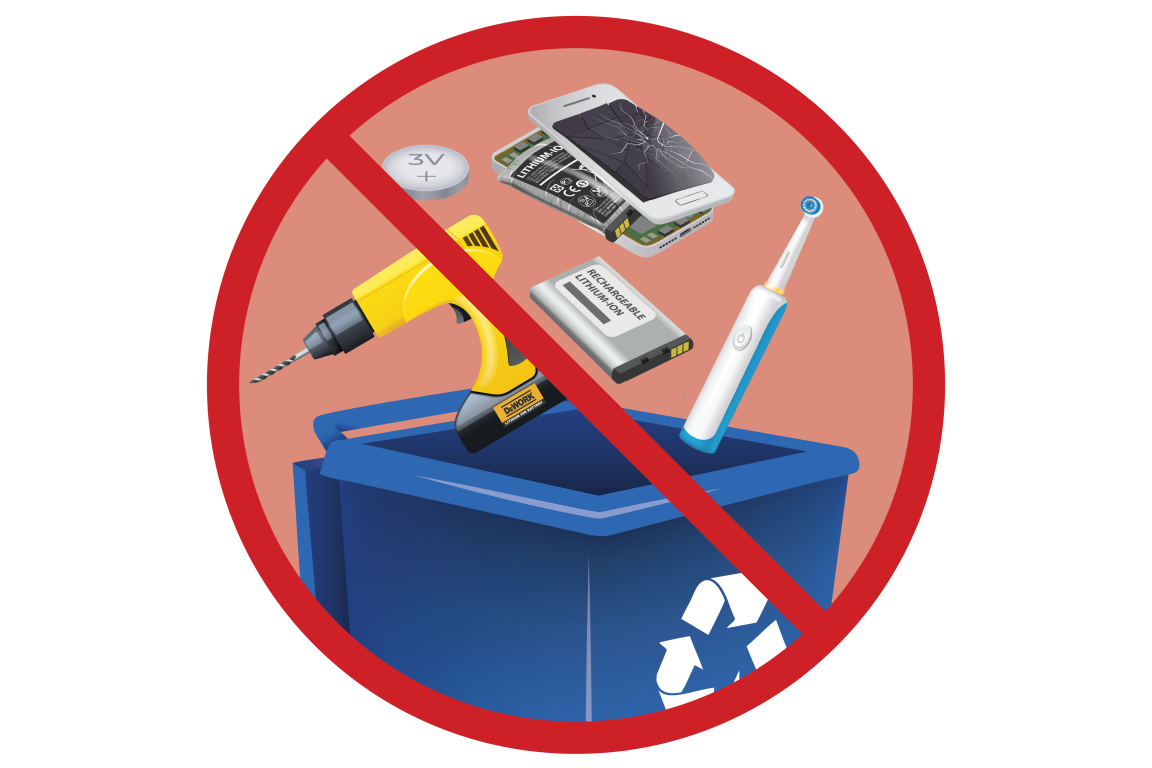
The average American home contains about 40 objects powered by lithium-ion batteries. There are probably more lithium-ion batteries in your home than you expect – know how to identify and dispose of them properly to protect your home and community from fires and keep critical minerals out of the landfill, providing environmental benefits.
This page is designed to help North Carolina citizens identify and safely handle products with lithium-ion batteries.
How to identify and safely dispose of lithium-ion batteries in your home
Lithium-ion batteries power the devices we use every day for personal care, communication, and transportation. Lithium-ion batteries are increasingly used in devices over alkaline, older rechargeable batteries (e.g., Nickel-cadmium), and lead acid batteries because they are more powerful, making them longer lasting. However, lithium-ion batteries are more volatile and have important safety considerations. For example, lithium button batteries pose serious risk if ingested, so many manufacturers now add a bitter coating to prevent injury or death.
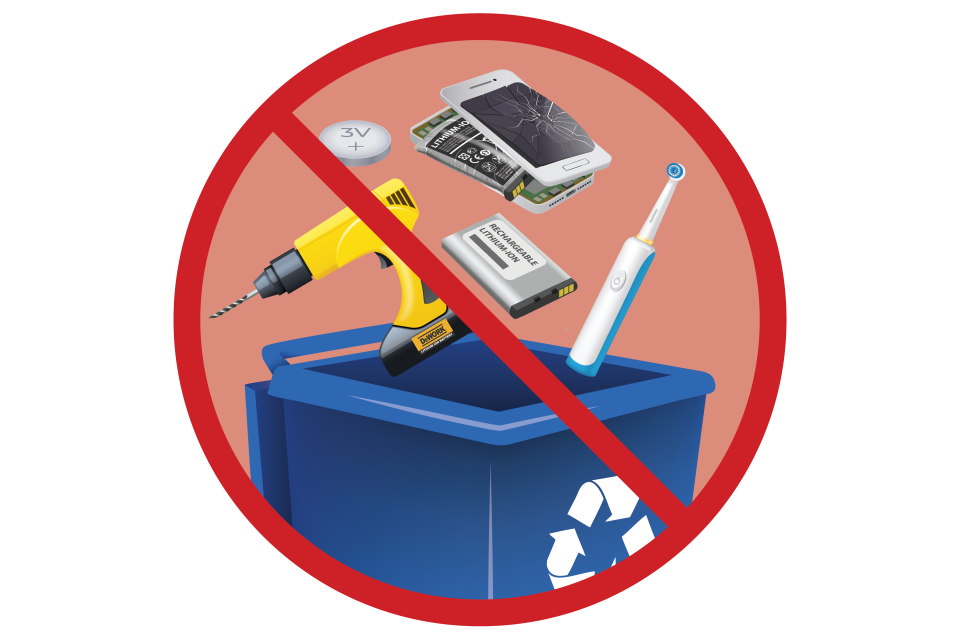
No battery should ever be placed in household recycling or garbage because they pose serious risk to human and environmental health. When compacted on sanitation trucks, lithium-ion batteries may ignite and burn the material deposited in the truck with them. Even seemingly “dead” batteries can cause devastating fires in homes, material recovery facilities, and landfills; skip the bin and turn them in.
Rechargeables vs. Single-Use
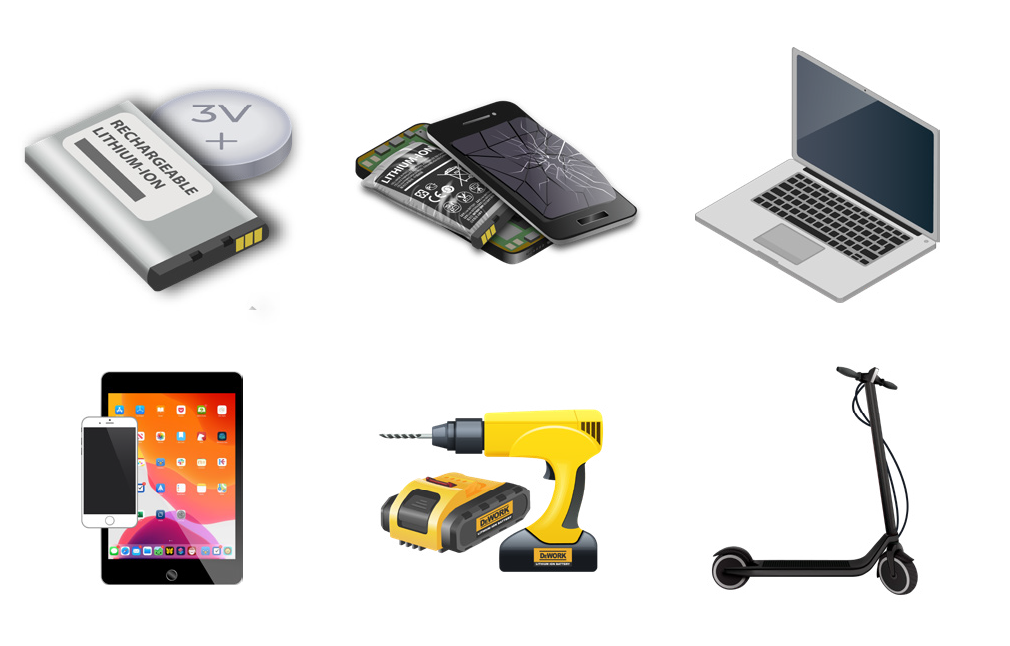
Lithium batteries come in various shapes and sizes and can be rechargeable or single-use. Single-use lithium batteries are often in the form of button or coin batteries in small objects like watches, remotes, and flashlights. While they can be difficult to distinguish from similarly shaped alkaline batteries, they should be marked with “Li-ion,” “LIR,” or “lithium.” Lithium coin/button cell batteries are marked with identifying numbers beginning with “CR.”
Lithium-ion batteries are the most commonly used batteries in laptops, cell phones, vapes, and other rechargeable devices and appliances. Some rechargeable lithium-ion batteries, like those found in power tools, are easily identifiable and removable, while others are embedded and should not be removed. Rechargeable household batteries (such as A, AA, AAA size) may also be lithium-ion batteries.
If you have an embedded battery or are unsure if a battery is lithium-ion, skip the bin and turn your used lithium-ion battery-powered devices in at a store drop-off or at your local government's collection site for safe and proper management.
Safe Battery Practices
- Use the charger that came with the item to ensure that the battery is charged the right way and as safely as possible.
- Unplug devices once charged. Some lithium-ion batteries can become overcharged and experience thermal runaway where the battery becomes overheated resulting in bloating and explosion.
- Do not charge batteries on furniture or fabric surfaces that can trap heat, place them on nonflammable surfaces instead.
- Keep battery-powered items and batteries out of the heat.
- Store in cool, dry places to prevent the risk of thermal runaway.
- Cover terminals with tape when they are ready to be properly disposed to prevent contact with other metals and creating a short circuit.
- Do not store items on top of lithium-ion batteries or devices to prevent physical damage or battery electrolyte from leaking.
- Do not store a lithium battery inside your home if it appears to be damaged, defective, or swollen. Move the battery outside and place it in a non-flammable container (such as a metal bucket or sturdy plastic bin) filled with sand or kitty litter. Bring it to your local household hazardous waste collection site.
- Do not attempt to remove an embedded battery from a device. Some electronics like vapes, computers, and wireless headphones have embedded Lithium-ion batteries that are not easily extracted or meant to be removed by consumers. Attempting to remove one can damage the battery, expose yourself to hazardous materials, and ignite a fire.
- Never throw batteries of any kind in your household trash or recycling. Handle them properly by dropping them off at one of the many safe battery drop-off sites to protect your home and community from fires and ensure that critical minerals can be recovered and recycled.
Lithium-ion Batteries by Room
Explore each room to identify common lithium-ion battery powered devices:
Many personal care and grooming devices like electric toothbrushes, shavers, and hairstyling tools are powered by lithium-ion batteries. Be sure to unplug devices once they are charged to prevent overcharging and overheating.
- Electric toothbrush
- Electric shavers
- Hairstyling tools
- Scales
Personal care and health devices are often powered by lithium-ion batteries.
- E-reader
- Bluetooth speaker
- CPAP machine
- Fitness tracker
- Hearing aids
Most cordless kitchen appliances are often powered by lithium-ion batteries.
- Rechargeable appliances
- Cordless blender
- Battery-powered candles
We rely on rechargeable lithium-ion powered technology to communicate at work and at home. Many of these devices have embedded lithium-ion batteries that should only be removed by an e-waste or battery recycling professional. Drop your devices with embedded lithium-ion batteries off at your local electronics waste collection site and never attempt to remove them yourself at home.
- Wireless headphones
- Tablets, laptops, smartphones
- Smartwatches
- Digital cameras
- Musical greeting cards
Many people use smart devices to keep their homes clean, safe, and comfortable like thermostats, smoke detectors, doorbells, and cordless vacuums. Along with portable entertainment devices, these lithium-ion battery containing devices may have embedded lithium-ion batteries that should only be removed by an e-waste or battery recycling professional.
- Portable gaming devices
- Smart devices, door bells, thermostats
- Remote controls
- Robot vacuums
- Vapes, e-cigarettes
- Chargeable toys
- Power banks
Garages and outdoor spaces are full of lithium-ion batteries in vehicles, power tools, and gear. Large lithium-ion batteries are frequently used in electric vehicles and power tools. Smaller single use lithium-ion batteries are used to power objects such as key fobs, flashlights, and garage door openers.
- Power tools, cordless drills, and leaf blowers
- E-bikes, cars, golf carts, hoverboards
- Garage door openers
- GPS devices
- Flashlights
- Portable power generators and solar panel generators
- Car keys